

14-Day Money-Back Guarantee
0
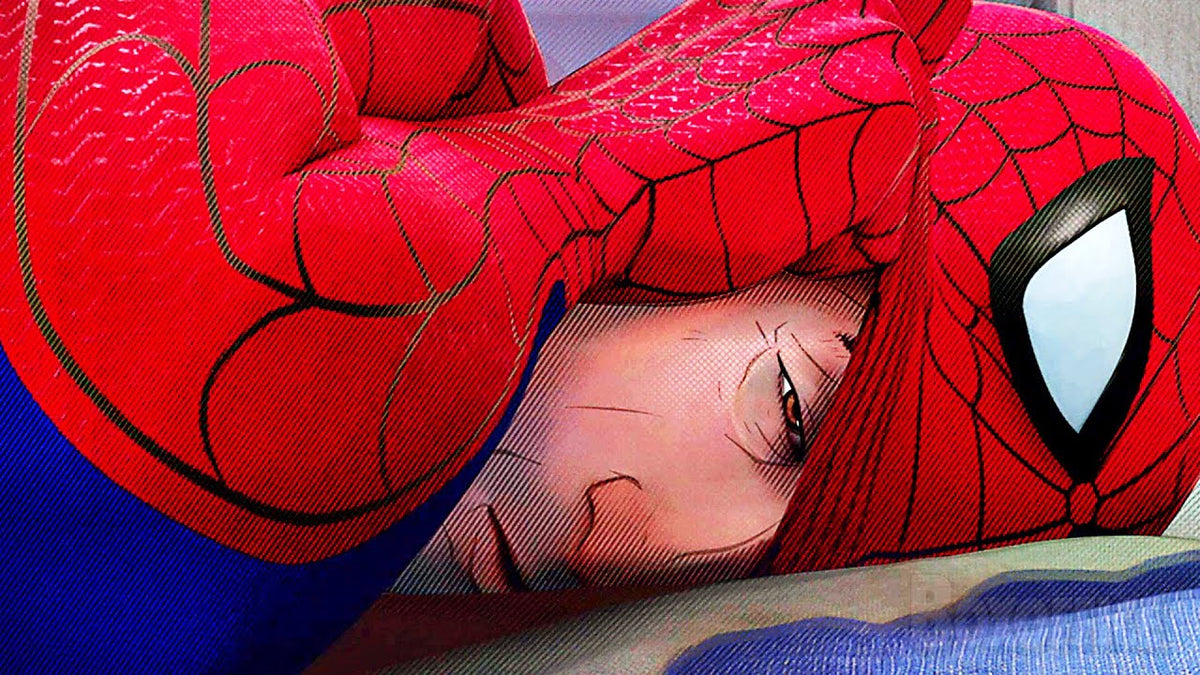
The short answer
Spider-Man isn’t driven by revenge but by guilt – and that difference explains the whole character. You take revenge once; you never finish making amends. Since the death of Uncle Ben, every loss he suffers is added to a debt he can never settle, and it’s that debt, not his powers, that keeps him in the mask.
In this article
Batman fights because his parents were murdered. Superman because he can. Peter Parker fights because he let a man run past him in a corridor, and that man killed his uncle three days later.
That detail changes the nature of the character more deeply than people tend to admit. Here’s how guilt works in him, what it produces, and why it never fades.
Where it comes from
It all starts with one act that the origin story places front and centre, and that the summaries tend to gloss over.
Peter, newly gifted with his powers, is earning money as a performer. A thief runs off with a studio’s takings, a guard shouts at him to stop the man, and he watches him go by. A few days later, his uncle is killed by a burglar. He hunts him down, unmasks him – it’s the same man.
There’s no villain in this story. There’s only him, and one second of indifference. The full sequence of events is in our article on the death of Uncle Ben, and the line that draws the lesson from it in ‘with great power comes great responsibility’.
What makes this origin unique
Other heroes are victims. Peter is responsible for his own misfortune. He can’t take revenge on anyone else: the person to punish is himself.
Guilt, revenge, duty: three different engines
These three drives are often confused with one another, and they don’t produce the same hero at all.
Revenge
Aims at an outside target and burns out when the target falls. A vengeful hero can win, then stop. It’s the engine behind Batman, the Punisher and most vigilantes.
Duty
Comes from an accepted role: soldier, king, appointed protector. It can be laid down. Captain America can hand back the shield; he has done so several times.
Guilt
Has no target and no end. It can’t be settled by a victory, since the wrong has already been done. It can only be compensated for, indefinitely.
It’s the third engine that drives Peter, and that’s why he can neither win for good nor hang up the mask: there’s nothing to win, and quitting would mean leaving the debt unpaid. The character’s relationship with violence, explored in our article on the line he draws with revenge, follows directly from this.
The deaths he carries
The original debt didn’t stay alone. Over sixty years, the series has added more losses – and for each one, a share of responsibility that Peter takes upon himself.
| Who | When | What Peter blames himself for |
|---|---|---|
| Uncle Ben | 1962 | letting his killer get away |
| Captain Stacy | 1970 | crushed by falling debris during one of Spider-Man’s fights |
| Gwen Stacy | 1973 | failing to catch her – or killing her by catching her |
| Harry Osborn | 1993 | breaking his best friend by unmasking his father |
| Aunt May | 2007 | a bullet that was meant for him |
Every row in this table has its own article. The heaviest is Gwen’s, whose fall has been debated for half a century – see our analysis of the death of Gwen Stacy. Harry’s is told in Harry Osborn: friend, rival or enemy, and the full overview of the losses in every death in the Spider-Man universe.

Spider-Man Noir Watercolour Poster
The character in a dark treatment, much like what guilt makes of him. Find it among our posters.
View the product – €16.90How it shows itself
Peter’s guilt isn’t a mood he puts into words. It’s a behaviour, observable in almost every story.
Over-commitment
He can’t let a call go unanswered. A siren, a scream, an alert: he goes, whatever the cost to his private life. Every missed intervention would be another Uncle Ben.
Self-sabotage
He misses his appointments, loses his jobs, lets down the people closest to him. Part of him believes he doesn’t deserve a normal life, and he makes sure he doesn’t get one.
Refusing happiness
Every time life gets better, he waits for the fall. He doesn’t believe he’s allowed to be happy while the debt is still running – and it’s always running.
That last point is central to his double identity: it isn’t the mask that stops him from living, it’s what he believes he owes.
The scenes where it breaks him
Three moments where the mechanism becomes visible to the naked eye.
Spider-Man No More
In 1967, Peter throws the costume in the bin and goes home. He lasts a few days. Then he hears a scream in the street, and he realises his freedom is worth nothing against what he would feel if he didn’t move. He doesn’t take the mask back out of duty: he takes it back because the guilt he can already feel coming is unbearable.
Kraven’s Last Hunt
Buried alive, Peter claws his way back to the surface for one reason only: Mary Jane is waiting for him, and the thought of putting her through one more disappearance is unbearable to him. The arc is analysed in our article on Kraven’s Last Hunt.
One More Day
To save Aunt May from a bullet that was meant for him, Peter accepts a deal that erases his marriage. It’s guilt taken to its logical conclusion: he sacrifices his own life rather than carry one more death. The pact is detailed in One More Day, the story that changed everything and its consequences in One Moment in Time.
Three scenes, three forms of the same debt
1967 – he gives up, then comes backanticipated guilt
1987 – he climbs out of the groundguilt towards someone still living
2007 – he erases his marriagethe guilt that costs everything
When it becomes dangerous
Guilt isn’t only a virtuous engine. Pushed too far, it produces exactly the opposite of what it promises.
Back in Black
After the bullet that hits May, Peter hunts down Kingpin and beats him within an inch of his life. For a few issues, guilt turns into rage – and he becomes the character he has spent his whole life refusing to be.
The pact with Mephisto
To avoid carrying one death, he accepts another: that of his marriage. The debt has grown so heavy that he’ll pay any price not to add to it.
The Superior counter-example
When Doctor Octopus takes over Peter’s body, he acts without guilt. He’s more efficient, more brutal, and he loses everything that gave the character his worth.
These three stories are covered in detail in Back in Black, Mephisto, the devil behind Peter’s fate and Superior Spider-Man.

Spider-Man Figure
The character in his most recognisable pose – that of a man carrying something. The full range is in our figures.
View the product – €69.90Why it never fades
It’s the question every reader asks at some point: why doesn’t Peter eventually forgive himself?
The answer is structural. A series that has been running since 1962 needs an engine that doesn’t wear out. Revenge wears out – Batman has had to reinvent himself several times. Duty wears out – Captain America resigned. Guilt, on the other hand, renews itself with every loss, and the series supplies one every ten years.
It’s also why every attempt at healing fails. Each time a writer has Peter make peace with his past, the next one hands him a new death. The character is designed not to heal. This logic of renewal runs through every story listed in our guide to the great story arcs.
The series’ unwritten rule
Peter Parker can lose everything except his guilt. It’s the one element that sixty years of rewrites have never touched – not even the pact with Mephisto.
What it says about us
If this device has worked for so long, it’s because it speaks to something very specific in the reader.
Almost nobody has lost a home planet. Almost everybody has, at some point, let something slide out of weariness or indifference, and found out later that it mattered. Peter Parker is the hero of that particular experience, and that’s why we turn to him when things go wrong – a mechanism we explore in why we watch Spider-Man when we’re sad.
He doesn’t offer a model of power. He offers a model of repair: you can’t undo the wrong, but you can spend your life doing what the wrong prevented. It’s less glorious than revenge, and far more universal. The full portrait is in our guide to Peter Parker.
What the character teaches without saying it
Responsibility doesn’t come from power. It comes from the wrong. Power is only what makes the wrong possible – and the repair obligatory.
What the other characters do with it
Peter’s guilt isn’t just an inner trait: it’s read, exploited and sometimes turned against him by those around him.
The villains who use it
Norman Osborn understood it first. Killing Gwen wasn’t an attack on Spider-Man, it was an attack on Peter – striking at what he can never repair. Kraven did the same with Mary Jane, and Mephisto with Aunt May: the character’s most dangerous enemies aren’t the strongest, they’re the ones who know where the debt weighs heaviest.
The loved ones who carry it with him
Captain Stacy, dying, reveals to Peter that he knew his identity and entrusts Gwen to him – a trust that will become the worst of burdens three years later. We tell this character’s story in George Stacy, the captain who understood. And Aunt May, in the trauma of her death, is the one whose every frailty reminds Peter of what he has already cost his family.
Those who try to free him from it
Mary Jane is the only character who has made a lasting effort to convince Peter that he has the right to be happy. The fact that the pact with Mephisto erases precisely that marriage is no accident of writing: the series took away from the character the one relationship that threatened his engine.
The pattern that keeps repeating
Someone loves Peter, someone tells him he can set the burden down, and the series makes sure that someone is the next loss. It isn’t cruel, it’s mechanical: a Peter set free would have no story left.
The misreadings to avoid
This theme is so central that it invites hasty readings. Five mistakes keep coming up.
Five false readings
- ‘He fights out of duty.’ No: out of debt. A duty is accepted; a debt is endured. The nuance changes his whole relationship with the mask.
- ‘He eventually forgives himself.’ Never for long. Every attempt is cancelled out by the next loss. That’s deliberate.
- ‘Guilt is his weakness.’ It’s his strength and his weakness at once. It keeps him going, and it stops him from living. His real flaws lie elsewhere – see his actual weaknesses.
- ‘Without it, he’d be happier.’ Without it, he’d be Superior Spider-Man: more efficient, and empty.
- ‘It’s just sadness.’ Sadness is passive. Guilt is an engine: it has been producing actions, every day, since 1962.
The detail of his real vulnerabilities, physical and psychological, is in Spider-Man’s weaknesses, and the catalogue of those who exploit them in our guide to his enemies.

Vintage Spider-Man Mug
An everyday object for a character whose everyday life was never simple. Find it in our mugs, our t-shirts and our gift ideas.
View the product – €24.90The questions people ask
Did Spider-Man really kill Gwen Stacy?
The question has been left open since 1973, and that’s deliberate. A sharp snap at the moment the web catches her suggests that the fall, or the sudden stop, broke her neck. Peter will never know for certain – and that’s precisely what makes this death so heavy.
Why not simply stop?
He tried, as early as 1967. He lasts a few days. The problem isn’t hanging up the mask, it’s living with whatever happens while he isn’t wearing it.
Is he the only hero built this way?
He’s the first, and by far the most accomplished. Other characters have since borrowed the device of the founding wrong, but none has sustained it for so long without resolving it.
Is the guilt the same for Miles Morales?
No, and that’s what sets the two characters apart. Miles carries the death of his own universe’s Peter Parker, but he isn’t responsible for it. His debt is an inheritance, not a wrong – which leaves him a lightness Peter will never have.
Did the films keep it?
Yes, and the MCU’s third instalment pushes it very far: Peter sacrifices his identity, his friends and every memory anyone has of him to repair a wrong. We analyse that choice in the impossible choice in No Way Home.
The question that comes up most
‘Will he ever get better?’ – No, and that isn’t a tragedy. It’s the condition of his longevity. A healed Peter Parker would be a finished character.
What to remember
Spider-Man doesn’t take revenge, he repays. One second of indifference in 1962, a debt that grows heavier with every loss, and a character designed never to settle it.
That’s what makes him fallible, exhausting, and more human than any other hero of his standing. We don’t follow him because he wins. We follow him because he keeps going.

