
14-Day Money-Back Guarantee
0
The short answer
In this mid-2000s arc, the web-slinger succumbs to an illness science cannot cure, then comes back as a totemic creature: stingers in his wrists, vision in the dark, a link with spiders. The predator Morlun, the moulting and the legacy left to the Spider-Verse: we unpack it all below.
A major turning point in the Spider-Man comics
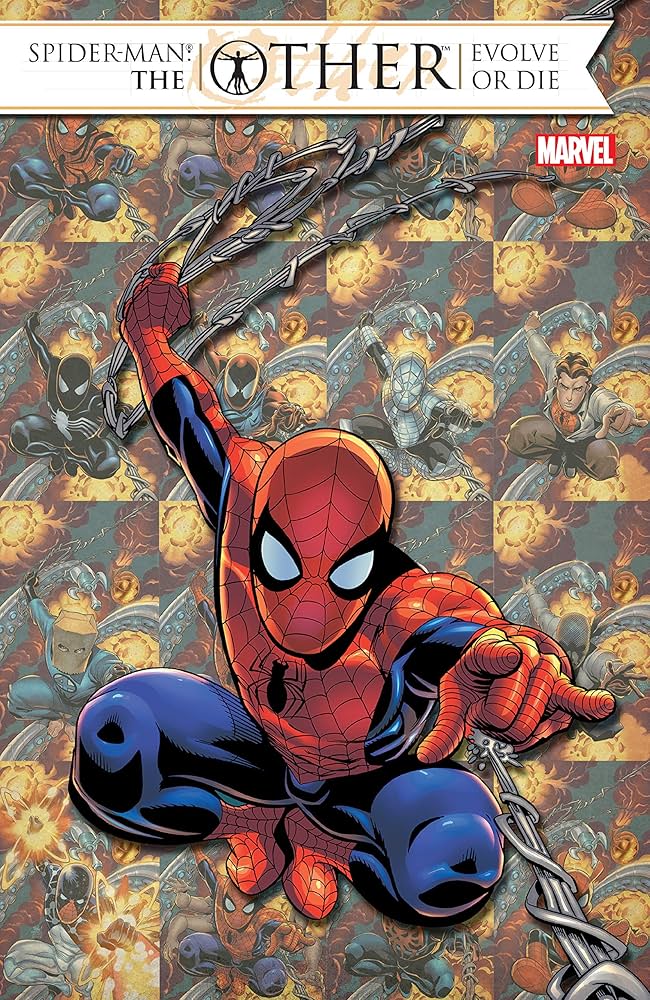
In Spider-Man’s sprawling universe, a handful of story arcs mark a genuine before and after. ‘The Other’ — released in France as ‘L’Autre’ — is unquestionably one of them. Published between 2005 and 2006, this story explores a side of the hero we had never really seen: deep vulnerability, imminent death and a mystical rebirth. Unlike the more classic plots where Peter Parker has to face a villain threatening the city, the enemy here is invisible: it is Peter’s own body that betrays him.
From the very first pages the tone is set: Spider-Man feels weakened, suffering from symptoms no scientific explanation can account for. This slow decline is not only physical. It opens the door to a brutal bout of soul-searching. Peter, used as he is to risking his life every single day, now has to face the real possibility of dying. More than that, he can feel himself changing. An inner metamorphosis is under way, heralding a transition as terrifying as it is necessary.
This story stands out for how dark it is. We are a long way from the breezy, high-energy adventures of the early days. Here the atmosphere is heavy, almost organic. The spider is no longer a simple metaphor for his powers: it becomes a living entity, crouched inside him, ready to claim its due. That theme of repressed animality, already hinted at in other versions of the character such as certain sequences in the Spider-Man 3 film, takes on an unprecedented dramatic scale here.
This shift is not only a narrative one. It also fits into a wider logic of reinventing the character. At a time when Marvel was looking to refresh its flagship figures, ‘The Other’ plays a pivotal role. It anticipates the more radical changes to come and offers a darker, more grown-up Spider-Man, almost shamanic in his relationship with the living world and with his own origins.
This duality between the man and the spider, between consciousness and instinct, between reason and nature, runs through the whole opening of the arc. And that deep questioning echoes across the entire Spider-Verse. You find it in characters such as Kaine, or even Spider-Man Noir, whose takes on the hero are often more brutal, more bestial — themes we also cover in our article on the Spider-Man variants.
The transformation, between agony and revelation

As the story moves forward, Peter Parker sinks. But far from being a purely physical decline, this phase becomes the stage for a genuine inner moulting. The narrative confronts him with enigmatic figures — notably an arachnid totem embodied by a mystical being named Ezekiel — who invite him to accept the idea that he is not only a superhero... but a totemic creature bound to a primal force: the Spider.
From ‘Kraven’s Last Hunt’ to ‘Spider-Verse’, explore the complete saga of Spider-Man story arcs and rediscover the hero’s key moments.
This almost spiritual dimension clashes with Peter’s usual rationalism. Yet cornered, ill and unable to explain what is happening to him, he is forced to give in. And that acceptance seals his fate. His body dies. Literally. Spider-Man is found lifeless by those closest to him, and the Marvel universe wobbles for a few moments.
But Peter is reborn. Not as a clone or as some convenient plot resurrection, but transformed. Metaphorically and physically, he becomes ‘the Other’: a version of himself that is more powerful, more instinctive, able to see in the dark, to communicate with spiders and even to extend venomous stingers from his wrists. This evolution marks a turning point in his personal mythology, and in many ways recalls the transformations of other Marvel figures such as Wolverine or Moon Knight, torn between humanity and savagery.
This new Spider-Man questions his own bearings, his methods, his relationship with justice. He is no longer the awkward Peter of the early days. He now embodies a creature in his own right, sometimes acting with a new brutality. That change is illustrated by more direct, more visceral confrontations, above all against Morlun, an antagonist tied to the multiverse and to totemic predators — a character you also meet in the Spider-Verse arc, and who embodies the ultimate hunt for every Spider-hero.
In this phase of transformation, the theme of the costume also takes on another dimension. Peter temporarily abandons his classic look for black, organic clothing that evokes rebirth as much as raw instinct. A good excuse to explore our Spider-Man costume collection, where the darker takes on the suit take centre stage.
This shift also chimes with the more mature vision of Spider-Man that Marvel wanted to develop at the time. More than a teenager juggling lessons and responsibilities, he becomes an icon of human duality here, between light and shadow, responsibility and impulse. It is a dynamic you find in many modern stories, such as Spider-Man: Reign II, where an ageing Spider-Man has to face his inner demons in a ruined world.
The legacy of ‘The Other’ in the Marvel universe
The story of The Other is not simply an isolated arc. It marks a before and an after in Spider-Man’s history, shaping his mythology, his powers and even his perception of himself for good. By reconnecting with the idea of the ‘Spider Totem’, Peter Parker is no longer content to be an urban hero: he becomes a fully fledged mythological figure, one of several beings chosen to embody the Spider.
The concept would be picked up and amplified a few years later in the huge Spider-Verse crossover, where the multiverse reveals the existence of dozens, even hundreds, of arachnid avatars. ‘The Other’, in that context, acts as a foundation stone of the whole narrative structure, introducing a mystical dimension that would later justify the existence of Spider-Gwen, Spider-Man Noir and Spider-Punk.
From an editorial point of view, this transformation also handed Marvel a way to renew the character without betraying his essence. Peter is still Peter, but he becomes more complete, more powerful, more firmly anchored in a symbolic destiny. Readers themselves are invited to reconsider their certainties: what if Spider-Man had never been bitten by chance? What if that bite had always been the start of a far bigger cycle?
That idea, fascinating and dizzying, is also one of the narrative pillars of the Beyond the Spider-Verse saga, where the symbolism of the multiverse, of choices and of legacies plays out at every meeting between Spideys from parallel universes. The Peter Parker of ‘The Other’ becomes one of the very few to have crossed through death... and come back changed forever.
This thematic shift has also left its mark on other incarnations. Some recent video games, such as those in the Marvel’s Spider-Man series on PlayStation, contain nods to this renewal of power — extrasensory perception, a deep link with spiders, near-supernatural reflexes. A reminder that even video games, just like the newest Spider-Man figures, now incorporate this evolved version of the hero.
Finally, symbolically speaking, ‘The Other’ asks a central question: do you have to die in order to be reborn? Peter Parker, like many mythological heroes, undergoes an alchemical transformation here. And that death-and-rebirth, as brutal as it is inspiring, makes him more human... and more powerful than ever.
When dying makes you stronger: a turning point for fans

With The Other, Marvel did not just tell one more story in the Spider-Man catalogue. The publisher dared to redefine the way we see the superhero, injecting a dose of spirituality and inner transformation rarely seen in mainstream comics. That Peter Parker did not simply come back to life: he evolved, he transcended his own limits.
This story resonated especially with long-time readers. The ones who had watched Peter fall, doubt and always get back up. But here the challenge runs deeper: accepting the fear of dying, facing the unknown and being reborn closer to himself than ever. That powerful, almost initiatory thread let a whole new generation of fans rediscover Spider-Man in a different light.
On the merchandise side, this renewal also took shape in a new aesthetic. Darker Spider-Man masks, figures in ‘totem’ or ‘symbiote’ versions, and more stylised clothing.
The strength of this transformation also lies in the way it echoes other major web-slinger arcs. Stories such as Spider-Man: No Way Home or even the greatest Spider-Man villains take on a whole different dimension once you realise that Peter Parker has already known death — and got back up stronger, more animal, more mystical.
Ultimately, ‘The Other’ is far more than a strange parenthesis in the comics. It is a solid narrative foundation that on its own justifies a whole new era for the character. A reminder, too, that even the greatest heroes can die… the better to rebuild themselves.
👉 Take a look at our Spider-Man slippers collection too, and walk in the hero’s footsteps — literally!

