
14-Day Money-Back Guarantee
0
The essentials before you choose
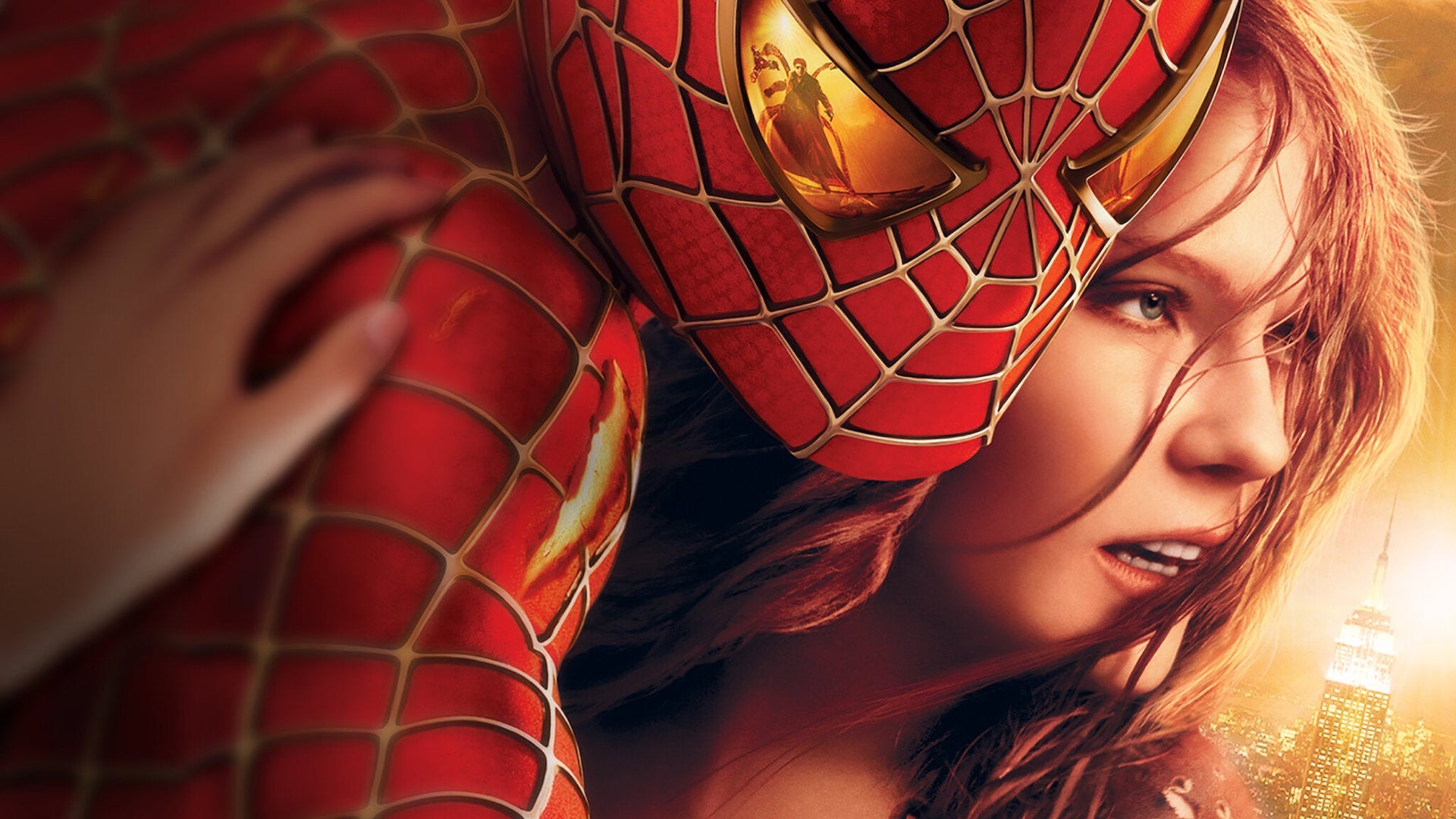
Deciding means weighing three things: the writing of the Peter/Otto duel, the room left for the hero's inner doubt, and how the action sequences hold up. Sam Raimi's feature ticks those boxes with rare consistency, but the comparison deserves nuance. We break down the criteria below.
In 2004, Sam Raimi delivered a film that goes far beyond simple entertainment.
Spider-Man 2 isn’t just a successful sequel. It’s a work about sacrifice, identity and moral exhaustion.
Where the first film laid the hero's foundations, this second chapter asks a deeper question:
What happens when being Spider-Man becomes a burden?
To place this film within the web-slinger's overall big-screen evolution, see the pillar page: Spider-Man films: order, versions, costumes and universe.
A film built around the hero's exhaustion
In Spider-Man 2, Peter Parker is no longer euphoric.
He is tired.
He is failing at university. He misses his deliveries. He loses Mary Jane. He lies to his Aunt May. He drifts away from his best friend.
The film explores a theme that is rare for a blockbuster: hero burnout.
This moral questioning echoes the more recent analysis of the impossible choice in No Way Home.
But here, the approach is intimate, almost silent.
Losing his powers: when the body mirrors inner doubt
One of the boldest choices in Spider-Man 2 is to make Peter lose his powers.
It isn’t a scientific accident. It isn’t outside manipulation.
It is psychosomatic.
Peter doubts himself. He doubts his mission. He doubts his ability to carry the weight of responsibility.
And his body answers that doubt.
This idea is deeply consistent with the character's philosophy set out on the pillar page: Peter Parker: the real face of Spider-Man.
Spider-Man isn’t just a physical power. It is a moral choice.
The train scene: a moment that became legendary
The train scene against Doctor Octopus is often cited as one of the greatest superhero scenes ever filmed.
Visually spectacular, it is above all symbolic:
- Peter fights alone
- He pushes his physical limits
- He accepts suffering to save others
When the passengers carry him at arm's length, unconscious, the scene becomes almost Christ-like.
They see his face.
And yet they keep the secret.
This moment is a reminder that Spider-Man is the people's hero.


If this version stuck with you, you can find more of its world in:
Responsibility or personal happiness?
The film asks a universal question:
Can you be happy when you carry an immense responsibility?
Peter gives up Spider-Man to get his normal life back.
And for a moment… he is happy.
But the guilt comes back.
The film reminds us that for Peter, happiness cannot exist at other people's expense.
This moral tension has been the very essence of Spider-Man since Spider-Man (2002).
Doctor Octopus: the mentor turned tragic mirror
If Spider-Man 2 is considered the best Spider-Man film, that is largely thanks to Otto Octavius.
Unlike Norman Osborn in Spider-Man (2002), Otto starts out as a benevolent mentor.
He admires Peter's intelligence. He shares his passion for science. He believes in responsible progress.

And that is precisely what makes his fall so powerful.
Science without responsibility
Otto keeps repeating that science must serve humanity.
But when his experiment fails and his wife dies, he tips over.
The mechanical arms become the physical embodiment of his obsession.
The theme is crystal clear: science without responsibility leads to chaos.
This parallel reinforces the central message set out by Uncle Ben even further: power demands responsibility.
If you want to dig deeper into the web-slinger's rogues' gallery, explore: Spider-Man's enemies: origins and analysis.
A deeply human antagonist
Otto isn’t evil by nature.
He is broken.
He is dominated by his arms, but also by his guilt.
His final scene, when he chooses to sacrifice his own life to stop his reactor, is one of the most powerful moments in the film.
He becomes himself again.
He chooses responsibility.
This kind of tragic antagonist paves the way for more complex figures like the ones found in:
If this version of Doctor Octopus stuck with you, you can take the experience further with:
Doctor Octopus isn’t just a spectacular villain.
He is the reflection of what Peter could become if he let his obsession take over.
Why Spider-Man 2 (2004) is still considered the best
Twenty years after its release, Spider-Man 2 is still cited as an absolute benchmark in superhero cinema.
Why?
- Because it takes the time to build its characters
- Because it treats its hero as a fragile human being
- Because it gives its antagonist rare depth
- Because it balances spectacular action with intimate drama
Unlike many modern blockbusters, the film does not try to set up ten plots for a future shared universe.
It tells a complete story.
And that narrative coherence makes it timeless.

A legacy visible in the MCU and the multiverse
When Alfred Molina returned to his role in No Way Home, it was not just a nostalgic nod.

It is official recognition that Spider-Man 2 set a standard.
The MCU has absorbed that emotional maturity:
- The hero's loneliness
- The weight of choices
- Responsibility as a dramatic engine
To understand how this version coexists today with those of Andrew Garfield and Tom Holland, explore: Understanding the Spider-Verse.
A work that transcends the genre
Spider-Man 2 isn’t just a superhero film.
It is a film about:
- Sacrifice
- Identity
- Moral exhaustion
- How hard it is to love when you wear a mask
It proved a blockbuster could be profound.
It proved spectacle could serve drama.
And it showed that Spider-Man may be the most human superhero of all.
If this version stuck with you, you can take its world further through:
- Sam Raimi Spider-Man figures
- Vintage Spider-Man T-shirts
- 2004 version costumes
- Spider-Man jumpers & sweatshirts
🕷️ Spider-Man 2 (2004) isn’t just the best Spider-Man film for many fans. It is the perfect example of what superhero cinema can achieve when it puts the human being at the centre.

