
14-Day Money-Back Guarantee
0
The short answer
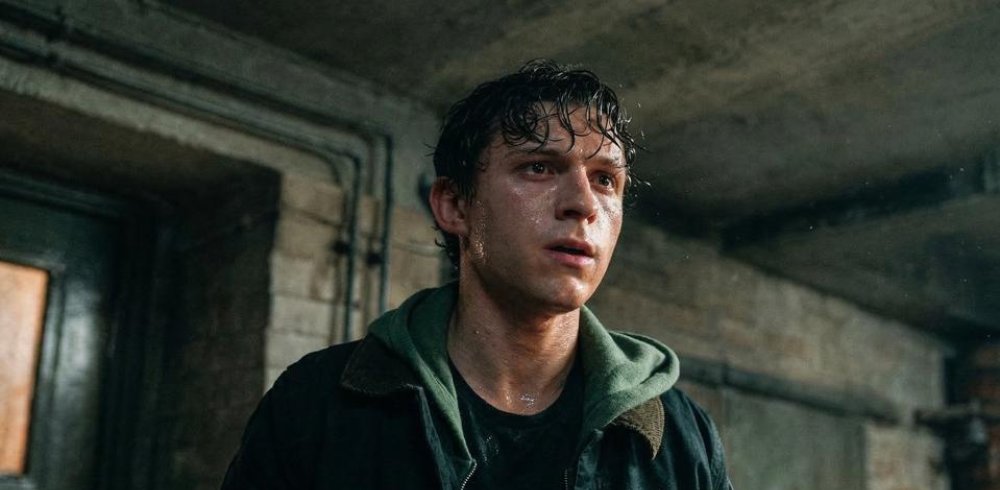
The film picks up with Peter Parker four years after the spell cast in No Way Home, its opening scene set nine months after that finale. This is no triumphant comeback: it is the portrait of a man nobody recognises any more, in a city that has carried on without him. Critics have very widely praised what they call Tom Holland's most mature performance.
Contents
Four years on: the exact chronology of an erasureAn unrecognisable Peter Parker: what the critics describeLoneliness is not a backdrop: it is the engine of the storyFrank Castle, the counter-model that reveals the voidA harder film, and the ratings say soThe reservations: when the void is filled by the rest of the MCUA hero the world forgot, but not the audienceWhat the film still refuses to say (mild structural spoiler)
Spider-Man: Brand New Day has been in cinemas in France since 29/07/2026, with an unusual promise for a Marvel blockbuster: not to pick the story up where viewers left it. The previous chapter closed on a sacrifice, that of a Peter Parker accepting that Doctor Strange would erase his existence from the memory of the entire world. The new film neither repairs that loss nor sidesteps it: it places it at the centre of the story and looks at what it has done to its hero.
The question is rarely asked this seriously in a superhero film: what becomes of someone whose social existence has been cancelled, but whose body, responsibilities and moral reflexes have remained intact? Peter is not dead and has not lost his powers. He has lost his place in the memories of those who loved him, and the very possibility of being recognised. That kind of void cannot be settled with a fight.
Four years on: the exact chronology of an erasure
Spider-Man: Brand New Day takes place four years after the events of Spider-Man: No Way Home, with its opening scene set nine months after the previous film's finale. Those nine months are therefore not the setting of the story but its point of entry: the film opens on a Peter still close to the disaster, then lets time do its work. It then finds a Peter settled into his isolation.
This gap is no accident. In an interview with Den of Geek, Tom Holland explains that the long pause between the two productions was embraced as a storytelling tool: 'One of the reasons we took a long break between No Way Home and Brand New Day was to allow the characters to grow up off camera.' So viewers find neither the chatty teenager of Homecoming, nor the overwhelmed young man of Far From Home, but an adult settled into his anonymity.

Only one film is essential before the screening: No Way Home, whose fate for Doctor Strange provides the direct starting point of this chapter. We have looked back at what that ending changed, at the moral mechanics of that sacrifice and at the question it leaves open: does MJ still remember Peter Parker? Worth noting: the title borrows that of a comics storyline, covered separately in our article on the great comics reset. The two stories are different.
Four years after No Way Home
The film takes place four years after No Way Home, with an opening set nine months after its finale; it is the only film you really need to have seen beforehand.
An unrecognisable Peter Parker: what the critics describe
This is the point on which the English-language critical reception is most unanimous: the vast majority of the reviews published at release praise what they call Tom Holland's best performance in the role to date. David Rooney, chief critic at The Hollywood Reporter, sums up his verdict with a 'Never better', and ComicBook.com runs with 'Tom Holland's best performance yet'. Empire describes a Peter who is 'less puppyish', 'hardened and bruised by grief and loneliness'.
Rooney goes further in his description of the character: 'a heavily burdened Spider-Man, rendered more vulnerable by his sense of loss'. He praises a film that 'has the good sense to stop banging on about the damn multiverse' and that 'foregrounds the humanity that has always been Spidey's greatest strength'. Putting humanity front and centre rather than dimensional connections: that is what a hero nobody identifies any more makes possible.
The most reliable signal comes from the harshest reviews
A consensus is best measured among those it did not convince. David Ehrlich, in IndieWire, gives the film only a C- and describes it as 'a dull and downbeat Marvel sequel'. He nevertheless concedes that Holland delivers his 'most nuanced and mature Spider-Man performance to date'. When a detractor saves the actor, the appraisal stops being a matter of collective enthusiasm.
The aggregators confirm this, provided you timestamp them. As of 29/07/2026, the film showed a 91% Tomatometer and Certified Fresh status on Rotten Tomatoes, a score calculated at that point on 163 reviews. On Metacritic, the Metascore reached 70 out of 100 from 42 press reviews: 32 positive, 10 mixed, none negative. These counters move hour by hour, but the absence of a negative review remains a solid indicator.

Spider-Man Tom Holland Figurine
To keep a record of this version of the character: the figurine captures the silhouette the actor will have carried across four feature films. A display piece for anyone who has followed this Peter Parker from the start.
View the product — €79.90Loneliness is not a backdrop: it is the engine of the story
Director Destin Daniel Cretton describes a Peter Parker who is 'completely alone', and the press reports that this psychological distress ends up spilling over into his powers. That is the difference between a sad character and a damaged one: the inner state contaminates the hero's machinery. Kevin Feige has described a 'real Spider-Man' facing human-scale threats, meaning a move away from multiversal chaos in favour of New York street crime.
This refocusing is the second major point of consensus. The word that comes up most often among English-language journalists is 'grounded': Rotten Tomatoes headlined its round-up of the first reviews 'The Most Grounded, Mature Spider-Man Story Yet', and The Playlist sums it up in three adjectives: 'Dark, grounded, vulnerable'. Looper welcomes the return to 'street-level stories'.
Others look for comparisons outside the genre: the San Francisco Chronicle invokes 'the mature melancholy of The Empire Strikes Back'. The most glowing reviews speak of melancholy rather than darkness; IndieWire, by contrast, sees a film that is 'dull and downbeat'. Our guide to the Spider-Man films in order places each interpretation in its continuity, and the feature on the real face of Peter Parker looks back at what the character owes to his civilian life.
The shift can be read right down to the shelves: the new suit feeds a Brand New Day collection darker than the previous ranges, while the Spider-Man figurines and Spider-Man posters still let every era sit side by side. We have decoded the design of the Fresh Start suit, which translates this change of mood visually.
Frank Castle, the counter-model that reveals the void
A hero on his own needs someone to talk to in order to exist on screen. Jon Bernthal takes up the role of Frank Castle, the Punisher, for his first big-screen appearance in the Marvel cinematic universe. The arrival of an openly lethal vigilante, with no equivalent among the partners of the previous MCU Spider-Man films, feeds into the general hardening. Facing a Peter the world has forgotten, Castle represents the other possible outcome: that of the man who has stopped asking permission.
Critics have endorsed the pairing. For Liz Shannon Miller, at Consequence, who gives the film a B+, 'Bernthal might be the cast highlight', and it is a 'pure pleasure to watch Frank and Peter yell at each other'. William Bibbiani, in TheWrap, sees 'a perfect foil for Tom Holland' and calls their exchanges 'comedy gold'. Charlie Ridgely, for Collider, writes that 'the biggest improvement belongs to Bernthal's Punisher'.
This proximity is not improvised. Broadcast from 24/03/2026 to 05/05/2026 on Disney+, series two of Daredevil: Born Again is set, according to the specialist press, just before the film, and Marvel Studios has confirmed that the two teams worked together. Two characters bridge the gap: Castle and Sheila Rivera, played by Zabryna Guevara. Read our profile of Frank Castle and his lethal methods, our analysis of their unstable relationship and our article on the alliance with Daredevil.

Black Spider-Man Peter Parker Mask
The film embraces a darker register: this black mask is its material equivalent, the same recognisable silhouette stripped of its reassuring colours. Ideal for an adult cosplay or a display that plays it understated.
View the product — €34.90A harder film, and the ratings say so
The change of tone leaves measurable traces in the official ratings. In the United States, the Motion Picture Association rates the film PG-13, citing 'sequences of action/violence and some language'. In France, the CNC issued exhibition visa no. 167934 on 06/07/2026, with a 'Tous publics' (all audiences) classification and no associated warning.
In the United Kingdom, the British Board of Film Classification has settled on a 12A certificate and four descriptors: 'moderate violence, threat, injury detail, implied strong language'. The third appears on no other MCU Spider-Man: No Way Home carried only 'moderate violence, threat', with no mention of blood. Its 'Injury detail' entry describes characters left bloodied after the fights, including a close-up of a bloodied face.
Should you take younger children?
The French classification imposes nothing, but foreign parental guides offer useful markers. Common Sense Media recommends the film from age 11 and places its violence at the top of its scale, 'a lot', citing bloody injuries, guns and blades, explosions and a torture scene. OSV News, the American Catholic agency, gives it an A-III rating, for adults only.
The running time adds to this density: 2hr 25min, or 145 minutes (144 minutes and 49 seconds according to the BBFC, credits included). It is the second-longest Spider-Man ever released, behind the 148 minutes of No Way Home. Tom Holland had announced 'a more mature tone', with his character entering 'the darkest chapter of his life'. Our costume guide for the release complements the Spider-Man fancy dress costumes in the shop.
| Body | Rating |
|---|---|
| Motion Picture Association | PG-13 |
| CNC (France) | All audiences, visa no. 167934 |
| BBFC | 12A, four descriptors |
| Common Sense Media | Age 11 and over |
| OSV News | A-III, for adults only |
The reservations: when the void is filled by the rest of the MCU
The reception remains favourable without being unanimous, and the reservations all aim at the same spot: what the film does with that void once it stops looking at it head-on. The most recurrent criticism concerns the concessions made to the wider Marvel universe and the reduced space left to the trio of Peter, MJ and Ned. Edward Douglas, of the Weekend Warrior, quoted by Rotten Tomatoes, writes that the trio's scenes are the best in the film, 'even if the three of them are together far less often than in any previous instalment'.
Empire questions the usefulness of Bruce Banner's appearance, with Mark Ruffalo listed in the official cast. In his four-star review out of five, John Nugent faults the intrusion of another Marvel hero for smashing 'not only buildings but also the narrative pace'. Rolling Stone, in a piece by David Fear, sees a cynical set-up for future crossovers, and IndieWire reckons the film mainly serves to keep us waiting. Consequence, by contrast, enjoys these connections: it is a recurring thread, not a majority verdict.
Owen Gleiberman, in Variety, judges the film 'half an hour too long' and several colleagues describe an overloaded story; he concludes on a feature that is 'watchable without ever being transporting'. William Bibbiani, otherwise enthusiastic, slips in that the villain's plan does not hold up once the screening is over, and David Ehrlich finds his backstory predictable. We have detailed the gallery of adversaries in our article on the film's villains, extended by the feature on all of the web-slinger's enemies.
As of 29/07/2026, the day of its French release, the film showed on AlloCiné a press rating of 3.2 out of 5 from 17 outlets counted and an audience rating of 4.2 out of 5 from 268 ratings, figures that keep changing. In The Guardian, Peter Bradshaw gives three stars out of five: he praises Zendaya, who in his view 'saves' the film, finds the whole thing too familiar, and concludes that 'a more radical reboot is needed'. That is one critic's opinion, not a consensus.

Spider-Man Peter Parker T-Shirt
The whole film sits in that dual identity, now invisible to the world. This t-shirt plays on the split between the man and the mask, in a cut you can wear day to day rather than at a fancy dress party.
View the product — €29.90A hero the world forgot, but not the audience
There is an irony in a film about being forgotten breaking advance-sales records. Spider-Man: Brand New Day became the biggest advance ticket seller of 2026 on Fandango. In France, according to the specialist site Zickma, it reportedly drew 12,421 viewers across 26 prints at the first Paris screenings on 29/07/2026, ahead of No Way Home in its day. The detail is in our article on the film's box office.
What the film still refuses to say (mild structural spoiler)
A warning: these lines describe the structure of the ending, without revealing any event in the story. Spider-Man: Brand New Day contains only one bonus sequence and no mid-credits scene. Nothing happens while the names roll, which pushes a lot of viewers to leave the screen: the scene comes right at the end, after the entire credits and even after the studio logos.
It is short and deliberately understated: no dialogue or voice-over, no actor on screen, only the interface of the Spider-Tracker built by Ned Leeds, before a card announces 'Spider-Man will return'. That card names no film and gives no date, neither Avengers: Doomsday, nor Avengers: Secret Wars. Several critics have faulted it for its lack of a reveal. Our article on the post-credits scene and the ending explained goes into the question.
On the calendar side, Brand New Day is the last Marvel Studios film before Avengers: Doomsday, scheduled for 18/12/2026: no other feature slots in between, even if the Disney+ series VisionQuest is announced for 14/10/2026. These dates may change, Doomsday having already been pushed from May to December. Our complete list of MCU films in chronological order remains the reference for finding your way.
One single scene, right at the end
No mid-credits scene: the only sequence arrives after the studio logos, with Ned Leeds's Spider-Tracker and a card reading 'Spider-Man will return'.
What to rewatch before or after the screening
If you only rewatch one film, rewatch No Way Home. Most guides recommend adding Homecoming and Far From Home, or even Captain America: Civil War, Avengers: Infinity War and Endgame. Some widen the list to the street-level block, given the film's New York grounding: Daredevil: Born Again and the Punisher content, judged all but essential by several outlets.
Two practical points. According to the guides published before release, notably ScreenRant and The Mary Sue, Daredevil: Born Again is a complement rather than a prerequisite; even so, it is better to watch series two before the film so as not to have its ending spoiled. She-Hulk: Attorney at Law (2022) is the most frequently cited optional extra, Mark Ruffalo's last live-action appearance in the MCU. Several outlets also consider an appearance by Yelena Belova highly likely, which makes Thunderbolts* a useful catch-up.
To extend the screening, the blog offers a guide to being ready for the event, a breakdown of the final trailer and a look at Michael Giacchino's score. On the shop side, the Spider-Man DVDs and films rebuild the trilogy, while the Spider-Man t-shirts and Spider-Man masks remain the most in-demand entry points after every release. The whole thing is mapped out on our Spider-Man universe page.
The essential one
No Way Home.
The trilogy and the Avengers
Homecoming, Far From Home, or even Civil War, Infinity War and Endgame.
The optional extras
Daredevil: Born Again, She-Hulk: Attorney at Law and Thunderbolts*.
Why this void is the film's real subject
Since 2017, the cinematic version of Peter Parker had defined himself through his mentors and his attachments: a teenager supervised and corrected, then a young man swept up in stakes beyond him. Brand New Day strips all of that away at a stroke and looks at what is left. According to almost every review published at release, what is left is a hardened man, whose vulnerability no longer comes from inexperience but from loss. The film does not ask whether Peter can still save New York, but who he is doing it for.
This is also what critics highlight to explain why the refocusing on street crime works. An anonymous hero no longer has any structural reason to be summoned to a planetary battle: he exists in nobody's address book. He is left with his city, his neighbours, and a vigilante too violent to be a friend but clear-sighted enough to be someone to talk to. The most glowing reviews explain that this shrinking is what makes the film adult; the harshest see a holding pattern before Marvel's big appointments.
What remains is the paradox that gives the film its strangest charge. The whole world has forgotten Peter Parker, but millions of viewers remember everything: the choice made in No Way Home, every stage of this trilogy. The audience is the last witness to an existence erased inside the fiction. That asymmetry between a hero everyone has forgotten and an audience that remembers everything is the paradox the film rests on. This is not a film about a hero starting over, but about the strength it takes to carry on with no audience.
A forgotten hero, a witnessing audience
The world has forgotten Peter Parker, but the audience remembers everything: that asymmetry is the paradox the film rests on.

