
14-Day Money-Back Guarantee
0
The short answer
Captain Stacy, chief of the New York police, had worked out Peter Parker's secret identity and kept quiet about it: he only admits it as he lies dying, crushed under rubble after pulling a child to safety during a clash with Doctor Octopus. Below, a look back at that moral legacy.
Contents
A man of honour at the heart of New York chaos
In the vast gallery of characters in the world of Spider-Man, few figures command as much respect as George Stacy. A police captain in New York, he is not only the father of Gwen Stacy — he is also one of the very few to have seen beyond the wall-crawler's mask. Where the city saw a dangerous vigilante, he saw a young man torn between responsibility and guilt.
First appearing in The Amazing Spider-Man #56 in 1968, George Stacy immediately embodied a father figure of integrity and wisdom. Unlike most police officers in the Marvel universe, he does not try to arrest Spider-Man, but to understand what drives him. That clear-sightedness is what would make him a legend, and a living tragedy.
The relationship between George Stacy and Peter Parker: respect and trust
What sets George Stacy apart from other authority figures is his ability to see the good in Peter. Very early on, he senses that Spider-Man is driven by justice, not by revenge. In several story arcs, he even goes so far as to defend the hero publicly against the attacks of J. Jonah Jameson. His relationship with Peter, built on mutual respect, echoes the one the young man had with his Uncle Ben: a mixture of admiration, reserve and silent gratitude.
That unspoken understanding is reinforced by his emotional intelligence. George Stacy is not a copper blinded by the law — he is a humanist. He realises that the man behind the mask fights himself first, long before he fights his enemies. A rare, almost prophetic insight, in a world where fear of the mask is often stronger than the truth it hides.
For fans who want to pay tribute to this symbolic spiritual father-and-son duo, our Spider-Man figures and Spider-Man posters capture the spirit of heroism and sacrifice that George Stacy embodied to his very last breath.
Role
A police captain in New York and Gwen Stacy's father.
First appearance
The Amazing Spider-Man #56, in 1968.
His stance
Understanding what drives Spider-Man rather than arresting him.
Bond with Peter
A mutual respect that echoes the bond with Uncle Ben.
A loving father, a courageous daughter: the unbreakable bond between George and Gwen Stacy
George Stacy is not just a hero of the New York police. Above all he is a deeply human father, devoted to his daughter Gwen Stacy, whose sense of duty and moral integrity he shares. This father-and-daughter pairing is one of the emotional pillars of the Spider-Man universe — a balance between family love and inevitable tragedy.
In the early comic arcs, we discover a tender, sincere relationship between them. George admires Gwen's strength of character, while she sees him as a model of integrity. That closeness is all the more striking because it contrasts with the many everyday dramas in the life of Peter Parker. George Stacy stands for stability, order and kindness in a world where everything seems to be giving way.
The tragedy of George Stacy: a sacrifice for the truth
But in the world of Spider-Man, fate often has a bitter taste. During a clash between Spider-Man and Doctor Octopus, a building collapses and George Stacy is fatally injured saving a child. His last words to Peter are among the most moving in the whole saga: he reveals that he always knew who was behind the mask, and that he is proud of him.


This moment seals the parallel between George Stacy and Uncle Ben — two father figures who die as heroes, and whose deaths deepen Peter's mission. It is at that exact moment that Spider-Man stops being an impulsive teenager and becomes a man guided by responsibility.
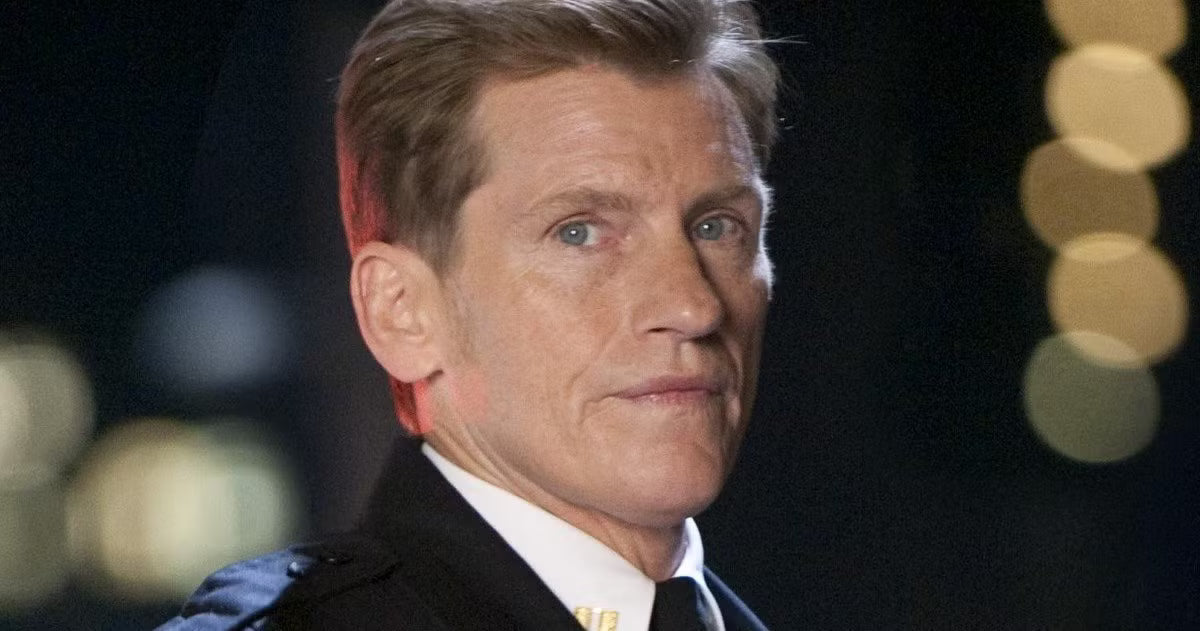
This tragedy would later inspire several film adaptations, notably in The Amazing Spider-Man, where Denis Leary plays a deeply human, protective George Stacy. His relationship with Peter — full of tension, respect and things left unsaid — remains one of the finest in the franchise.
And for anyone who loves this tragic era of the hero, our Spider-Man masks and our Spider-Man decorations pay tribute to these key moments in the web-slinger's story.
1
The clash Spider-Man fights Doctor Octopus.
2
The collapse A building comes down during the fight.
3
The sacrifice George Stacy is fatally injured saving a child.
4
The final words He tells Peter he always knew his identity, and that he is proud of him.
Captain Stacy's moral legacy: a compass for Spider-Man
The death of George Stacy does not mark the end of his influence, quite the opposite. Like Uncle Ben, he becomes a silent voice in the conscience of Peter Parker — a moral compass in a world where the line between good and evil grows blurrier by the day.

Every time Spider-Man doubts himself, every time the weight of his responsibilities crushes him, he remembers the captain's words: 'Keep doing what you believe is right, whatever it costs you.' Simple as it is, that line embodies the hero's very philosophy. It ties the police officer to the superhero through one shared idea: faith in justice, even when justice fails to save the people we love.
A tragic legacy for Gwen Stacy
For Gwen, losing her father was an irreversible wound. She holds Spider-Man responsible, unaware that behind the mask is Peter, the man she loves. That inner conflict between love and hatred makes her path even more tragic. It is this dramatic tension that would later lead to the death of Gwen Stacy — one of the most heartbreaking events in all of Marvel mythology, told in The Amazing Spider-Man #121.

George Stacy's death therefore acts as an omen. It signals the end of innocence, a shift to a darker tone in the comics, and Spider-Man's entry into an era of maturity and pain. That radical change would later inspire entire arcs of the Spider-Verse, where each version of the hero faces loss and guilt in his own way.
George Stacy across parallel universes
In some alternate realities, George Stacy survives — and sometimes becomes an active ally of the web-slinger. In the world of Spider-Gwen, for example, he works out very early that his daughter is the masked superhero and chooses to protect her rather than judge her. This version of the character overturns the original tragedy and shows that compassion can triumph over fate.
Echoes of his philosophy also turn up in modern adaptations — whether in the films of Marc Webb with Denis Leary or in recent video games where his memory hangs over Peter and Gwen. Through his wisdom, George Stacy becomes a timeless figure of quiet courage, a form of civilian heroism, a world away from superpowers yet just as essential.
To carry that tribute further, take a look at our Spider-Man costumes and our Spider-Man decorative lamps, perfect for recreating the New York atmosphere of the web-slinger's earliest adventures.
For Peter
A moral compass in his conscience, like Uncle Ben.
For Gwen
A devastating loss: she holds Spider-Man responsible.
Spider-Gwen universe
George survives and chooses to protect his masked daughter.
Adaptations
Denis Leary plays him in Marc Webb's films.
George Stacy: a figure of conscience in a world without bearings
What makes George Stacy unforgettable is his clear-sightedness. In a world where heroes wear masks and the truth hides behind appearances, he remains one of the few who sees things as they are. His kind but firm view of Peter Parker embodies the idea that courage lies not in strength but in moral integrity. In his own way, he is the perfect example of the Spider-Man philosophy: 'With great power comes great responsibility', but you still have to know how to carry that weight with dignity.
George Stacy's influence on Spider-Man culture
For more than half a century, George Stacy has been an emotional anchor in Spider-Man mythology. Whether in the films, the parallel universes or the original comics, his memory acts as a constant reminder: Peter Parker does not only fight monsters, he fights to preserve the memory of those who believed in him.

In The Amazing Spider-Man from 2012, the captain played by Denis Leary captures this duality between duty and understanding to perfection. His final scene, where he asks Peter to protect Gwen by forbidding him to go near her, remains one of the most powerful moments in the entire franchise. Even after his death, George keeps guiding Peter's choices, the symbol of a moral legacy that outlasts life itself.
An eternal symbol of sacrifice and duty
George Stacy is the very embodiment of the hero without a costume. No webs, no gadgets, no superhuman powers — just an iron will and an unshakeable faith in justice. It is that contrast that makes him so precious in the world of Spider-Man: he reminds us that true heroism lies not in abilities, but in choices. And it is precisely that message that still resonates with fans today.
The echo of an immortal captain
George Stacy is not just a name carved into the archives of the Spider-Verse: he is a metaphor for everything Peter Parker must always protect — humanity, compassion, responsibility. Even without a mask, he managed to be a lighthouse in the dark, a voice in the uproar. And if Spider-Man keeps getting back up, again and again, it is because somewhere in his memory George Stacy is still watching over him.
The hero without a costume
With no webs, gadgets or powers, George Stacy is a reminder that true heroism lies not in abilities, but in choices.

