
14-Day Money-Back Guarantee
0
The short answer
First appearing in 1964 in Strange Tales, this frustrated aircraft mechanic took on the Human Torch before he ever faced Spider-Man. Recruited by Baron Zemo into a team of fake heroes, he grew to enjoy the role and became MACH-I; Janice Lincoln would later inherit the costume. Origins, armours and legacy below.
In Spider-Man's sprawling rogue's gallery, a handful of enemies stand out for having evolved far beyond their modest beginnings. The Beetle is one of them. A gifted mechanic turned armoured criminal, Abner Jenkins started out as a second-tier opponent before reinventing himself as one of the most interesting redemption stories in the Marvel universe. From petty armoured thief to member of the Thunderbolts, his journey tells a rare truth in comics: even a villain can change. Here is the full story of the Beetle.
Abner Jenkins: the frustrated mechanic turned criminal
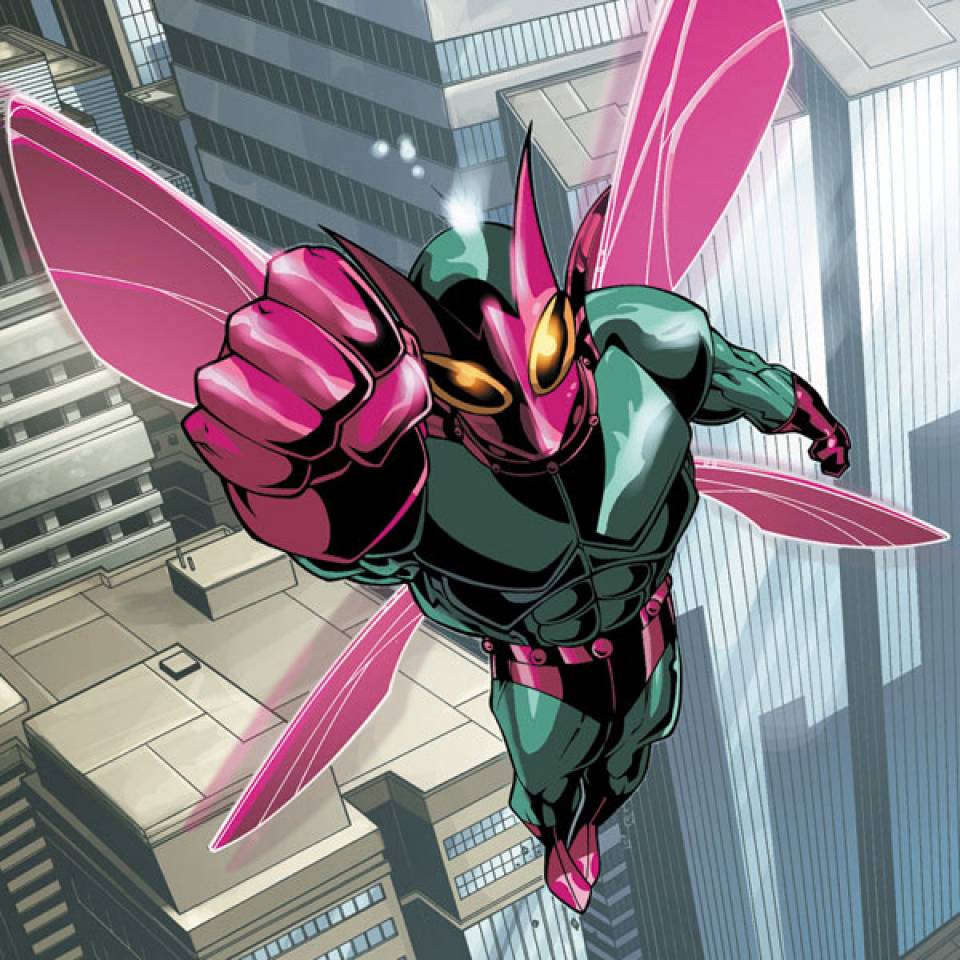
The Beetle first appeared in 1964 in the pages of Strange Tales, before becoming a recurring opponent of both Spider-Man and the Human Torch. Abner Jenkins, known as 'Abe', is an extremely talented aircraft mechanic eaten away by frustration: underpaid and underestimated, he feels his talent deserves better than a labourer's wage. That bitterness pushes him to use his technical skills to build a beetle-inspired combat suit - complete with wings, mechanical claws and an assortment of gadgets.
Like many Silver Age comic villains, Jenkins embodies a theme the Spider-Man universe holds dear: genius corrupted by social resentment. Where Peter Parker chooses responsibility despite his poverty, Abner Jenkins chooses crime to win the recognition and wealth he believes he deserves. That moral opposition makes him an interesting mirror of the web-slinger, even if he was long confined to the role of a minor adversary.
The Beetle's armour: technology in the service of crime
What defines the Beetle is his armour. Unlike villains born with innate superpowers, Abner Jenkins owes his danger entirely to his mechanical genius. His first suit, relatively crude, already gives him flight, greatly increased strength and claws capable of tearing through steel. Over the years, Jenkins never stops refining his kit, turning the beetle costume into an increasingly sophisticated war machine.
This obsession with technological improvement places the Beetle squarely in the great tradition of engineer-villains in the Marvel universe. His armour evolves so far that in certain versions it becomes a cutting-edge suit rivalling the very best technology in the Marvel Universe - foreshadowing the sophistication of suits such as the Iron Spider armour. The Beetle proves that a man with no powers, but with enough ingenuity, can stand up to the greatest heroes.

The world of armour
Spider-Man Iron Figurine
Like the Beetle, this armoured version embodies the fusion of technology and combat. A collector's figurine, ideal for fans of the high-tech armours in Spider-Man's world.
119,90 €
See the figurine
From the Sinister Six to clashes with Spider-Man
Over the course of his criminal career, the Beetle clashes again and again with Spider-Man, but also with the Human Torch, Daredevil and plenty of other heroes. His versatility makes him a sought-after recruit for the big villain coalitions. In particular he joins the line-ups spun off from the Sinister Six and various super-criminal teams, where his armour and technical genius provide valuable support.
But Abner Jenkins stays trapped in his second-tier villain status for a long time. Dangerous enough to be a problem, never quite enough to be an existential threat, he occupies that grey zone of Spider-Man's 'regular' opponents. It is precisely that modest position that makes his later transformation so remarkable: few villains starting from so low have undergone such a profound evolution. His trajectory sets him apart from other criminal armours and brings him closer to the great stories of reinvention the Spider-Man universe loves, much like the upheavals of Sinister War.
MACH: the Beetle's redemption with the Thunderbolts
The great turning point in Abner Jenkins's life comes with the Thunderbolts. When Baron Zemo puts together this team of villains posing as heroes in order to win the public's trust, the Beetle joins under a new identity: MACH-I (Mobile Armored Cyber Harness). What was only ever meant to be a masquerade would change Abner Jenkins for good.
By dint of playing the hero, Jenkins ends up enjoying it - and genuinely changing. The pretence becomes reality. He gradually gives up his criminal career to embrace heroism sincerely, climbing through the successive versions of his armour (MACH-II, MACH-III and beyond), each one marking a stage in his redemption. The Beetle thus becomes one of the finest examples of redemption in the whole Marvel universe: a villain who, by pretending to be good, becomes good for real.
That arc echoes other great redemption stories in the web-slinger's world, such as Eddie Brock becoming Anti-Venom. Abner Jenkins proves that no label is permanent in comics, and that even the most modest criminal can write a story of profound transformation.

Collector's piece
Spider-Man Bust Figurine
For collectors who appreciate characters with a rich trajectory, from Silver Age villains to redeemed heroes. A premium bust to elevate your collection.
79,90 €
See the figurine
The Beetle's legacy: a name that gets passed on
When Abner Jenkins gives up the Beetle identity for good to become a hero, the name and the armour do not disappear with him. Several characters take up the Beetle mantle over the years, carrying on the criminal legacy Jenkins left behind. The most notable is Janice Lincoln, daughter of crime boss Tombstone, who becomes a new version of the Beetle and makes her mark in the ranks of the modern Sinister Six.
Passing the name on is a recurring narrative device in the Spider-Man universe, where villain identities are handed down from one generation to the next, much as we see with the Goblin and other criminal legends. The Beetle is therefore not just a character but a genuine mantle, a criminal role that outlives those who wear it. Janice Lincoln in particular brings a new dimension to the character, blending Abner Jenkins's technological legacy with her own ambitions tied to her father's underworld.
Why the Beetle deserves rediscovering
The Beetle suffers from the image of a minor villain, but that reputation is unfair. Few characters in the Marvel universe can claim such a complete evolution: from frustrated criminal to sincere hero, taking in every shade of grey that makes the great stories so rich. Abner Jenkins's story is a reflection on redemption, on the possibility of change, and on the idea that our actions end up defining us, whatever our intentions were to begin with.
Visually, the Beetle's armour - with its wings, its insectoid design and its constant evolution - offers considerable iconographic potential, still largely untapped in adaptations. And with growing interest in the Thunderbolts within the Marvel cinematic universe, MACH / the Beetle could well enjoy a fresh surge of visibility in the years to come.
For anyone who loves characters with real psychological depth, the Beetle is an underrated gem. He is a reminder that the best stories are not always about perfect heroes or absolute villains, but about those in-between figures capable of evolving, of doubting, and sometimes of redeeming themselves. Abner Jenkins is living proof that a background villain can become one of the most human characters in the entire Spider-Man universe.

The golden age of comics
Spider-Man in Battle Comics Poster
The look of classic comics, where Spider-Man took on Silver Age villains like the Beetle. A collector's poster to celebrate that founding era of the web-slinger.
19,90 €
See the poster
Conclusion: the villain who became better
The Beetle is one of the best-kept secrets in Spider-Man's rogue's gallery. Behind the look of a second-rate armoured criminal hides one of the finest redemption arcs in the Marvel universe. Abner Jenkins, the frustrated mechanic who wanted his talent recognised, ended up finding that recognition not in crime but in heroism - by becoming, almost in spite of himself, one of the Thunderbolts.
His story proves that in Spider-Man's universe no character is fixed in their role, and that the line between villain and hero is often thinner than we think. For any fan keen to explore the lesser-known corners of the web-slinger's mythology, the Beetle is a rediscovery well worth the effort.
To carry on exploring the villains and armours of the Spider-Man universe: discover the Iron Spider armour, the peak of Spider-Man's technology, and dive into the Sinister Six, the villain coalition where the Beetle cut his teeth.

