

14-Day Money-Back Guarantee
0
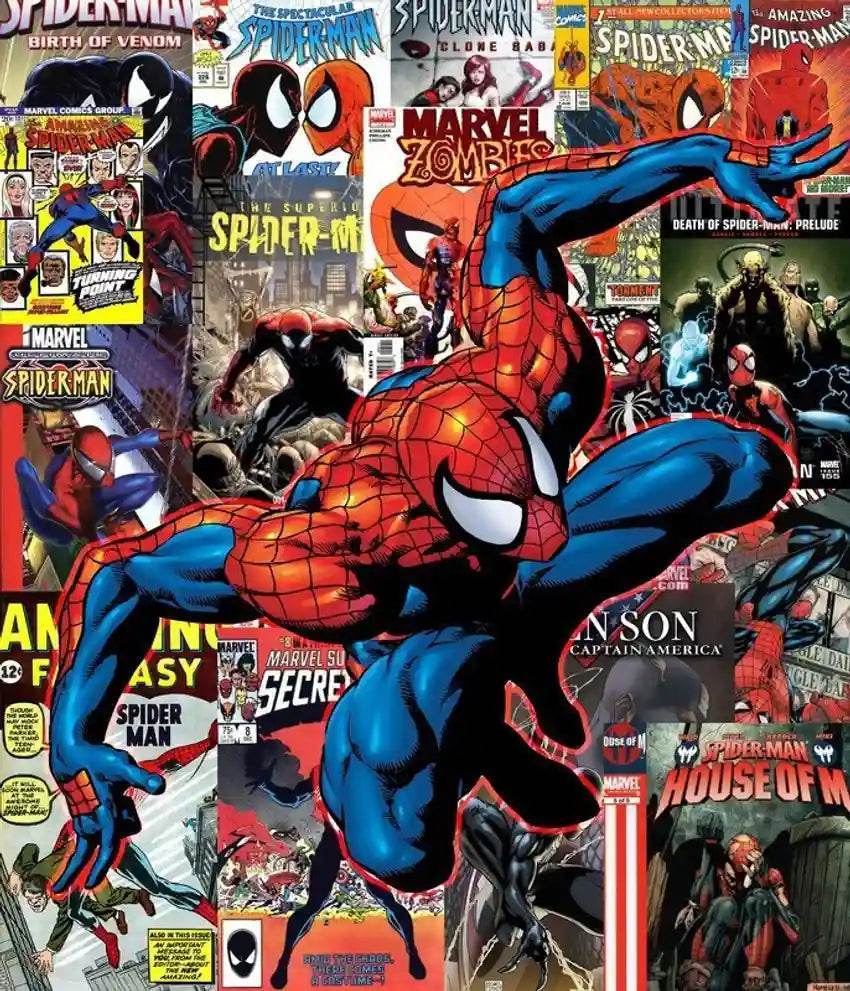
The short answer
If you are discovering the web-slinger in comics for the first time, the title to go for is Ultimate Spider-Man by Brian Michael Bendis, an origin story retold outside continuity. Readers who prefer self-contained stories will favour Kraven's Last Hunt or Spider-Man Blue. Reader profiles, major runs, French editions and budget are all covered just below.
Contents
Where to start based on your reader profileThe runs to read first (and why those ones)What order should you read Spider-Man comics in?Which format and which edition should you choose?Print or digital: where to read Spider-Man?How much does it cost to get started?The 4 beginner mistakes to avoidWhat next? How to go deeper once you have started
Sixty years of stories, thousands of issues, a dozen different Spider-Men and just as many continuities tangled together: when you want to get into Spider-Man comics, it is easy to feel dizzy. Good news — you absolutely do not need to read everything, and you do not need to start at the beginning. This guide gives you a clear entry point based on YOUR profile, the runs to read first, the reading order, the edition to choose and the budget to plan for. The goal: that you open your first Spidey comic today, without drowning.
The quick answer
For a complete beginner, the best starting point is Ultimate Spider-Man by Brian Michael Bendis: a modern reboot of the origins, with no continuity prerequisites whatsoever. If you would rather test the character with a short, complete story, pick a self-contained read such as Kraven's Last Hunt or Spider-Man Blue. Either way: you do not need 60 years of continuity to begin.
Where to start based on your reader profile
There is no single 'right' starting point, only the one that matches what you are after. Before you buy anything, work out which profile you recognise yourself in — the rest of this guide follows from that choice.
You came from the films (Raimi, MCU, Spider-Verse)
This is the most common case, and the simplest. Forget classic continuity and start with Ultimate Spider-Man or, if you loved the animated films, with the adventures of Miles Morales. These series were designed for readers discovering the character, with a contemporary tone and zero homework to catch up on.
You want the origins, in order
Are you the sort who wants to understand everything from day one? Then head back to 1962 and the legendary comic that gave birth to Spider-Man, Amazing Fantasy #15. The founding runs by Stan Lee with Steve Ditko, then John Romita Sr., lay down the whole myth: the bite, the death of Uncle Ben, and the famous lesson 'with great power comes great responsibility'. The subject is covered in more detail in The death of Spider-Man in the Ultimate universe: the arc that gave birth to Miles Morales.

Back to the origins
Spider-Man Figurine – Stan Lee
Pay tribute to the father of the web-slinger by starting with his Lee & Ditko origins. The perfect figurine for the shelf next to your first collected editions.
You want something modern, right now, with no backstory
If the idea of working back through the years puts you off, aim for a recent relaunch designed as a way in: the Marvel NOW! and Fresh Start collections, or the audacious Superior Spider-Man, in which Doctor Octopus takes control of Peter Parker's body. These series start from a clean slate, without forcing you to know what came before.
You are (or you are buying for) a young reader on a small budget
For a child, a teenager or a low-cost discovery, the Marvel-Verse collection devoted to Miles Morales is ideal: short, accessible, all-ages volumes. It is also a brilliant bridge for anyone who loved Peter B. Parker and the Spider-Verse crew on screen.
You came from the films
Ultimate Spider-Man, or Miles Morales if you loved the animated films.
You want the origins
Amazing Fantasy #15 from 1962, then the Stan Lee runs with Steve Ditko and John Romita Sr.
You want something modern
Marvel NOW!, Fresh Start or Superior Spider-Man, with no backstory to know.
A young reader
The Marvel-Verse collection devoted to Miles Morales: short, accessible, all-ages.
The runs to read first (and why those ones)
Here are the most recommended entry points. For each one, the essentials: what it is, and why it makes a good first read. I will not spoil any plots here — where a run matches a major saga we have already broken down, I point you to the dedicated article to go deeper.
Ultimate Spider-Man (Bendis & Bagley) — the modern way in
Published from 2000 onwards, this reboot tells Peter Parker's origins in a parallel universe, with contemporary writing and zero prerequisites. It is THE title most booksellers and fans recommend to a newcomer. Long but addictive, it is best devoured in a collected edition. Bonus: this is also the universe where Miles Morales will later appear.

The modern way in
Spider-Man Figurine – Miles Morales
The hero who brought a whole generation into comics. The ideal figurine to sit alongside your reading of Ultimate Spider-Man and the Spider-Verse.
Lee & Ditko then Lee & Romita Sr. — the founding golden age
If you take the origins route, know that the very first years read in two stages. The Stan Lee & Steve Ditko period (1962-1966) invents the character, his gallery of villains — Green Goblin, Doctor Octopus, Vulture, Sandman — and the revolutionary idea of a teenage superhero loaded with problems. Then John Romita Sr. picks up the pencil (1966-1972) and tips Spider-Man into adulthood: the arrival of Mary Jane, the romance with Gwen Stacy, and the soap-opera tone that would become the web-slinger's trademark. It is this period that explains why Spider-Man is not only an action hero, but a human serial above all. An excellent entry point for anyone who likes watching a character grow page after page.
Michelinie & McFarlane — the Venom way in
In the late 1980s, the duo introduced Venom and set the visual style that would define the modern Spider-Man. If you came to the character through the Venom films, this is a natural way in — a chance to understand the tragic bond between Eddie Brock and Peter Parker. The symbiote itself turns up a little earlier, in the Alien Costume Saga.

The mainstream way in
Spider-Man Figurine – Venom
The enemy who tipped millions of fans into comics. An essential piece for anyone discovering Spider-Man through the McFarlane era.
JMS, Slott & the modern era
J. Michael Straczynski's run (2001-2007) gives you an adult Peter and a rare emotional depth — an excellent 'prestige' starting point. Then Dan Slott takes over and delivers one of the most central runs of the modern era, from Big Time to Superior. Another editorial reboot built for newcomers: Brand New Day, followed by The Gauntlet and Grim Hunt, which parade the whole rogues' gallery past you.
Miles Morales & the Spider-Verse — the generational way in
If the animated films won you over, dive straight into the Spider-Verse arc which brings together every version of the web-slinger, or discover Miguel O'Hara, the Spider-Man 2099. These stories are self-contained, spectacular, and perfect for carrying the emotion of the cinema over onto the page.
The self-contained stories to try first
If you just want to 'taste' Spider-Man without committing to a 100-issue run, nothing beats a short, complete story. Kraven's Last Hunt is regularly cited as the finest Spidey story of all time; Spider-Man Blue, by Jeph Loeb and Tim Sale, is a devastating emotional dive. Two one-shots that are perfect for a very first read, with no prerequisites at all. To gauge the emotional scale of the character before you start, have a look too at our pick of the saddest moments in Spider-Man's history.
| Run | Era | Why read it |
|---|---|---|
| Ultimate Spider-Man (Bendis & Bagley) | From 2000 onwards | Modern origins, zero prerequisites |
| Lee & Ditko | 1962-1966 | Invents the hero and his villains |
| Lee & Romita Sr. | 1966-1972 | Mary Jane, Gwen Stacy, soap-opera tone |
| Michelinie & McFarlane | Late 1980s | Venom arrives, modern style |
| J. Michael Straczynski | 2001-2007 | Adult Peter, emotional depth |
| Dan Slott | From Big Time to Superior | The central run of the modern era |
| Kraven's Last Hunt and Spider-Man Blue | Complete stories | One-shots with no prerequisites at all |
What order should you read Spider-Man comics in?
The question that worries every beginner. The truth is that there is no single compulsory order: Spider-Man is not a serial you have to follow issue by issue since 1962. Here are two approaches, depending on your temperament.
| The 'beginner comfort' approach (recommended) | The 'chronological purist' approach |
| 1. A self-contained story (Kraven's Last Hunt or Spider-Man Blue) | 1. Amazing Fantasy #15 + Amazing Spider-Man by Lee/Ditko |
| 2. A complete modern run (Ultimate or Superior) | 2. The Lee/Romita era, then the 1980s (McFarlane, Venom) |
| 3. A big event once you are comfortable (Spider-Verse) | 3. The major sagas decade by decade via the collected editions |
Be careful not to confuse the order of the comics with that of the adaptations: if you are trying to find your way around on screen, that is another subject, covered in our chronological order of every Spider-Man animated series. And for the exhaustive map of the printed sagas, era by era, keep our reference page on every Spider-Man story arc.
Which format and which edition should you choose?
In France, Spider-Man is published by Panini Comics across several collections. Choosing the right format saves you from paying over the odds or ending up with incomplete volumes. Here is how to find your way around.
| Format | Who it is for | Ideal for |
| Marvel Must-Have | The complete beginner | Complete, self-contained stories at a low price (Blue, Spider-Verse…) |
| Marvel-Verse | Young readers | All-ages volumes, light format (Miles Morales…) |
| Marvel Omnibus | The committed reader | Devouring a whole run in one go (Ultimate Spider-Man) |
| L'Intégrale | The completist | Following the continuity year by year from 1962 |
In short: start with a Marvel Must-Have, the beginner's format par excellence. If the character grabs you, move up to an Omnibus to take on a complete run. L'Intégrale, meanwhile, is a collector's commitment — gorgeous, but one to save for later.
Print or digital: where to read Spider-Man?
Even before you choose a format, one question comes up: read on paper or on screen? Both have their advantages, and nothing stops you mixing the two. Digital, through a subscription service such as Marvel Unlimited, gives access to thousands of issues for a fixed monthly fee: ideal for exploring without spending a fortune, trying plenty of runs and making up your mind before you buy. The flip side is that the catalogue is mostly in English and that nothing replaces the feel of a beautiful album in your hands.
Print, for its part, remains the benchmark for the French-speaking reader: the Panini editions translate and gather the stories into carefully made volumes, easy to follow and to collect. My advice for a beginner: start on paper with a Marvel Must-Have, and you will get a clean French translation and an object you will keep. If you turn into a reading glutton, top it up with a digital subscription to devour the runs Panini has not yet published in French.
Digital
Marvel Unlimited gives access to thousands of issues for a fixed monthly fee, mostly in English.
The Panini editions translate and gather the stories into carefully made volumes.
The beginner's advice
Start with a Marvel Must-Have in French, then top up with digital.
How much does it cost to get started?
Good news: getting into Spider-Man comics will not ruin anyone. It all depends on the level of commitment you are aiming for. The discovery tier comes in under €20: a single self-contained Marvel Must-Have is enough to tell you whether you are hooked. The commitment tier, around €40 to €60, gets you an Omnibus or a complete collected edition — enough to fill several evenings of reading. Finally, the collection tier means following the collected editions year by year: that is a regular budget, but you build a library that spans the decades. My advice: never jump straight to the collection tier. Test the water cheaply first, and you will refine your tastes before you invest.
The 4 beginner mistakes to avoid
The first mistake, the most classic of all, is wanting to read everything in chronological order from 1962. That is the completist's trap: you exhaust yourself before you even reach the modern stories. Start with what appeals to you, and the continuity will come naturally.
The second: starting with a complex multi-title event such as the Clone Saga or Maximum Carnage. These are excellent stories, but they assume you already know the characters. Save them for when you are comfortable.
The third: confusing the continuity of the comics with that of the films. The two tell different versions of the character. Do not try to make what you saw at the cinema line up with what you read. And the fourth: ignoring the self-contained stories, which are in fact the best ways in. A one-shot such as Kraven's Last Hunt will teach you more about Spider-Man's soul than ten issues picked at random.
What next? How to go deeper once you have started
Once your first run is finished, you will want to explore the great sagas that shaped the character. The best approach is to start from our complete encyclopaedia — every Spider-Man story arc, sorted by era from 1962 to today — and pick out the stories that appeal to you. Among the essentials to read next: One More Day, the controversial reset that turned Peter's life upside down, and Spider-Man: Life Story, which condenses an entire life of the hero into a single story.
To go wider still, you can browse the biggest Spider-Man events, have fun with the wildest What If…? comics, or understand why Spider-Man literally saved Marvel. And if you then want to navigate the countless versions of the web-slinger, our guide to understanding the Spider-Man multiverse opens every door.
One More Day
The controversial reset that turned Peter's life upside down.
Spider-Man: Life Story
An entire life of the hero condensed into a single story.
What If…? and the multiverse
To explore the wildest versions of the web-slinger.
FAQ — Where to start with Spider-Man comics
What is THE first Spider-Man comic to read?
For a complete beginner, Bendis's Ultimate Spider-Man is the safest choice: modern origins, no prerequisites. If you want to test the water with a single complete story, get the Marvel Must-Have of Kraven's Last Hunt or of Spider-Man Blue.
Do you have to read the comics in chronological order?
No, and it is actually not advised for a beginner. Spider-Man lends itself very well to reading run by run or story by story. The full continuity only matters if you become a completist — and that is exactly what the Panini collected editions are for.
Which Spider-Man omnibus should you choose to start?
The Ultimate Spider-Man Omnibus is the best modern entry point in a single volume. If you prefer the action of the classic origins, an Omnibus of the Lee/Ditko runs will do the job too. For a first purchase at a low price, stick with a Marvel Must-Have.
Where should I start if I came from the Spider-Verse films?
Straight in with Miles Morales (the Marvel-Verse collection or Ultimate Comics Spider-Man) and with the Spider-Verse arc. These are self-contained stories, in the direct line of what you loved at the cinema.
How many comics does it take to understand Spider-Man?
A single well-chosen one is enough. A self-contained story such as Kraven's Last Hunt lets you grasp the essence of the character in one read. There is no need to pile them up: the quality of the entry point matters far more than the quantity.
Where can you buy Spider-Man comics in French?
In specialist comic shops, in general bookshops (the graphic novel and comics section), and of course online. The Panini editions are available everywhere; look for the collection name (Must-Have, Omnibus, Intégrale) to know exactly what a volume contains before you buy.
Do you need to have read other Marvel series before Spider-Man?
Absolutely not. Spider-Man is one of the most self-contained characters at Marvel: his best stories make sense without knowing the Avengers or the X-Men. You will bump into other heroes now and then in a crossover, but never to the point of needing to catch up first. That is exactly what makes Spider-Man the ideal entry point into the whole Marvel universe: you can read him on his own, without having to open ten other series alongside to follow it all.
The first comic
Bendis's Ultimate Spider-Man, or a Marvel Must-Have of Kraven's Last Hunt or Spider-Man Blue.
Chronological order
Not advised for a beginner: read run by run or story by story.
Coming from the Spider-Verse
Miles Morales (Marvel-Verse or Ultimate Comics Spider-Man) and the Spider-Verse arc.
Other Marvel series
Not needed: Spider-Man reads on his own, without the Avengers or the X-Men.

