
14-Day Money-Back Guarantee
0
The short answer
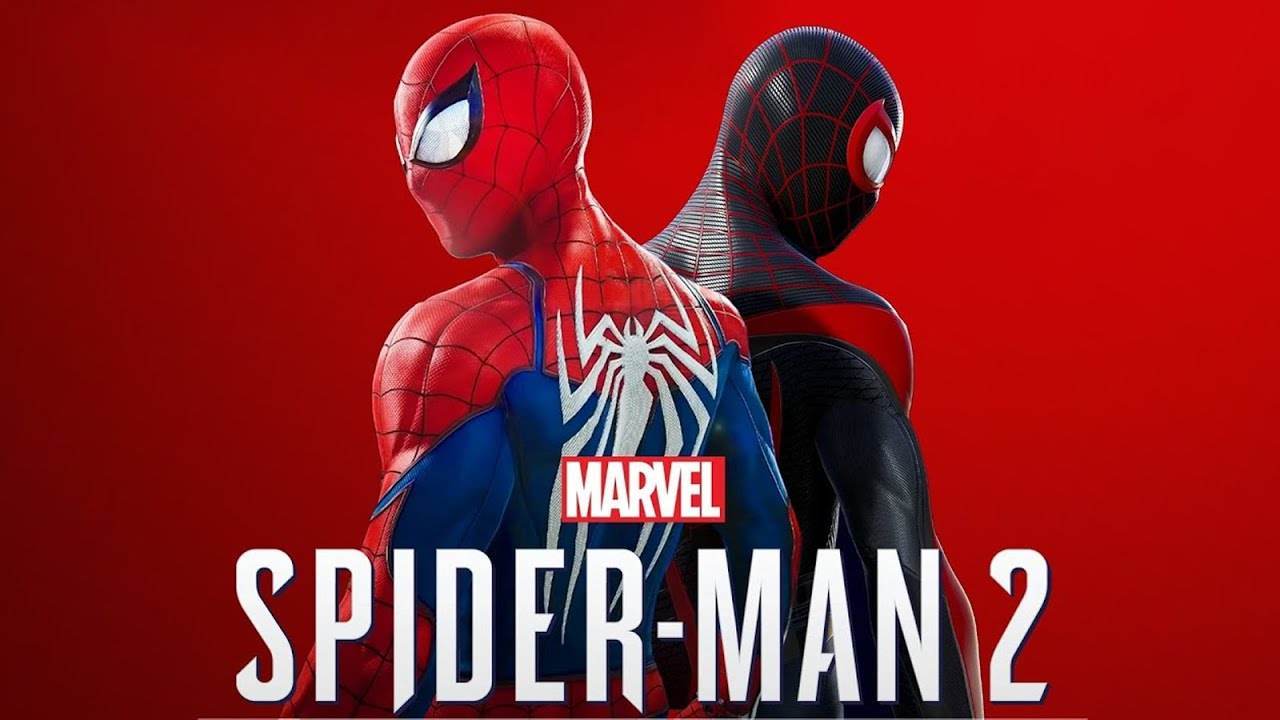
An Insomniac-made PS5 exclusive, this one lets you switch between Peter Parker and Miles Morales almost instantly thanks to the SSD, across a map extended to Brooklyn and Queens. The symbiote and the new parry rework every fight. We break down the technical and narrative changes below.
Contents
The Genesis of a Long-Awaited Sequel: From PS4 to PS5Two Spider-Men, Two Play Styles: Peter Parker and Miles Morales TogetherVenom: The Antagonist Who Lifts the Whole GameThe Ultimate Web-Swinging: Moving Through the Biggest New York Ever CreatedThe Cultural Impact and Legacy of Marvel's Spider-Man 2Marvel's Spider-Man 2 in the Lineage of the Great Spider-Man Games
In October 2023, Insomniac Games delivered what millions of players had been waiting five years for: the direct sequel to Marvel's Spider-Man from 2018 on PS4 which redefined the superhero game. Marvel's Spider-Man 2 on PlayStation 5 did not simply patch up its predecessor's weaknesses, it pushed back the limits of what a Spider-Man game could offer. Two playable heroes, a New York doubled in size, a mythic antagonist in the shape of Venom and storytelling worthy of the best comics in the complete saga of the web-slinger: the mix won over ten million players in under two months, an absolute record for a PlayStation exclusive. But beyond the sales figures, it is the depth of the experience that deserves unpicking. This article gives you the complete analysis of everything that makes Marvel's Spider-Man 2 the best Spider-Man game ever created, from the technical revolutions to the bold narrative choices that marked the history of the superhero video game.

The Genesis of a Long-Awaited Sequel: From PS4 to PS5
To understand the scale of Marvel's Spider-Man 2, you have to go back to Insomniac Games' journey through the web-slinger's universe. It all started long before the PS4: as early as 1982 on the Atari 2600, Spider-Man was already climbing walls in a primitive but foundational video game. The following decades brought landmark titles such as the Spider-Man 2 from 2004 on PS2 and its revolutionary web-swinging. But it was Insomniac that transformed the genre in 2018 with a first PS4 instalment acclaimed by critics, followed in 2020 by Marvel's Spider-Man: Miles Morales, a shorter episode centred on the young hero of the Spider-Verse.
When Sony and Insomniac announced Marvel's Spider-Man 2 at a PlayStation Showcase in September 2021, the reaction was instant. The teaser showed Peter Parker and Miles Morales fighting side by side, with a thunderous appearance from Venom, voiced by Tony Todd, the legendary Candyman actor. The promise was clear: two playable Spider-Men, a world-class villain and the power of the PS5 fully exploited. The studio had five years of experience with the game engine behind it, a team grown to more than three hundred developers and a budget never before seen for a Spider-Man game. The ambition was to create not a simple sequel but the definitive action-adventure game of the PS5 generation, the one that would justify buying the console all on its own.
The PlayStation 5 technical gamble
The PlayStation 5 and its ultra-fast SSD let Insomniac realise a vision that was impossible on the previous generation. Loading times have been cut to virtually zero: switching from Peter to Miles happens in real time, with no transition screen, which was a major technical feat. The New York map has been enlarged to take in Brooklyn and Queens on top of Manhattan, doubling the playable surface compared with the first instalment. This geographical extension was not a cosmetic add-on: every borough has its own architectural identity, its contextual side missions and residents who react differently to Peter or Miles depending on their local reputation. Real-time ray tracing, the reflections on the New York skyscrapers and the density of the crowds have created a New York more believable than in any previous game, turning every web-swinging session into a striking visual experience.


1
1982 on the Atari 2600 Spider-Man was already climbing walls in a foundational game.
2
2004 on PS2 Spider-Man 2 and its revolutionary web-swinging.
3
2018 and 2020 Insomniac's first PS4 instalment, then Miles Morales.
4
September 2021 Marvel's Spider-Man 2 announced at a PlayStation Showcase.
Two Spider-Men, Two Play Styles: Peter Parker and Miles Morales Together
Insomniac's boldest decision was to offer two fully playable protagonists, each with their own skill tree, exclusive gadgets and combat philosophy. Peter Parker, the seasoned hero fans have known since his origins in the comics, has mechanical arms inspired by the Iron Spider suit and, later in the game, the black symbiote that multiplies his raw power. Miles Morales keeps his bio-electric powers and his camouflage ability, offering a stealthier, more strategic approach to combat. The player can switch between the two heroes at any time outside scripted missions, which invites constant experimenting with fighting styles.
This duality is not just a mechanical gimmick: it carries the whole story. Peter, weighed down by his responsibilities as a mentor, as Mary Jane's partner and as a scientist, has to face the temptation of the symbiote that promises him strength without the exhaustion. Miles, now a fully fledged Spider-Man after the events of his solo game, is trying to prove he deserves his place out of Peter's shadow. Their dynamic recalls the best duos in the Spider-Man universe, the one from the complete universe of characters that the comics took decades to build. The game manages to give both heroes equal screen time while keeping a constant dramatic tension between them, culminating in a brotherly confrontation in the third act that ranks among the most intense moments in narrative gaming.
The combat system reinvented
While the first Marvel's Spider-Man borrowed heavily from the Freeflow system of the Batman Arkham series, this sequel has found its own identity. Combat in Marvel's Spider-Man 2 is faster, more vertical and more spectacular thanks to three major innovations. The first is the parry system, which replaces the automatic dodge with precise timing that rewards aggressive players. The second is Peter's symbiote abilities: black tendrils that grab several enemies at once, devastating area attacks and a rising fury that turns fights into magnificent chaos. The third is the evolution of Miles's Venom powers (not to be confused with the character Venom), whose bio-electric attacks create chain reactions between enemies. The powers of Spider-Man have never been so well captured in a video game, with each unlocked skill offering new tactical possibilities that enrich the fighting right up to the final hours.

Since we are talking about the PS5 that will make every web-swinging session across Manhattan look sublime, you might as well give it a shell worthy of the experience. The official Marvel's Spider-Man 2 faceplate turns your console into a collector's piece, with the game logo engraved on a finish that recalls Peter Parker's symbiote suit. Not just an accessory, an extension of the adventure right onto your TV unit.
Discover the faceplate that turns your PS5 into a Spider-Man artefactPeter Parker
Mechanical arms inspired by the Iron Spider, then the black symbiote that multiplies his raw power.
Miles Morales
Bio-electric powers and camouflage for a stealthier, more strategic approach.
Venom: The Antagonist Who Lifts the Whole Game
Among the most powerful enemies of Spider-Man, Venom holds a place of his own. Insomniac understood that and made him far more than a simple end boss: Venom is the emotional heart of the game. The story opens with the return of Harry Osborn, Peter's best friend, cured of a terminal illness thanks to a mysterious alien treatment. That treatment is none other than the symbiote, an extraterrestrial entity that passes through Peter first before bonding permanently with Harry to give birth to Venom. This deeply personal origin sets Insomniac's Venom apart from all his previous incarnations: he is not a monster fallen from the sky, he is the result of a broken friendship, of badly handled grief and of a scientific obsession.

Tony Todd delivers a terrifying vocal performance that gives the character an oppressive physical presence, even in the calmest cutscenes. The Venom of Marvel's Spider-Man 2 is massive, brutal and intelligent. His boss fights are among the most spectacular in the history of action gaming: the final battle on the hospital roof, in a New York overrun by symbiote tendrils, demands that the player master the abilities of both Spider-Men. The Venom threat literally contaminates the game map, turning whole districts into hostile zones coated in alien biomass, recalling the best comic arcs such as Maximum Carnage or the complete saga of the iconic villains of Spider-Man.
Kraven the Hunter: the second masterful villain
While Venom steals the show in the final third, Kraven the Hunter dominates the first half of the game with rare intensity. Sergei Kravinoff lands in New York with an army of mercenaries and a single goal: to find prey worthy of him for his last fight. This Kraven is a dying predator, suffering from terminal cancer, chasing the glory of one final clash with a superhuman opponent. He methodically hunts down the city's supervillains, beating Scorpion, capturing the Lizard and challenging Venom himself. Kraven's arc introduces a theme rarely explored in Spider-Man games: the mortality of the hunter set against the immortality of the hero. His tracking missions in Central Park and his hunting camps scattered across the city deliver some of the tensest stealth sequences in the game, a reminder that the Spider-Man universe is not limited to spectacular fights but also excels at the psychological tension that the legendary suits of the web-slinger have symbolised across the eras.

A deeply personal Venom
Harry Osborn, cured thanks to the symbiote, bonds with it: Venom is born of a broken friendship, badly handled grief and a scientific obsession.
The Ultimate Web-Swinging: Moving Through the Biggest New York Ever Created
Ever since the legendary Spider-Man 2 of 2004 on PS2, every Spider-Man game has been judged on the quality of its web-swinging. Marvel's Spider-Man 2 crushes the competition by adding the web wings, a mechanic borrowed from the Web Wings suit in the comics. These wings let the player glide at high speed between skyscrapers, surf the thermal currents rising from the New York streets and cover enormous distances without touching the ground. Combined with classic swinging, quick web-shots and the new air dash, they turn every journey into an exhilarating piece of choreography. The map extended to Brooklyn and Queens finally gives players an arena worthy of those mechanics: the bridges between the boroughs, the low residential areas that force you to adapt your style and the Manhattan skyscrapers that act as natural launch ramps create a variety of traversal that neither the Spider-Man figures nor the films had managed to capture with such fluidity.
Speed is the watchword of this sequel. Insomniac stated that the PS5's SSD allowed them to double the maximum travel speed compared with the first instalment. The result is palpable: Spider-Man tears through the streets at a dizzying pace, buildings stream past in controlled motion blur and the city renders with no visible pop-in. This technical feat directly serves the gameplay, since some timed missions demand perfect mastery of the transitions between swing, glide and dash to hit objectives within tight windows. The sense of absolute freedom that movement in Marvel's Spider-Man 2 delivers remains unmatched in the genre, surpassing even the sensations offered by the Spider-Man web-shooters that make children dream in the real world.
A living, reactive New York
Beyond the size of the map, it is the density of content that impresses. The New York of Marvel's Spider-Man 2 holds hundreds of side activities spread across FNSM missions (Miles's heroic foundation), enemy bases to infiltrate, symbiote nests to purge, Kraven hunter challenges to complete and random events that flare up while you explore. Every borough tells a story: Harlem remains Miles's turf and its residents greet him as their local hero, while the Financial District still carries the scars of the fight against Mister Negative from the first game. The Mary Jane missions, often criticised in the first instalment for their slow pace, have been completely rethought: MJ now has an alien taser and far more dynamic stealth gameplay. The open world of Marvel's Spider-Man 2 proves that a Spider-Man game can offer as much narrative depth as an RPG while keeping the frantic action that is the hallmark of the web-slinger in all his incarnations, from toys to merchandise and on to video games.
After facing Venom in that epic battle on the rooftops of New York, it is hard not to want to keep that symbiote energy in your daily life. The PS5 faceplate Spider-Man Venom captures the character's dark duality perfectly, with a design that recalls every second of tension in the final act. Enough to turn every console start-up into a thrill worthy of the last boss.
See the Venom faceplate that gives your PS5 the aura of the symbioteWeb wings
Glide at high speed between skyscrapers and surf the thermal currents.
Extended map
Brooklyn and Queens are added, with bridges and low residential areas.
Speed doubled
The PS5's SSD doubles the maximum speed compared with the first instalment.
The Cultural Impact and Legacy of Marvel's Spider-Man 2
With more than ten million copies sold in under sixty days, Marvel's Spider-Man 2 became the fastest-selling PlayStation Studios game in history at the time of its release. That commercial success came with unanimous critical acclaim: near-perfect scores in the specialist press worldwide, Game of the Year honours at numerous ceremonies and a fan community still creating content around the game months after launch. But the impact of Marvel's Spider-Man 2 goes beyond video games. It proved that superhero games could rival the best Marvel films for emotional storytelling, redefining what audiences expect from comic adaptations. Insomniac's approach, which treats Spider-Man with the same respect as the most acclaimed Spider-Man films, has opened the way to a new era where the video game is seen as a legitimate medium for telling superhero stories.

The game also had a major impact on representation in video games. Miles Morales, a Puerto Rican and African American hero, shares top billing equally with Peter Parker, never demoted to sidekick. The themes running through his arc, school pressure, grieving his father, the search for identity in a mentor's shadow, speak to a whole generation of players who recognise themselves in this Spider-Man of the Multiverse. In the same way, the character of Hailey Cooper, Miles's deaf best friend, is portrayed with an authenticity praised by the deaf and hard-of-hearing community. Insomniac worked with specialist consultants to make sure the American Sign Language used in the game was grammatically correct and emotionally expressive, a level of care that reflects the studio's commitment to respectful representation.
The suits: an interactive museum of the web-slinger
Marvel's Spider-Man 2 offers more than sixty-five unlockable suits for Peter and Miles combined, making up the largest collection of Spider-Man outfits ever gathered in a single game. From the iconic black symbiote suit to the Spider-Punk suit with its coloured mohawk, by way of the futuristic 2099 suit and the classic Scarlet Spider suit, every outfit is modelled with an obsessive eye for detail that our guide to the best Spider-Man PS5 suits covers in depth. Some suits even trigger specific NPC dialogue, such as the residents of Harlem commenting on Miles's new look or J. Jonah Jameson tearing into Peter's black suit on his podcast. This virtual wardrobe makes you want to explore the whole of the history of Spider-Man through its outfits, with each suit telling a chapter of the character's mythology. And for fans who want to wear this universe every day, the Spider-Man T-shirts offer designs inspired by those same iconic suits.

A record-breaking success
More than ten million copies sold in under sixty days: the fastest-selling PlayStation Studios game at its release.
Marvel's Spider-Man 2 in the Lineage of the Great Spider-Man Games
Marvel's Spider-Man 2 does not exist in a vacuum: it is the heir to forty years of the web-slinger's gaming history. If the first Spider-Man game on the Atari 2600 in 1982 laid the foundations by proving a superhero could work in a video game, and if Spider-Man 2 on PS2 in 2004 invented open-world web-swinging, the Marvel's Spider-Man 2 of 2023 represents the culmination of all those innovations. It takes the best of the PS2's physical gameplay, the narrative depth of the first Insomniac game and the raw power of the PS5 to create a perfect synthesis. The game even nods to its predecessors with a wink: one Easter egg shows a player on the New York underground holding a handheld console with a retro Spider-Man game on screen, an open salute to the hero's 8-bit origins. This awareness of its own lineage makes Marvel's Spider-Man 2 not a simple game but the high point of a gaming saga that has accompanied three generations of players, a masterful trajectory retraced in our complete timeline of every Spider-Man video game. To go further on this subject, see also Spider-Man: Shattered Dimensions — the cult game that brought together 4 universes of the web-slinger.
The question every fan is now asking concerns the future. Insomniac planted major clues for a third instalment: the post-credits scene shows Cindy Moon discovering her spider powers, while Norman Osborn contemplates a mysterious green helmet in his secret laboratory, foreshadowing the arrival of the Green Goblin. The studio has also hinted that the next game could explore the multiverse further, potentially connecting the game universe to the film saga of the Spider-Verse. While we wait for that inevitable sequel, Marvel's Spider-Man 2 remains a monument of modern gaming, a title that deserves its place in the conversation alongside the best action-adventure games of all time.
The Spider-Man ecosystem beyond the game
The Marvel's Spider-Man 2 phenomenon has radiated far beyond the controller. Sales of Spider-Man PS5 faceplates exploded as soon as the game was announced, with fans wanting to personalise their console in their hero's colours. The Spider-Man posters reproducing the game's iconic scenes adorn players' walls, while the figures of the Insomniac versions of Peter and Miles are among the most sought-after on the market. The universe created by the Californian studio has become so popular that it now influences the comics themselves, with Marvel folding elements of the Insomniac design into some recent series. For day-one fans and newcomers alike, this ecosystem offers a thousand ways to extend the adventure: wearing a Spider-Man costume inspired by the game's symbiote suit, decorating your room with Spider-Man lamps that recall the night-time mood of New York, or slipping your things into a Spider-Man backpack in the web-slinger's colours. As Peter Parker puts it so well in the game, being Spider-Man is not a suit you put on, it is a way of life, and Spider-Man merchandise let you live that philosophy every day.
Marvel's Spider-Man 2 on PS5 is not simply the best Spider-Man game ever created: it is living proof that forty years of iteration, passion and technical innovation can produce a work that transcends its medium. From the first pixel on the Atari in 1982 to this gigantic New York made possible by the PS5, the web-slinger's path through gaming tells the story of video games themselves. And if you are looking to extend this heroic adventure into your everyday life, the guides and advice section of our shop is packed with ideas for weaving the Spider-Man universe into every aspect of your life, whether you are a die-hard gamer, a passionate collector or simply a fan of the greatest superhero of all time.
1
Atari 2600 in 1982 A superhero can work in a video game.
2
PS2 in 2004 The invention of open-world web-swinging.
3
PS5 in 2023 Marvel's Spider-Man 2, the culmination of all those innovations.

