
14-Day Money-Back Guarantee
0
The short answer
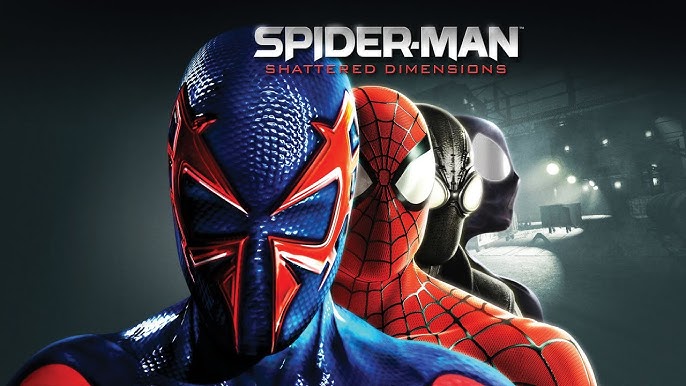
It all starts with the Tablet of Order and Chaos, shattered by Mysterio: Madame Web then summons four versions of the hero, Amazing, 2099, Noir and Ultimate, each with its own gameplay, from stealth to symbiote rage. We break down the dimensions and villains below.
Contents
The brilliant concept: four dimensions, four Spider-MenEach dimension, its own world and style of playA rogues' gallery completely reimaginedThe missing link to Into the Spider-VerseA cult following that reaches far beyond one countryIts place in the history of Spider-Man gamesShould you (re)discover Shattered Dimensions today?
Long before Into the Spider-Verse blew the idea of a spider multiverse wide open on the big screen, one video game had already dared to bring four Spider-Men from four different realities together in a single adventure. Released in 2010, Spider-Man: Shattered Dimensions remains one of the boldest and best-loved games ever made about the web-slinger — a visionary concept, four radically opposed styles of play, and an art direction that marked a whole generation of players. Fifteen years on, it still enjoys cult status. Here is the full story of this overlooked masterpiece: its brilliant concept, its dimensions, its villains, and the huge place it occupies in the history of Spider-Man in video games.
The brilliant concept: four dimensions, four Spider-Men
It all begins with a mystical artefact, the Tablet of Order and Chaos, smashed to pieces by Mysterio. Each fragment scatters into a different dimension of the multiverse, threatening to destabilise reality itself. To repair the damage, the enigmatic Madame Web calls on not one but four Spider-Men, each from a distinct universe. You play each of these four versions in turn to recover the fragments before they fall into the wrong hands.
The idea is brilliantly simple: instead of offering a single hero, the game gives you four, with completely different gameplay, moods and aesthetics. That variety made its reputation, and it is what still makes it so singular within the long history of the web-slinger's video game adaptations. Where most games commit to one identity, Shattered Dimensions celebrates the character's infinite richness.
One shattered tablet, four heroes
Mysterio shatters the Tablet of Order and Chaos; Madame Web calls on four Spider-Men from distinct universes to recover the fragments.
Each dimension, its own world and style of play
The Amazing Spider-Man is the classic, colourful version everyone knows: fast action, quips full of humour, acrobatic fights across New York. It is the game's familiar way in, faithful to the spirit of the original comics.
Spider-Man 2099, Miguel O'Hara, drops you into a dizzying cyberpunk future. His free-fall sequences through the skyscrapers of Nueva York are among the most spectacular in the game. This futuristic version, since turned into a big-screen star, is covered in our profile of Miguel O'Hara, the anti-hero of the future.

The futuristic version
Spider-Man 2099 Figure
Miguel O'Hara, one of the stars of Shattered Dimensions, as a collector's figure — the futuristic design that stayed with players.
79,90 €View the figure
Spider-Man Noir turns the game into a pure stealth thriller. In a 1930s New York drenched in shadow and rain, this Spider-Man hunts his enemies in silence, striking from the dark. An atmosphere that fans of Spider-Man Noir, the 1930s detective particularly savour.

The 1930s mood
Spider-Man Noir Articulated Figure
The trench-coated vigilante from the game's stealth levels, as an articulated figure. The cult piece of the Noir dimension.
54,90 €View the figure
The Ultimate Spider-Man, finally, wears the famous black symbiote suit. More brutal, more full of rage, he draws his strength from the alien costume — a direct nod to the toxic relationship between the hero and the symbiote, which we explore in our feature on Spider-Man and the symbiote.
Amazing
The classic, colourful version: fast action, humour, acrobatic fights in New York.
2099
Miguel O'Hara in a cyberpunk future, free-falling through Nueva York.
Noir
A stealth thriller set in a 1930s New York.
Ultimate
Black symbiote suit, a more brutal, rage-driven style.
A rogues' gallery completely reimagined
The game's other great success is the way it reinvents the web-slinger's most iconic enemies by adapting them to each dimension. Mysterio, the instigator of the chaos, runs through the whole game. But each universe has its own adversaries: Kraven the Hunter hunts the Amazing Spider-Man through an urban jungle, while alternative versions of Hammerhead, Hobgoblin, Silver Sable and Juggernaut populate the other dimensions.

The high point is unquestionably the clash between the Ultimate Spider-Man and Carnage, the symbiote's bloodthirsty offspring: a fight of rare intensity, where the black suit's rage answers the pure madness of the scarlet killer. This rereading of the villains let the game deliver a variety of memorable bosses, each designed to play to the strengths of the Spider-Man facing him.

The symbiote suit
Spider-Man Black Suit Figure
The dark look of the Ultimate version, the one that faces Carnage in the game. The most coveted design in Shattered Dimensions.
59,90 €View the figure
Villains tailored to each dimension
Mysterio runs through the whole game; the high point remains the fight between the Ultimate Spider-Man and Carnage.
The missing link to Into the Spider-Verse
Looking back, Shattered Dimensions stands out as a genuine forerunner. Eight years before Into the Spider-Verse revolutionised animated cinema, the game was already laying the foundations of what would become the web-slinger's winning formula: letting several versions of the hero coexist, each with its own personality and visual style. It is the same instinct that runs today through Across the Spider-Verse and the whole modern mythology of the character.
This is no accident: the idea that several Spider-Men can exist at the same time stems from the notion of Spider-Totems, the mystical concept linking every bearer of the spider's power across the multiverse. Shattered Dimensions managed to turn that idea into a playable experience long before the wider public took hold of it. That is what makes it, in hindsight, a work of astonishing modernity.
A forerunner of the Spider-Verse
Eight years before Into the Spider-Verse, the game already had several versions of the hero coexisting, each with its own visual style.
A cult following that reaches far beyond one country
Fifteen years after its release, Shattered Dimensions has lost none of its aura — and the phenomenon is anything but local. All across Europe, fan communities keep the flame alive, and each has its favourite among the four. Spider-Man Noir, with his gothic look and his 1930s film atmosphere, fascinates German-speaking fans in particular: he is a figure that German collectors actively seek out, much like the place he holds among the figures offered on shop-spiderman.de.
Spider-Man 2099, for his part, enjoys considerable popularity in Spanish-speaking countries, where his name — Miguel O'Hara, a hero of Latino origin — resonates especially strongly; an attachment well reflected by the range on offer at the Spanish web-slinger shop, tienda-spiderman.es. As for the Ultimate version's symbiote suit, it remains one of the most coveted designs in the game: our Dutch neighbours know it well, and favour that dark look among the collector's pieces available on shop-spiderman.nl. Further proof that the genius of Shattered Dimensions — celebrating every facet of the hero — speaks to every audience, whatever the language.
Germany
Spider-Man Noir fascinates German-speaking fans.
Spanish-speaking countries
Spider-Man 2099, Miguel O'Hara, enjoys considerable popularity.
The Netherlands
The Ultimate version's symbiote suit is a firm favourite.
Its place in the history of Spider-Man games
To measure its importance, you have to place it in the long line of the web-slinger's video game adaptations. From the very first Spider-Man game of 1982 on the Atari 2600 through to today's blockbusters, the character has had his ups and downs in video games. The absolute peak of the classic formula is still arguably Spider-Man 2 on the PS2 (2004) and its web-swinging revolution.
Shattered Dimensions took another route: not an open world, but scripted, varied levels in the service of the multiverse concept. An approach that opened the door to the new era launched by Marvel's Spider-Man in 2018, then carried on by Spider-Man: Miles Morales. For a complete overview, our survey of every Spider-Man video game through the ages puts each title back in its rightful place.
Should you (re)discover Shattered Dimensions today?
Without hesitation. Its graphics have aged and some of its combat mechanics betray their era, but the game keeps its charm and its inventiveness intact. Its four-dimension structure prevents any weariness: as soon as one style starts to run out of steam, the game switches to another universe and renews the experience completely. The Spider-Man Noir stealth levels, in particular, remain a rare breath of fresh air in the genre.
More than just a game, Shattered Dimensions is a love letter to the richness of Spider-Man — proof, as early as 2010, that there is not one web-slinger but an infinity of them, each carrying his own story. That is precisely the idea that still gives Marvel's most universal character his strength today. A classic to rediscover urgently for anyone who wants to understand where the multiverse mania now dominating the web-slinger's world came from.
Yes, without hesitation
Aged graphics, but four dimensions that prevent any weariness and Spider-Man Noir stealth levels that are still refreshing.

