

14-Day Money-Back Guarantee
0
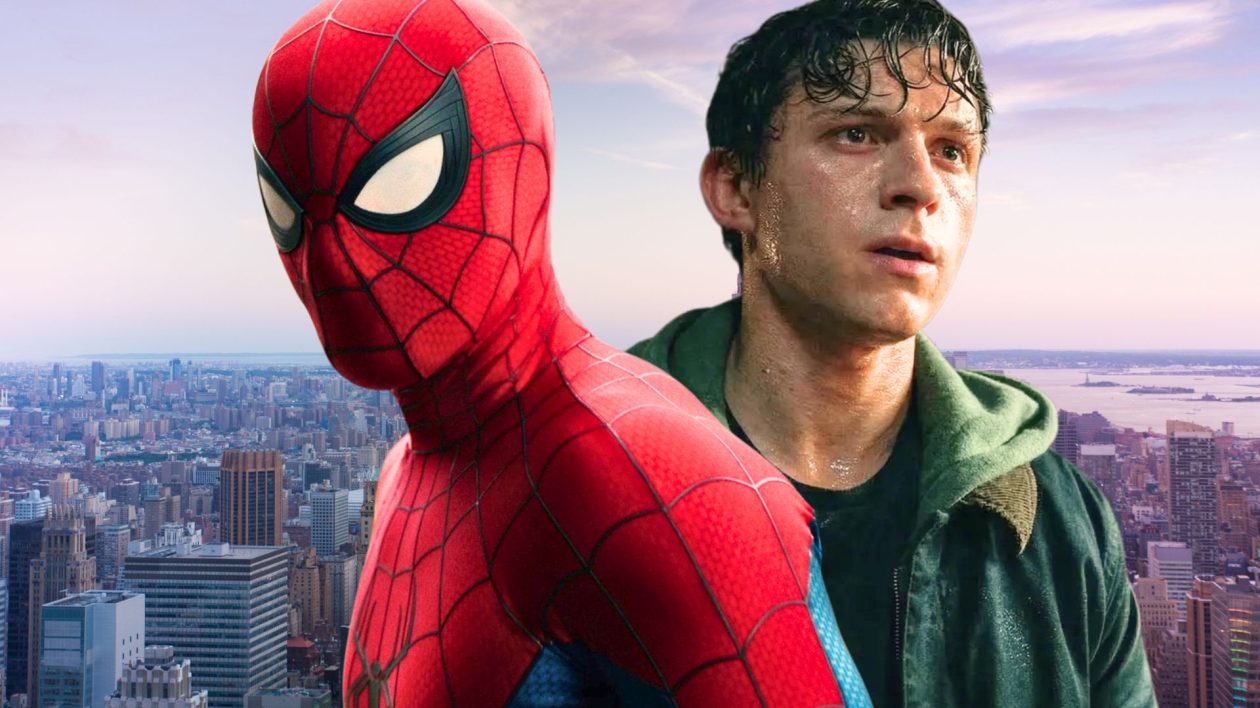
The short answer
Rosario Dawson has publicly confirmed that she filmed a cameo and was then cut. A supporting actor talks about three hours removed in the edit. And Tom Holland describes an intermediate cut, built from test-screening feedback, that the whole team hated and abandoned. The director, for his part, says the opposite: very few deleted scenes.
Contents
This is the film behind the film, and it is more interesting than most making-of features. Between what the actors describe and what the director claims, the accounts do not line up — and that is exactly what makes the story of the edit so instructive.
Here is what was removed, what was redone, and why the accounts differ.
Rosario Dawson filmed, then was cut
It is the most talked-about cut, and it comes from the woman concerned herself.
What she said
Asked at a convention panel in late July 2026, Rosario Dawson confirmed that she had filmed for the movie and had been removed from the final cut. Her wording is blunt: she was cut.
The character she was due to reprise is a nurse already established in this universe, known to series viewers for patching up injured heroes — a connecting figure between several storylines.
Why it made sense
The film features a great deal of injury and physical consequence. A medical character attached to this universe therefore had a natural place, all the more so since Brand New Day already brings back Frank Castle, who comes from the same set of stories.
Her disappearance in the edit is therefore no snub: it is a pacing decision on a film already crowded with supporting characters.
What you should not conclude from it
Detailed descriptions of her scene are circulating, attributed to anonymous sources. They are not confirmed and should not be presented as if they were. What is established fits in one sentence: she filmed, she does not appear.

Spider-Man Tom Holland Figure
The Peter Parker of this film, the one whose edit was redone twice. The figure captures the silhouette of the web-slinger as played by Tom Holland, and you'll find it in our Spider-Man figures.
View the product — €79.90The cut the team hated
It is the most revealing anecdote about how the film was made, and it comes from Tom Holland himself.
What happened
After test screenings, a version of the film was assembled incorporating all of the audience feedback. Every note, every request, applied.
The team watched it and hated it. Holland, his on-screen co-star and his long-time friend all three rejected that version. It was dropped.
The line that sums it all up
Holland's verdict is worth remembering: it was what people were asking for, but not what the team wanted to make.
That is a distinction few productions own up to publicly. A film built purely on screening feedback produces something smooth, which ticks every box and belongs to no one.
What that tells us about the film we got
The film's melancholy tone, its ending without a spectacular fight, its pacing that winds down in the final act: these choices clearly survived a judgement call. They were not kept through carelessness, they were defended.
That casts the criticisms made on release in a different light, and we round them up in our summary of the critical reception: what some took for a weakness was a decision.
1
Test screenings A version incorporates all of the audience feedback.
2
The team rejects it Holland and his two co-stars hate it.
3
Dropped The melancholy tone and the fightless ending are defended.
'Three hours removed': what is that figure worth?
A supporting cast member has spoken publicly about the scale of the cuts, explaining that a large part of his own scenes had disappeared.
What he says
According to him, the production had to remove roughly three hours of material, and actors far better known than he is were cut entirely. His own part, a secondary antagonist, was trimmed back considerably.
His account is consistent with what we know elsewhere: the film has a great many characters, several of whom appear only briefly. Our overview of the film's villains shows just how crowded that rogues' gallery is.
The director's version, which does not match
Destin Daniel Cretton says something different. According to him, there are surprisingly few deleted scenes, and his longer version was a working assembly rather than an alternative film.
The two statements are not necessarily contradictory. A first assembly of nearly three hours that comes down to the final running time does represent 'three hours' of material removed from an actor's point of view — but very few finished scenes deleted from a director's point of view.
The difference is one of vocabulary: they are not counting the same thing. It is the kind of discrepancy that feeds rumours when it is really just a misunderstanding.

Marvel Legends Electronic Spider-Man Mask
A collector's piece worthy of a film that was re-cut twice. Marvel Legends finish, to be discovered in our Spider-Man masks and in our Brand New Day merch.
View the product — €109.90The reshoots
Additional sequences were shot in spring 2026, several months after principal photography wrapped.
What they added
Two strands, according to the team: added humour, and the storyline of one of the antagonists reworked. The phrase used to describe them is telling — the icing on the cake, not a rescue mission.
That is an important distinction. Reshoots have a bad reputation, associated with troubled productions. Here they come in on a film already assembled, to adjust a tone and tighten a thread.
Why you can see it on screen
The film alternates between very different registers — an outright comic sequence in the middle of a dark story, for example. That deliberate unevenness fits late-stage adjustment work rather well.
The most talked-about sequence on that front is the Russian bathhouse scene, which we cover in detail in our article on Yelena Belova's appearance.
Reshoots in spring 2026
Added humour and one antagonist's storyline reworked: the icing on the cake, not a rescue mission.
Test screenings, and why they trap films
The episode of the rejected cut deserves explaining, because it sheds light on a mechanism that quietly shapes a great many feature films.
How it works
A studio screens an unfinished version to a recruited audience, then collects their reactions through a questionnaire. The answers are aggregated into scores and recommendations, which go back up to the production.
The tool is useful for spotting what does not work: an incomprehensible scene, a character who is unlikeable by accident, pacing that sags. On those points, the audience is almost always right.
Where the tool turns against you
It becomes misleading as soon as you ask it what should be done instead. A viewer can tell you he was bored; he is far less able to say why, and even less able to say what to put in its place.
The requests that come back most often are predictable: more action, more humour, a clearer ending, familiar characters. Applied mechanically, they produce a film that looks like every other one.
That is exactly what Holland describes: a version that answered every request and that nobody on the team recognised.
What that refusal cost and gained
Turning down a cut approved by audiences is a commercial gamble. The film as released divides opinion more than a smoothed-over version would have, and part of the criticism on release bears precisely on what that version would have fixed.
In return, the film exists as something in its own right. It has a tone, an ending of its own, and a point of view. Over time, that is generally what separates a film you remember from a film you merely watched.
The test-screening trap
- Asking for the solution Audiences can tell you they are bored, not what to put in its place.
- Applying it mechanically More action, more humour, more familiar faces: a film like all the others.
The rest of the production
A few production details shed light on the result on screen.
A long shoot, under another name
Principal photography spread over several months, under a working title meant to limit leaks — common practice on highly anticipated productions.
That length partly explains the sheer volume of footage shot, and therefore the scale of the cuts. A shorter shoot mechanically produces fewer scenes to sacrifice.
An injury on set
Filming was halted after an incident involving the lead actor during a stunt. We go back over that episode and its consequences in our dedicated article on Tom Holland's injury.
That kind of interruption has a mechanical effect on the edit: planned sequences are reshaped, others dropped, and the finished film drifts away from the original script.
A director from somewhere else
Destin Daniel Cretton is no regular of the genre. His career took him from intimate cinema to big-budget production, and that background can be felt in the film's choices — the room given to quiet scenes, the unspectacular resolution, the refusal of a closing firework display.
It is also, in all likelihood, what allowed the team to hold firm against the screening feedback. A director raised on blockbusters might well have decided otherwise.
A long shoot
Several months under a working title, so plenty of material to cut.
An injury
A stunt accident halts filming.
A director from somewhere else
Destin Daniel Cretton, from intimate cinema to big-budget production.
What survived the edit, and why that matters
Looking at what was cut is instructive. Looking at what held firm is more so.
An ending with no battle won
The final act is settled by a conversation inside Peter's head, not by a fight. That is exactly the kind of choice a cut guided by screening feedback would most likely have corrected. It stayed. The full detail is in our analysis of the ending.
A deliberately stingy post-credits scene
No character on screen, no line of dialogue, a phone interface. Here again, it is the opposite of what a test-screening audience asks for.
A hero who loses control
The film shows Peter seriously injuring an innocent man. It is an uncomfortable moment, with no excuse offered to the character, and it was kept. We set out the context in our article on Peter's mutation and the spider DNA.
An ending with no fight
The final act is settled by a conversation inside his head.
A stingy post-credits scene
No character, no dialogue, a phone interface.
A hero who goes off the rails
Peter seriously injures an innocent man, with no excuse.
What the cuts say about the film's priorities
An edit is a ranking. What falls away shows what the film judged secondary, and this film's ranking is a consistent one.
The supporting characters paid the price
The second-tier antagonists, the connecting figures brought in from other stories, the linking appearances: those are what were trimmed or removed.
That is defensible. A film that piles on cameos ends up feeling like a crossroads rather than a story, and Brand New Day already had more than enough to fill it — look at the number of figures we have had to cover separately, from the Punisher to The Hand.
The intimate scenes were protected
Conversely, everything that belongs to the inner life was kept, even when it slows the film down. The memories, the conversations with no action at stake, the moments where nothing spectacular happens.
The most striking case is the memory that serves as the resolution, which we cover in detail in our article on Marisa Tomei's return — a scene shot specially for this film, and one that would have been first in line for the chop in a cut driven by pacing.
The humour was added afterwards
It is the only element the reshoots visibly strengthened. The original film was therefore even darker than the one that was released.
That changes how you read the criticism about the tone: what some found too solemn was already the result of a lightening pass.
Supporting roles trimmed
Second-tier antagonists and linking appearances cut.
The intimate protected
Memories and conversations kept, even when they slow things down.
Humour added
The original film was even darker.
The questions everyone is asking
Will we ever see the deleted scenes?
Nothing has been announced. Home video releases often come with bonus features, but deleted scenes are never guaranteed — especially when the director says there are few usable ones.
Be wary of articles promising an extended cut: at this stage, no source mentions one.
How long is the film?
Around two hours and twenty-five minutes. It is the second longest of the series within this universe, which puts the idea of a butchered film into perspective.
Set against a first assembly of close to three hours, the gap comes to about half an hour — a perfectly ordinary reduction between a working cut and a release version. No film comes out at the length of its first assembly.
Were other actors cut?
That is what the account mentioned above claims, without naming anyone. No other cut has been publicly confirmed by an actor to date. Treat any list circulating on the subject as unverified.
Why so many contradictory accounts?
Because everyone speaks from where they stand. A supporting actor measures the cuts by his own lost shooting days. A director measures them in finished scenes pulled from the final edit. An actress who was cut is simply stating a binary fact.
None of them is lying. They are simply not counting the same thing, and the press adds up figures that are not comparable. That is how most production rumours are manufactured.
Should you wait for an extended cut before rewatching the film?
No. Nothing suggests an alternative version exists in any releasable form, and the director implies the opposite. The film as released is the intended version, not a butchered one.
That is in fact the most reassuring part of the whole story: the team got the cut it was fighting for.
Was the film redone because of bad feedback?
No, quite the opposite. The cut built on the feedback was rejected by the creative team, which went back to its own version. The reshoots were about adjustment, not rescue.

Retro Spider-Man Poster
A poster for a film that defended its choices against the test screenings. The full selection is in our Spider-Man posters and our gift ideas.
View the product — €16.90What to take away
An actress confirmed as cut, a supporting actor talking about three hours removed, a director saying the opposite, and an entire cut built on audience feedback then abandoned because the team hated it.
That last point is the most important, and it explains the film you watched. Its melancholy, its ending without fireworks, its almost empty post-credits scene: these are not oversights, they are decisions that survived a judgement call where they could easily have fallen.
There is an industry lesson in all this, and it holds well beyond this film. A cut built on what the audience demands always produces something decent and never something memorable, because audiences can tell you what bothered them but not what would have moved them. The team chose to stand behind a film that divides opinion rather than a film nobody would have hated. Over time, that is usually the right call — and it is the real subject of this deleted-scenes story.
Decisions, not oversights
Melancholy, an ending without fireworks and an almost empty post-credits scene all survived a cut guided by the audience, then abandoned.

