

14-Day Money-Back Guarantee
0
The essentials before you choose
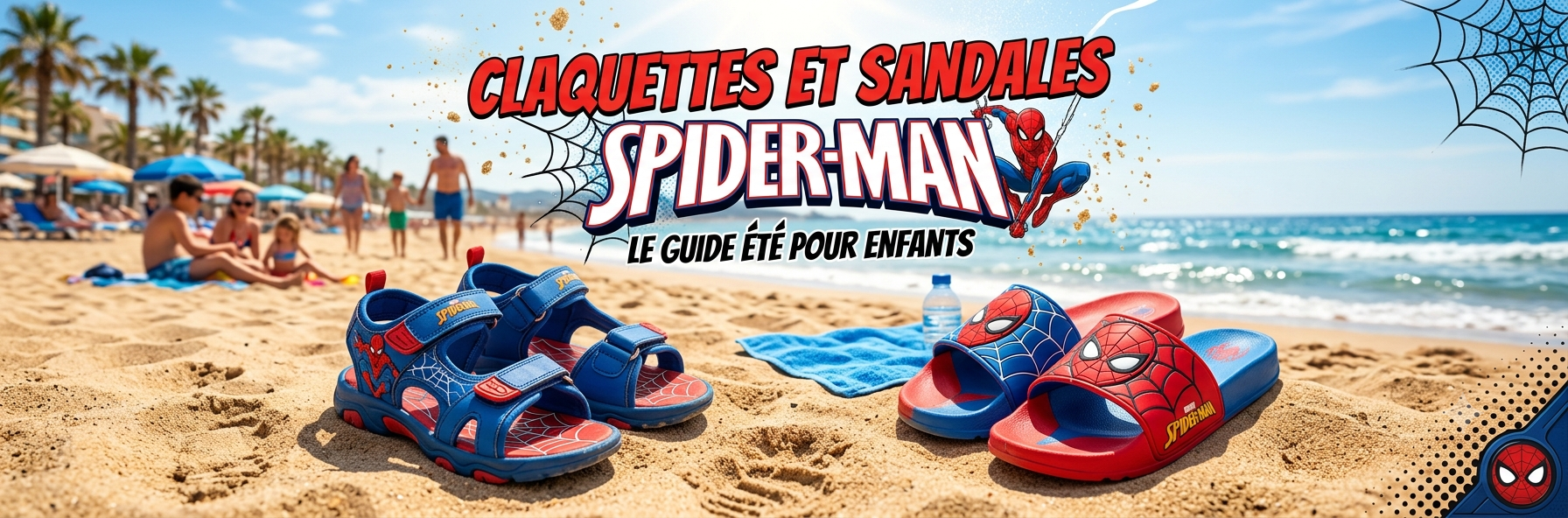
Three families not to be confused. The slider, with its wide strap, goes on and comes off in one movement: it’s the poolside model. The sandal, with a back strap, holds the foot and suits walking and the garden. The slider slipper, padded, remains an indoor item. For a child, the back strap isn’t a comfort detail but a safety one.
You buy a pair of sliders in thirty seconds, and that’s precisely why you get it wrong.
The pair that slips on the wet poolside tiles. The one that catches on the stairs because nothing holds the heel. The one bought a size too big ‘for next summer’ that the child drags along as they walk. The one whose strap comes unstuck after three weeks of sand.
This guide starts by separating the three things we lazily file under the same word, then sets out what really matters depending on the use. Looks come last: they never make up for a sole that slips.
Slider, sandal, slider slipper: three different things
The confusion is kept alive by product pages, which use all three words for items that don’t serve the same purpose. The distinction is simple enough, though.
The slider
A sole and a wide strap over the top of the foot. Nothing at the back. You slip it on without using your hands and flick it off with your heel. That’s what makes it unbeatable in a changing room or at the edge of a pool.
That’s also its limit: nothing holds the foot. For walking any distance, climbing stairs or running, it isn’t suitable. A child who runs in sliders either loses them or falls.
The sandal
The same open-sole principle, but with a back strap that passes behind the heel. That strap changes everything: the foot is held, walking becomes natural, and the child can run without losing a shoe.
It’s the format to go for the moment it’s about going out, walking or playing outside. For a toddler, it’s in fact the only format that can really be recommended for everyday use.
The slider slipper
It borrows the shape of the slider but with a soft sole and a padded upper. It’s an indoor item, designed for comfort at home rather than for outdoors: the sole has neither the grip nor the durability needed outside.
Not to be confused with the closed winter slipper, which answers a different need again. We cover that format separately in our guide to Spider-Man slippers for winter, where warmth and hold on the foot come before everything else.

Spider-Man Slider Slippers for Kids
The padded format designed for indoors, to slip on as you come through the door. Find the rest of the everyday kit in our Spider-Man accessories.
View product — €34.90Which model for which real use
The right question isn’t ‘which one is best’ but ‘where will it be worn’.
Swimming pool, shared showers, changing rooms
This is the slider’s home ground. You put it on and take it off constantly, it dries instantly, and it keeps the foot off a shared floor — which is its real hygiene function, often forgotten.
The deciding criterion here is grip on wet floors. A smooth sole on damp tiles is an accident waiting to happen, and unfortunately it’s the most widespread fault on cheap models.
Beach and sand
Sand changes the priorities. A strap that’s too tight traps grains and rubs, a sole that’s too thin heats up in the sun to the point of becoming unpleasant, and salt attacks the glue over time.
For this use, go for a medium-thickness sole and a strap that rinses easily, and accept that the pair is consumable: few models get through two beach summers without showing it.
Garden, patio, short outings
As soon as there’s walking involved, the back strap becomes necessary. This is the sandal’s territory, not the slider’s. A child playing in a garden in sliders ends up barefoot within ten minutes, or trips over.
It’s also the format that stretches the season furthest: a sandal can be worn with socks between seasons, which a slider copes with badly.
Sizing: the trap with children’s models
This is the most common mistake, and it’s made worse by the very nature of the object.
On a closed shoe, half a size too big can be made up for with a thicker sock. On a slider, there’s nothing to make up for it: the foot slides forward with every step, the toes hang over, and the child adapts their gait by clawing with their toes to hold the sole on. It’s uncomfortable and it distorts the way they walk.
The centimetre rule
The heel should sit flush with the back edge of the sole, with half a centimetre of margin in front of the toes at most. No more. With sliders, you don’t allow for growth: you fit the size of the moment.
A simple test: stand the child up wearing them and ask them to lift a foot. If the sole clearly comes away from the heel or swivels, the pair is too big. If the toes touch the front, it’s too small.
The case of unisex sizes
Many adult models are offered in broad size bands, which hides real differences from one maker to the next. If you’re hesitating between two sizes on a wide-strap model, go down rather than up: a slightly snug slider is still wearable, one that’s too big isn’t.

Spider-Man Sandals
The back-strap format, the one that holds the foot and lets them run. It’s the model to go for outdoors. Pair it with our kids’ T-shirts and our gift ideas.
View product — €39.90The sole: the real safety criterion
This is the point not to compromise on, and it’s the one nobody looks at on a product photo.
Grip on wet floors
Turn the sole over before you buy. A flat, smooth sole doesn’t grip damp tiles. What you’re looking for is grooves, studs or a pronounced pattern that channels water away from under the foot.
Rubber grips better than hard plastic. Compressed foam is comfortable but becomes slippery as it ages, when its surface smooths out with use.
Thickness and cushioning
A sole that’s too thin passes on every bit of gravel and heats up in the sun. One that’s too thick is destabilising, especially for a young child whose balance isn’t settled yet. Two to three centimetres at the heel is a reasonable compromise for an adult, appreciably less for a child.
Arch support
Models with an anatomical, slightly hollowed sole are noticeably less tiring over a full day. It’s a comfort criterion for an adult, and a posture criterion for a child wearing their sliders all summer.
Materials and what they mean in practice
Three main families share the market, with very concrete consequences.
EVA, the light foam that makes up the majority of pool sliders, is waterproof, dries instantly and weighs almost nothing. In exchange, it deforms in the heat and wears out quickly if the pair is used every day.
Rubber is heavier and dearer, but it grips better and lasts considerably longer. It’s the sensible choice for a pair meant to last several seasons.
Textiles and synthetic leathers appear mainly on the strap. They’re nicer against the skin and avoid irritation on the top of the foot, but they hold moisture and cope badly with chlorine or salt. Keep them for dry use.
Light-up models: gimmick or genuine plus?
LED soles light up on contact with the ground. With children the effect is spectacular, and it’s often the argument that settles the decision.
There’s a real benefit beyond the fun: a light-up shoe makes a child visible at the end of the day, in a garden or on a pavement as dusk falls. It isn’t road safety, but it’s a useful marker for parents.
Two limits to know about. The batteries generally can’t be replaced: when the light goes out, it goes out for good, often after several hundred lightings. And these models cope badly with prolonged immersion, which makes them a poor fit for pool use.

Spider-Man LED Sandals
The light-up version, the one that lights up with every step. The argument that wins a child over, with the hold of a proper back strap. Take a look alongside our Spider-Man toys.
View product — €59.90Care and lifespan
A pair of sliders asks almost nothing of you, but that almost nothing changes everything over time.
Rinse them in clean water after the pool and after the beach. Chlorine attacks the glue, salt crystallises in the seams and sand acts as an abrasive between the strap and the sole. A ten-second rinse is enough to hold off most of it.
Dry them in the shade. Direct sun deforms EVA irreversibly: a pair left out on a patio in high summer can warp in an afternoon and never come back to its shape.
Finally, keep an eye on the strap’s fixing point. That’s always where the break happens, and you can see it coming: a slight lifting around the rivet signals the end. A strap that gives way mid-stride makes you fall, especially a child.
Stretching the season beyond summer
A pair of sliders bought in July often ends up in the cupboard by early September. That’s a shame, because two uses keep them going all year.
Indoor sport
The changing rooms at the gym, the dojo and the indoor pool run all year. A child doing an activity at a club uses their sliders every week from September to June, and that’s in fact where they get the most use.
In this use, grip on wet floors becomes the number one criterion again, and lightness counts because the pair lives in a sports bag.
Indoors in winter
This is where the slider slipper really comes into its own. It offers the quick on-off of a slider with the comfort of a slipper, which makes it the perfect transition item between the front door and the sofa.
Be careful, though, not to make it a substitute for a closed slipper when temperatures drop: the top of the foot stays uncovered, and a cold floor is felt despite the padding.
The special case of camps and residential trips
One context deserves a mention of its own, because it combines all the constraints seen above: residential trips, summer camps and school journeys.
The showers there are shared, which makes the pair not so much comfortable as necessary. It will be worn on wet floors, in corridors, sometimes outside, and it will have to survive two weeks without any particular care.
For this specific case, three requirements stack up. A very grippy sole, because nobody will be watching the floor. An exact size, because there’ll be no swapping it on site. And a very recognisable look, because twenty identical pairs will be lying around outside the showers and marker pen rubs off.
It’s one of the rare contexts where a loud model is objectively more practical than a plain one. A pair in bold colours finds its way back to its owner; a black pair disappears.
The mistakes that come up most
Buying big for next season. On an open shoe, that margin can’t be made up for. It’s mistake number one with children.
Taking a slider for a use that calls for a sandal. The garden, outings and stairs all demand a back strap. The slider stays an item for the poolside and the changing room.
Ignoring the sole. A pair that looks great but has a smooth sole is a bad buy, especially around a swimming pool.
Going out in slider slippers. The padded format isn’t made for outdoors: the sole wears through in a few outings and the grip is poor.
Leaving them to dry in the sun. The most ordinary thing to do, and the one that most surely cuts a pair’s life short.
How to get a child to accept the right pair
The clash is a classic: the child wants the slider that lights up, the parent wants the sandal that holds the foot. There is a way out through the top.
The first is to move the choice rather than forbid it. Pick out two or three models that meet the technical criteria first, then let the child decide between them. They genuinely choose, and you’ve already ruled out what doesn’t work.
The second is to accept two pairs when the uses really are distinct. A light slider that lives in the swimming bag, a strapped sandal for everything else. At summer-item prices the extra cost stays limited, and each pair lasts longer because it’s only used for what it does well.
Finally, one argument works surprisingly well with the youngest: explaining that the back strap lets them run. Presented as a constraint, it’s refused. Presented as the thing that lets them play without losing their shoes, it’s adopted.
Which model for which profile
For a child going to the swimming pool or to a holiday club, a light slider with a grooved sole, in the right size, does exactly its job.
For a child who plays outside, runs and climbs, the back-strap sandal is the only sensible choice. The safety difference isn’t up for debate.
For use at home, to slip on as you come in, the slider slipper is comfortable provided you accept that it stays indoors.
And if the pair is meant as a gift, the light-up model almost always hits the mark with younger children. It fits neatly into a wider set, as shown by our guide to gifts for children, our selection of small gifts under €20 and our guide to toys by age. For a complete outfit, our article on how to dress your child and our ideas for putting together their bedroom take the universe beyond the feet. The rest of the indoor outfits are in our kids’ pyjamas.
What to remember
The word slider covers three items that don’t serve the same purpose. The slider for the poolside, the sandal as soon as there’s walking to do, the slider slipper for indoors. Choosing the wrong format is the source of almost every disappointment.
After that, two checks are enough: turn the sole over to judge the grip, and fit the exact size without allowing for growth. Looks can decide the rest — a pair a child has chosen is a pair they’ll wear.

