

14-Day Money-Back Guarantee
0
The short answer
May Parker passes on, day after day, the lesson in responsibility we usually credit to Ben; in No Way Home, she is the one who speaks those founding words. Marisa Tomei turned her into a knowing ally, a world away from the frail, bedridden old lady of the early days. We retrace that shift below.
Often written off as a secondary character, May Parker, better known as Aunt May, is in fact one of the sturdiest pillars in the world of Peter Parker. Behind her gentleness and her kindness, she plays a crucial part in the emotional, moral and psychological making of Spider-Man. And in some versions, her influence outweighs even Uncle Ben’s.
Across the decades and the adaptations, Aunt May has been played in countless ways: a fragile figure in the early comics, a strong, modern woman in the MCU, the voice of wisdom in the video games and the animated series. In every one of her incarnations, she embodies a form of quiet resilience that is nonetheless powerful — so much so that her death in No Way Home changes the young hero’s path forever.
But beyond her emotional role, May Parker is also a vehicle for passing on the core values of Spider-Man. She is the heart of the home, the last link to a ‘normal’ life — Peter’s life before the mask, before the responsibilities, before the tragedies. And it is precisely to protect that part of himself that he keeps fighting, again and again.
That duality between ordinary life and heroic duty runs right through the everyday objects inspired by this universe. Our Spider-Man mugs and our iconic posters capture that same tension between the intimate and the legendary.
A model of responsibility far quieter than Uncle Ben

The famous line ‘With great power comes great responsibility’, so often credited to Uncle Ben, is in truth lived out every single day by Aunt May. While Ben represents the initial shock that pushes Peter into his role as a masked vigilante, May is the one who, day in and day out, gives that responsibility its meaning and its depth. She raises Peter alone, in difficult circumstances, without ever faltering.
Whether in the early comics, in Sam Raimi’s films or in the more recent world of the MCU, May embodies a kind of quiet strength. Even while she still has no idea that Peter is Spider-Man, she unknowingly nudges him towards the right choices, towards staying human despite the sacrifices.
In Spider-Man 2, it is she who, with a simple but hard-hitting speech, gives Peter back the desire to be the hero he truly is deep down. And in No Way Home, it is she — not Ben — who speaks for the very first time the words that define Spider-Man’s identity, giving the character an even more tragic and heroic dimension.
That quiet yet central role makes her one of the very few Marvel characters to stand at once for the past, for memory and for moral balance. A figure you can find symbolically in our selection of iconic action figures.
A character who keeps evolving with every generation
One of the most fascinating things about Aunt May is her ability to evolve while holding on to her essential function. In the early comics she is drawn as a frail old woman, often bedridden and dependent, which sharpens Peter’s guilt whenever he takes risks. That version survives in adaptations such as The Amazing Spider-Man, where she is kept at arm’s length from her nephew’s secrets.
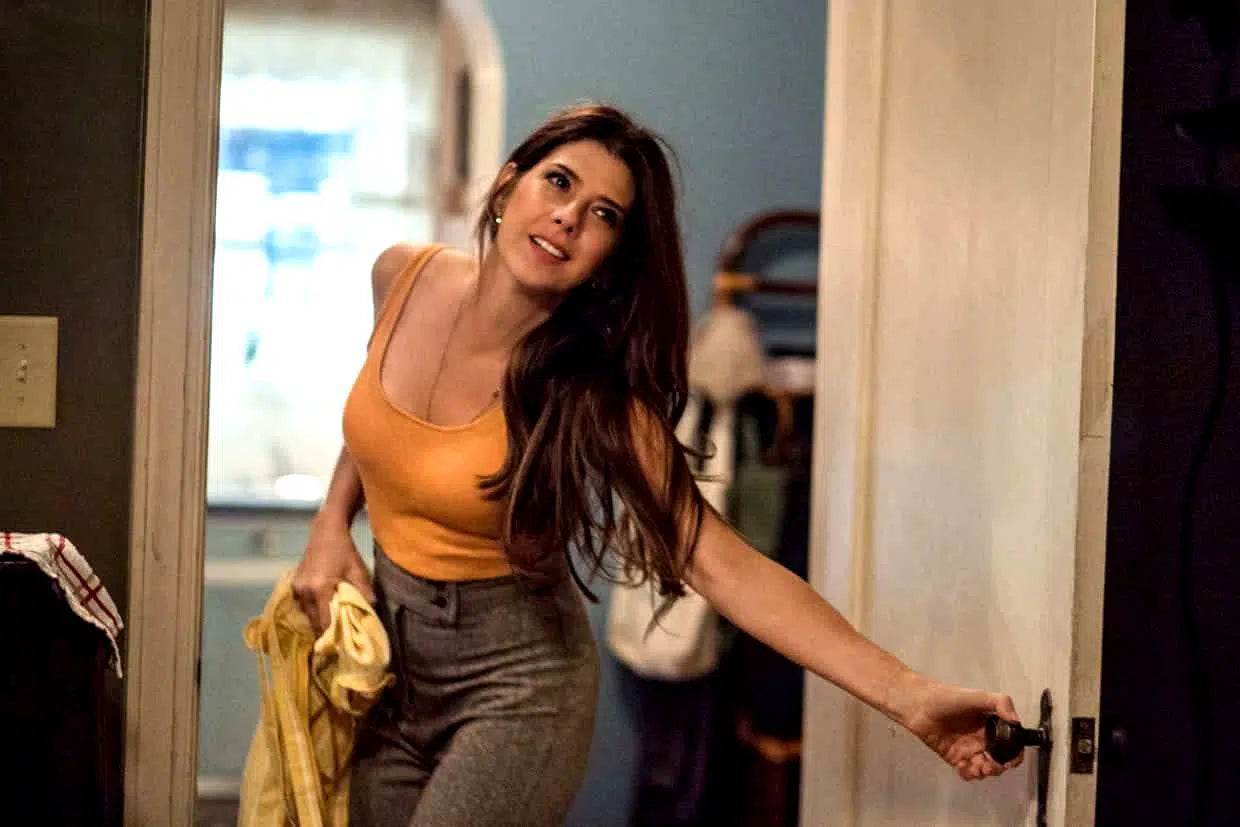
But from the 2000s onwards, and above all with the arrival of the Marvel Cinematic Universe, Aunt May becomes a modern, active woman, firmly rooted in her own time. Played by Marisa Tomei, she is far more than a simple emotional anchor: she becomes an independent, funny figure, involved in her community, and even an accomplice once she discovers Spider-Man’s identity.
This modernisation of the character forges a stronger bond with the newer generations of fans. The MCU version of Aunt May embodies a contemporary kind of parenting, where listening, closeness and trust replace strict authority.
She is also one of the few characters in the Marvel universe to be so thoroughly reinvented without ever betraying her original role. A strong, human woman who, without a costume, carries an enormous share of the hero’s burden.
In Spider-Man: Far From Home, the relationship between Happy Hogan and Aunt May brings a welcome touch of humour and lightness after the events of Endgame. Their discreet but unapologetic flirtation creates some wonderfully awkward moments, not least for Peter, caught between embarrassment and curiosity. The dynamic also strengthens Happy’s role as a kindly presence in the young hero’s life, while giving May a little emotional room of her own in a post-Iron Man world.
Conclusion: Aunt May, the invisible heart of the Spider-Verse

In a world where heroes wear flamboyant costumes, swing between skyscrapers and face cosmic threats, Aunt May can seem almost insignificant. And yet she is the silent foundation, the human bedrock on which Peter Parker’s whole identity rests. Without her there would be no balance, no emotional stability, no real meaning to his fight.
May never needed powers to be a heroine. Her strength lies in her ability to stand tall in adversity, to raise a broken child, to inspire him day after day to do what is right, even at the cost of sacrifice. It is that intimate dimension which explains why her death in No Way Home hit fans so hard.
If Spider-Man has fascinated us for generations, it is also because he holds on to that deep streak of humanity. And that streak is the one she protects, nurtures and passes on. She is the living memory of Peter’s past, but also the compass that stops him losing himself in his double life. A discreet but essential figure of the Spider-Verse.

