
14-Day Money-Back Guarantee
0
The short answer
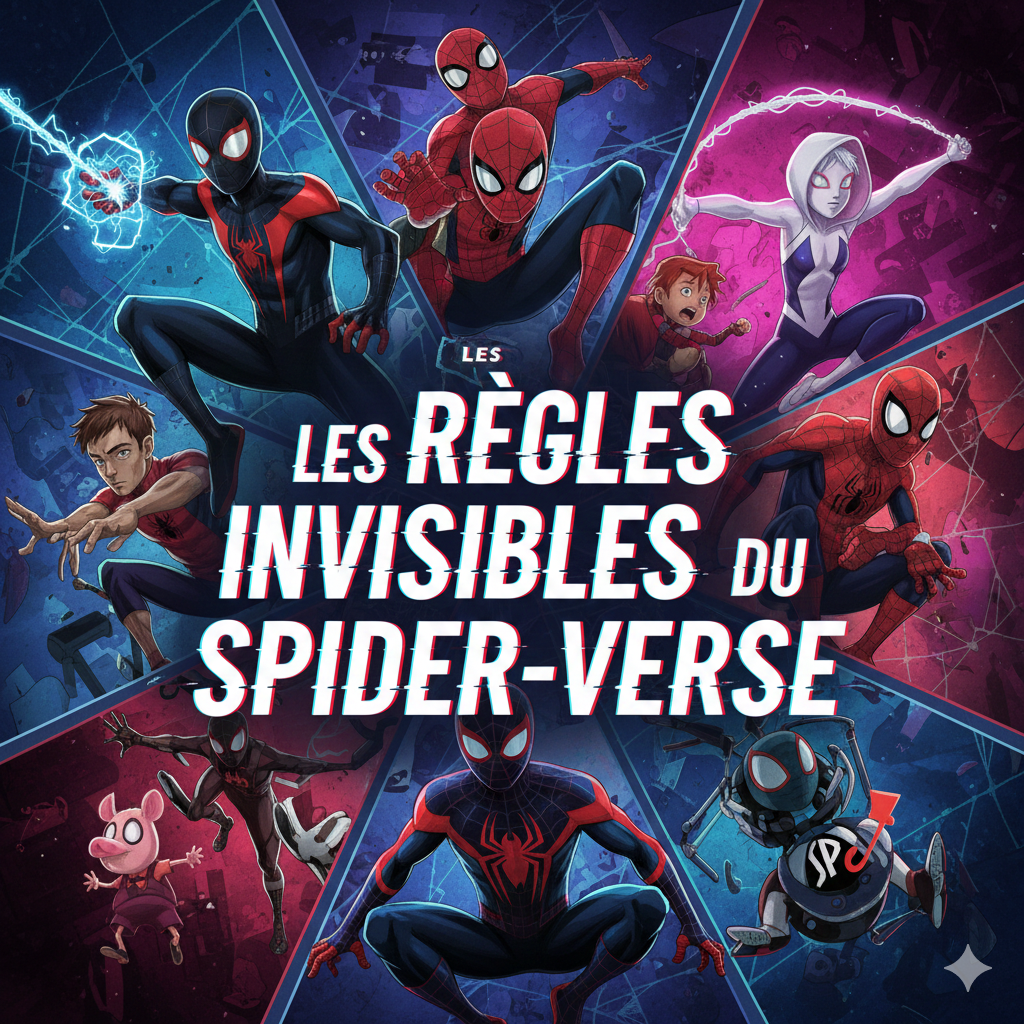
Three unspoken principles hold this arachnid multiverse together: every wearer of the mask is born out of a founding bereavement, certain moments known as canon events impose themselves whatever he does, and trying to prevent them tears whole timelines apart. The Inheritors and the Spider-Totems follow directly from this. We break down each law below.
The Spider-Verse isn’t chaos: it’s a system governed by invisible laws
At first glance, the Spider-Verse can look like one vast narrative playground where anything goes: dozens of Spider-Men, parallel realities, variants that are sometimes absurd, sometimes tragic. And yet this multiverse is neither anarchic nor random. It obeys invisible rules that are rarely spelled out, yet present in every single story.

These rules are never written down in black and white in some cosmic manual. They show themselves through the recurring tragedies, the unavoidable sacrifices and the unsettling repetitions that every Spider-Man lives through. It’s precisely this hidden structure that gives the Spider-Verse its emotional power… and its coherence.
Unlike other, more open-ended Marvel multiverses, the Spider-Verse works like a system of constrained destiny. Whatever the universe, whatever the face beneath the mask, certain things have to happen. And when they don’t, the balance breaks.
This idea sits at the heart of major arcs such as Spider-Verse, Spider-Geddon or End of the Spider-Verse. Every time, the message is the same: being Spider-Man isn’t just about wearing a costume, it’s about accepting a cosmic role.
The first rule: every Spider-Man is bound to a founding tragedy
Whether it’s Peter Parker, Miles Morales, Gwen Stacy or far more obscure variants, they all share one thing: an irreversible loss.
An uncle, a parent, a mentor, someone close. That loss isn’t a narrative accident, it’s a condition of existence. Without it, the Spider-Man in question isn’t ‘stable’. That is quietly what the stories tied to the Spider-Totems: power is never handed on without a price.

This rule explains why some universes collapse when a key event is prevented. It also explains why entities like the Inheritors can hunt the Spider-Men down: they aren’t hunting individuals, they’re hunting knots of destiny.
A mythology that goes far beyond entertainment
This invisible framework is also what makes the Spider-Verse so fascinating for fans. You aren’t collecting stories, you’re collecting variations on one and the same myth. That is exactly what explains the huge pull of multiverse Spider-Man figures or Spider-Man posters showing different realities: every version tells the same story… with a different pain.
In the next part, we’ll look at another fundamental rule of the Spider-Verse: why all the Spider-Men can’t freely coexist without consequences, and what that means for the balance of the multiverse.
‘Canon’ events: when destiny lays down its laws
The second great invisible rule of the Spider-Verse is probably the most unsettling of all: certain events have to happen. Whatever the universe, whatever the choices, whatever the hero wants. These key moments are called canon events.
They take different forms — the death of a loved one, the fall of a mentor, a decisive betrayal — but their function is always the same: to forge Spider-Man through pain. Without those events, the narrative and cosmic balance cracks. The hero becomes unstable, and his universe starts to fall apart.
This idea is brilliantly explored in the animated films Into the Spider-Verse and Across the Spider-Verse, and analysed in depth in our pillar page on the Spider-Man films. The message is clear: Spider-Man doesn’t always choose to be a hero, he is usually forced to become one.

Why breaking a canon event comes at a price
When a Spider-Man tries to prevent a canon event — out of love, out of guilt or out of sheer defiance — the multiverse reacts violently. Realities collapse, timelines tear, and alternative versions appear to correct the anomaly.
The Spider-Verse therefore works like a self-correcting system. It doesn’t prevent choices, but it punishes the ones that threaten the overall architecture. That logic explains why forces like the Inheritors exist: they aren’t merely antagonists, they are the brutal enforcers of cosmic order.

A hero doomed to lose… so that others are protected
This is where Spider-Man differs radically from other Marvel heroes. Where some can rewrite their past or win without major losses, Spider-Man is condemned to save everyone else at the cost of his own happiness.
This invisible rule is what makes the character so universal. It is examined in articles such as Why Spider-Man is one of the best-loved heroes: readers recognise that permanent injustice, that fight against fate that is lost before it begins.
That sense of fate also explains the attachment to objects that embody those key moments: from Spider-Man masks to collectable figures, every piece stands for a victory… often born of a defeat.
In the next part, we’ll look at an even more troubling rule: why not every Spider-Man is meant to survive indefinitely, and how the Spider-Verse decides who gets to carry on… and who has to disappear.

Not every Spider-Man is meant to last
The third invisible rule of the Spider-Verse is probably the cruellest: not every Spider-Man is meant to survive indefinitely. Unlike other Marvel heroes who move through the decades without lasting consequences, Spider-Man is a role you can lose… sometimes for good.
In the multiverse, the suit isn’t an eternal privilege. It is a temporary contract. Some Spider-Men serve their purpose, protect their reality, then disappear — through death, through sacrifice, or through narrative erasure. That mechanism lets the Spider-Verse renew itself without ever breaking.
Replacement is part of the myth
The existence of figures like Miles Morales or Mayday Parker isn’t a betrayal of Peter Parker’s legacy. It is the logical continuation of it. When one Spider-Man falls, another can emerge — not to replace him, but to carry the same burden.
This logic is explored in arcs such as Dying Wish or Superior Spider-Man, where the very idea of identity is separated from the person. Spider-Man becomes a symbol that several individuals can embody… provided they accept the price.
Why the Spider-Verse eliminates certain variants
Some versions of Spider-Man don’t respect the fundamental rules: they refuse loss, responsibility or sacrifice. Those variants become unstable. The multiverse then corrects them brutally — by collapsing their reality or by sending in higher entities.
This is where figures like Morlun make complete sense. They aren’t simple monsters: they are narrative filters. They remove the Spider-Men who break the balance, the ones who refuse the role as it is defined.
That brutality is why the Spider-Verse is so deeply tragic. It doesn’t always reward courage. It rewards conformity to sacrifice.
A rule that deepens the fans’ attachment
Paradoxically, that precariousness makes each Spider-Man more precious. The reader knows nothing is guaranteed. Every victory could be the last. Every version has a limited lifespan.
In the final part, we’ll look at the ultimate rule — the one that overrides all the others: why Spider-Man is doomed to save the multiverse without ever being able to control it.
The ultimate rule: Spider-Man saves the multiverse, but can never control it
The last invisible rule of the Spider-Verse is also the cruellest… and the truest to Spider-Man’s DNA: he is doomed to protect a system he will never master.
Unlike cosmic figures able to rewrite reality, Spider-Man always acts on a human scale. Even when he ends up at the heart of the multiverse, facing entities like the Inheritors or major multiversal crises, he never becomes a god. He remains an imperfect guardian, forced to make impossible choices.
Why Spider-Man is never the one calling the shots
In the Spider-Verse, Spider-Man isn’t the one who sets the rules. He is the one who endures them… then acts in spite of them. That is what sets him radically apart from other Marvel heroes, the strategists and the ones who bend fate to their will.
That position explains the internal tensions we see in figures like Miguel O’Hara, who tries to impose an authoritarian vision of the multiverse, or in Peter B. Parker, worn down by decades of sacrifice with no lasting reward.


Conversely, Miles Morales embodies a fascinating anomaly: he doesn’t try to control the system, he tries to reinterpret it. And it is precisely that emotional disobedience that sometimes threatens the balance… while also offering a glimmer of hope.
A rule that explains why Spider-Man moves us so much
If the Spider-Verse works, it isn’t only because of its visual or narrative richness. It is because it rests on a deeply human truth: you can do everything right… and still never get the perfect outcome.
Conclusion: the Spider-Verse isn’t a freedom, it’s a shared burden
The invisible rules of the Spider-Verse remind us of something essential: being Spider-Man is never a privilege. It is a cosmic burden, handed down from reality to reality, always accompanied by losses, sacrifices and responsibilities that can never be lightened.
If the Spider-Man multiverse fascinates us so much, it is because it doesn’t promise happiness. It promises just one thing: do what is right, even when it hurts.
And that is exactly why, whatever the universe, whatever the face beneath the mask, Spider-Man remains the most human hero of all… even on the scale of the multiverse.

