
14-Day Money-Back Guarantee
0
The short answer
Behind Kindred's mask hides Harry Osborn, brought back from the dead in a damned form bound to Mephisto. Written by Nick Spencer, this tormentor wields illusions, reanimated corpses and mind control to break the hero morally rather than kill him. His powers and the reveal are detailed below.
Kindred: a nightmare dragged out of Peter Parker's past
Among the most striking enemies in recent Spider-Man mythology, Kindred holds a place all of its own. This terrifying character, with his spectral design and morbid aura, is far more than a simple supervillain: he is the personification of Peter Parker's guilt and past sins. Introduced in the pages of ‘The Amazing Spider-Man’ (post-Last Remains), Kindred marks a major narrative turning point in the Marvel universe, exploring themes rarely this dark for the web-slinger.
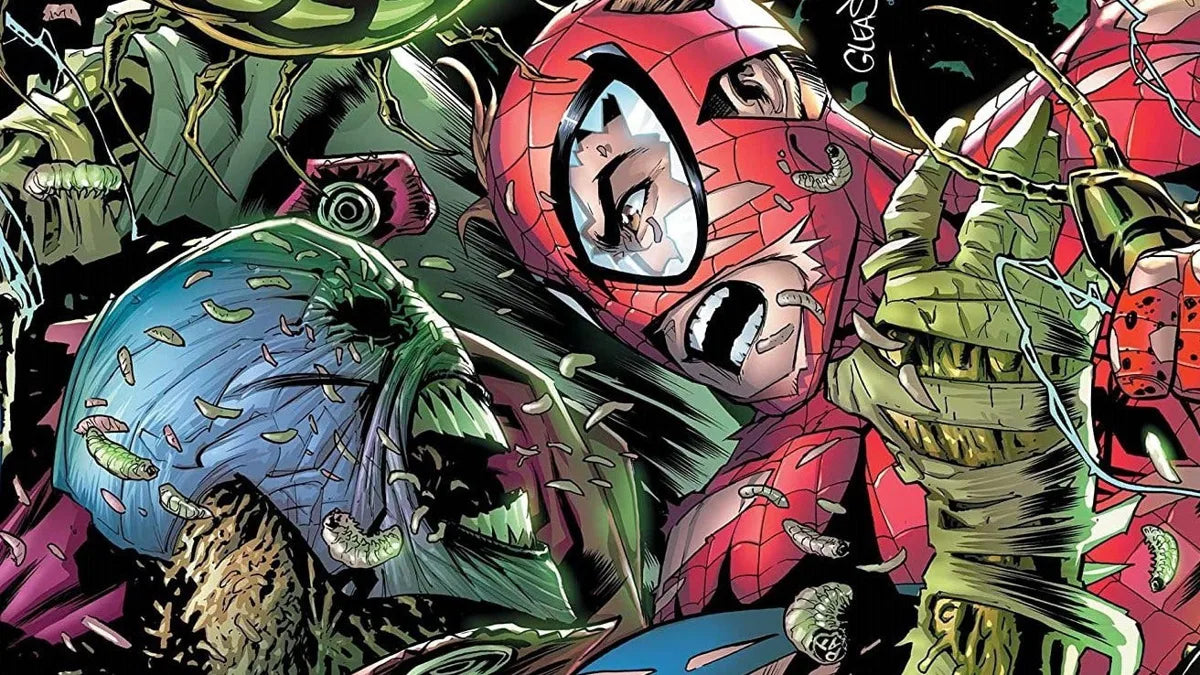
Behind his bogeyman looks and his gift for macabre manipulation, Kindred embodies a formidable psychological threat. He isn't simply trying to kill Spider-Man. He wants to make him suffer, to break him mentally, by reviving the ghosts of his past, from the death of Gwen Stacy to his pacts with Mephisto.
A mysterious identity: the long con orchestrated by Nick Spencer
When Kindred first appeared, he was wrapped in a thick mystery. Writer Nick Spencer played with readers' nerves for more than 50 issues, leaving his true identity in doubt. It was only in the Sins Rising arc that the pieces of the puzzle started to fall into place.
In the end, we learn that Kindred is really Harry Osborn, or more precisely a resurrected, corrupted version of him. A powerful twist, because Harry, though an antagonist in the past, had been rehabilitated as Peter's loyal friend. His return in this demonic form calls their entire relationship into question, and heightens the emotional impact of every confrontation between the two characters.
The twist also strengthens the link between Kindred and major past arcs such as One More Day or Brand New Day, underlining the long-term consequences of Peter's choices and the weight of the past he carries, even unconsciously.
This new enemy isn't a foreign body bolted onto the rogues' gallery, but a figure born from the cracks in the universe itself. A creature of remorse, literally.
An opponent with frightening powers
Kindred isn't simply a mystical villain or a psychological threat. He also has fearsome supernatural abilities : control over corpses, morbid illusions, mind control, and even the ability to reanimate the dead and send them to torment Peter Parker. In the Last Remains arc, he goes as far as turning the members of the Spider-Team against him.

His powers seem tied to some kind of infernal dimension from which he draws his energy. That link with hell sits squarely in the continuity of the deal struck between Peter and Mephisto in One More Day, underlining just how deeply Spider-Man's actions tore open the cosmic order.
Kindred against the Spider-Family
In his most elaborate schemes, Kindred doesn't settle for going after Peter: he targets his closest allies too. Spider-Gwen, Miles Morales, Jessica Drew, Silk... all of them are manipulated, pushed to breaking point, or forced to face torments of their own.
This narrative device reinforces just how far Kindred's reach extends. He is a threat that contaminates the universe, an enemy who works in the shadows and eats away at the heroes' very hope. Seen that way, Kindred recalls the darkest hours of the Clone Saga, when Peter's certainties collapsed one by one.
Kindred's horror design, his symbolic language and his obsession with the truth make him a new kind of antagonist, halfway between a demon and a supreme judge of karma. A bold evolution of Spider-Man mythology, one that echoes the dark arcs of Kraven's Last Hunt as much as the modern tragedies of Spider-Verse.

You'll find products tied to these darker corners of the mythology in our Spider-Man figurines collection, or in our villain costumes inspired by the Marvel universe.
The devastating reveal: who is Kindred?
After months of speculation and mystery, Marvel finally unveiled Kindred's identity... and it was a monumental shock for readers. Kindred is really Harry Osborn, Norman's son, back from the dead in a damned form fuelled by hatred, pain and a twisted will to justice.
But the reveal goes further still. The arc shows us that it isn't one Harry... but two distinct entities fighting over the Kindred identity, both tied to demonic manipulations orchestrated by Mephisto. A way for Marvel to rewrite the consequences of One More Day, while creating a hybrid character, Harry and yet no longer quite human.
A personal tragedy for Peter Parker
This reveal is an emotional gut-punch for Peter. Harry was one of his oldest friends, one of the few who had been through every ordeal with him, from the Gwen Stacy tragedy to the clashes with Norman. Seeing him come back as a tormented being, eaten away by suffering and eager to punish Peter, forces the hero to face his own failings... real or imagined.
The Spider-Man posters from this arc put that darkness on the wall: shadowy alleyways, haunted faces, gothic imagery. If you're a fan of that atmosphere, you can also take a look at our selection of Spider-Man lamps inspired by the darkest scenes in the series.
A final showdown... and lasting consequences
The confrontation between Peter Parker and Kindred in the final stretch of the arc reaches peaks of dramatic intensity. Spider-Man isn't facing a simple enemy: he is facing the weight of his past choices, the anger of a lost friend, and Mephisto's manipulations in the background. The last battle sets faith, pain, friendship and free will against one another, in a spiral of psychological suffering and hard-won redemption.
The resolution is far from simplistic: even after defeating Kindred, Peter doesn't walk away unscathed. The arc leaves an indelible mark on his psyche and on those around him. You'll also find an echo of other consequence-heavy stories such as Back in Black or Dying Wish, where the idea of loss is everywhere.

Kindred: a key character for the future
Kindred never really disappears. His presence and his trauma still echo through the series that followed. He marks a new stage in the way Spider-Man's enemies are written: more psychological, more intimate, more rooted in Peter's personal history. That is what makes him as memorable as iconic figures like Norman Osborn or Otto Octavius. For more iconic villains, have a look at our complete page on all of Spider-Man's enemies.
You'll also find our darkest products in the Spider-Man T-shirt collection to recreate the arc's standout fights, or explore the blanket collection for décor faithful to Kindred's tortured world.
For an overview of every major storyline, explore our pillar page dedicated to Spider-Man story arcs, or our special page on Spider-Man merchandise to carry the experience beyond the page.

