
14-Day Money-Back Guarantee
0
The short answer
The inspiration comes from two sources: the ancient legends, Arachne among the Greeks and Anansi in Africa, then the sight of a spider climbing a wall, as the writer himself told it. Out of that meeting comes a fallible teenager rather than a flawless crime-fighter. We unravel the thread below.
Long before Peter Parker became Spider-Man, the spider already held a fascinating place in myths, religions and folk tales. When Stan Lee and Steve Ditko created Spider-Man in 1962, they did not choose that symbol at random: the spider embodies creativity, cunning, isolation and perseverance all at once. Traits deeply bound up with the identity of the masked superhero.
The spider in mythologies around the world
Since antiquity, the spider has appeared in a great many cultures. In Greece, she takes the shape of Arachne, a weaver punished by Athena for her pride. In Africa, she becomes Anansi, the sly and cunning spider god. Her web also evokes the invisible threads between worlds, an idea Marvel would later put to work with the Spider-Verse.
That symbolic richness feeds directly into the world of Spider-Man, and explains why he appeals to children and adults alike, through products such as our Spider-Man fancy dress costumes or our children's masks, perfect for stepping into the shoes of a hero with a thousand faces.
Stan Lee: an idea born from a single glance at a wall
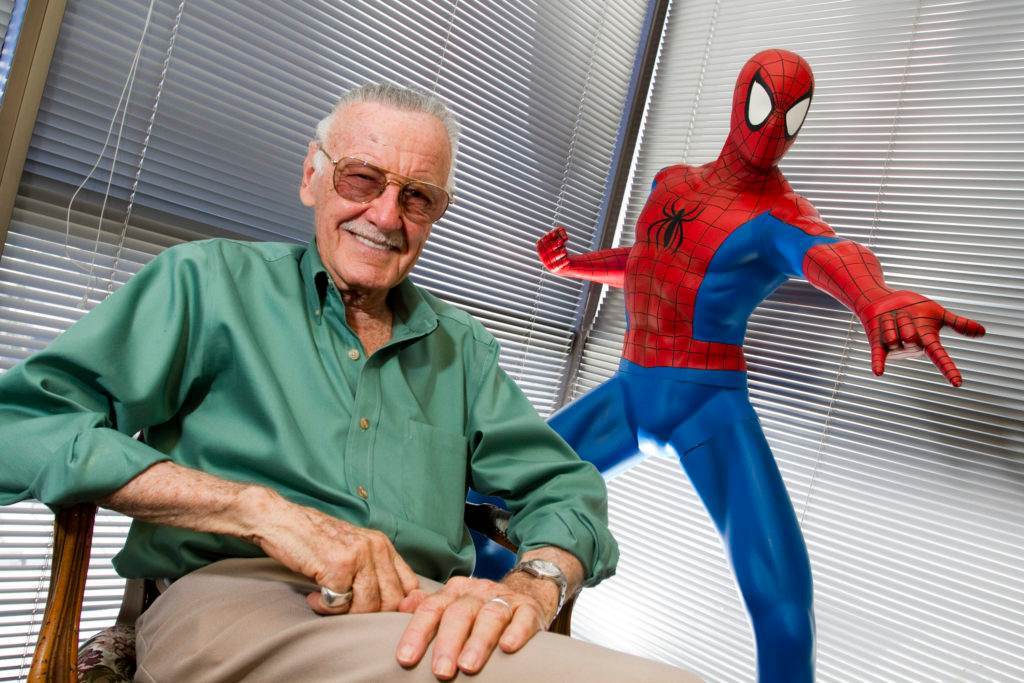
Stan Lee often told the story that all it took was watching a spider climb a wall to imagine a character able to do the same. But there was more to it: he also wanted his hero to be a teenager, imperfect, rejected, left to fend for himself. The spider then becomes the symbol of an adolescent searching for his bearings, caught between power and loneliness.
A visual identity shaped by Steve Ditko
Graphically, Steve Ditko translated that idea through animal postures, webs everywhere, and a costume at once organic and strange. It is in that taut, electric atmosphere that the first issue of Amazing Fantasy appeared, and with it a hero who would upend every convention of the genre.

An ancient myth, a modern icon
Spider-Man is not simply a teenager with powers. He is the heir to an ancestral myth adapted to the modern world. And it is that symbolic depth which explains his dazzling success in the comics, in the films and in everyday accessories alike. To go further, have a look at our article “With great power comes great responsibility”, the true moral pillar of his universe.
An ambivalent figure that speaks to every generation
What makes Spider-Man so universal is precisely that ambivalence inherited from the spider myth: alluring and unsettling, brilliant and dangerous, solitary yet connected to everyone. Those contradictions strike a chord with teenagers, with adults looking for balance, and even with children who love playing the hero “just like the grown-ups” thanks to immersive accessories such as our Spider-Man glasses, faithful to the versions seen in the films and cartoons.

That link between the ancient and the modern, between legend and pop culture, is the key to the character's longevity. Where other superheroes embody perfection, Spider-Man reminds us that vulnerability is a strength too, and that even the most unassuming of creatures — a simple spider — can change the world.
And it is that symbolic bedrock which explains why, even today, Spider-Man's success shows no sign of fading. Whether it is his battles against enemies like the Green Goblin, or his heart-wrenching choices in the great MCU films, it all comes back to one simple idea: a hero inspired by an ancient myth, who keeps on spinning his web through our collective imagination.
A symbol more relevant than ever
At a time when superheroes are taking over the big screen and social media, Spider-Man keeps a rare authenticity. Where others settle for spectacular super-powers, Peter Parker embodies the reality of daily life, the doubts, the failures, but also the quiet victories. He is a hero we follow from his school days through to his greatest sacrifices — a journey anyone can recognise themselves in.
That symbolic depth also feeds the character's offshoots in other universes: whether it is Miles Morales, Spider-Gwen or the shadowy Spider-Man Noir, all these heroes weave stories of their own in turn, rooted in their era yet always tied back to the founding myth of the spider. Each reflects a different facet of what it means to be a vigilante in an unstable world.
Spinning a web through popular culture
Spider-Man is not just a comics character. He has become a pillar of global pop culture, adaptable into every possible form: video games, animated series, cult films, toys and clothing. And it is precisely that ability to stay true to his roots while moving with the times that earns him such a firm place in the hearts of fans.

Conclusion: a deep inspiration, a lasting impact
By drawing on powerful mythological figures such as the spider, Stan Lee and Steve Ditko laid the foundations of a hero at once timeless and profoundly human. Spider-Man does not boil down to a costume and a set of webs: he embodies an inner struggle, a sense of duty, and a psychological complexity that was rare in the comics of the 1960s.

