
14-Day Money-Back Guarantee
0
The short answer
The Uni-Power, a roaming cosmic entity that picks temporary hosts, bonds with Peter Parker at the turn of 1989 into 1990 and grants him near-godlike abilities without altering his personality. This interlude, born in the Acts of Vengeance crossover, peaks against the Tri-Sentinel; we piece it back together below.
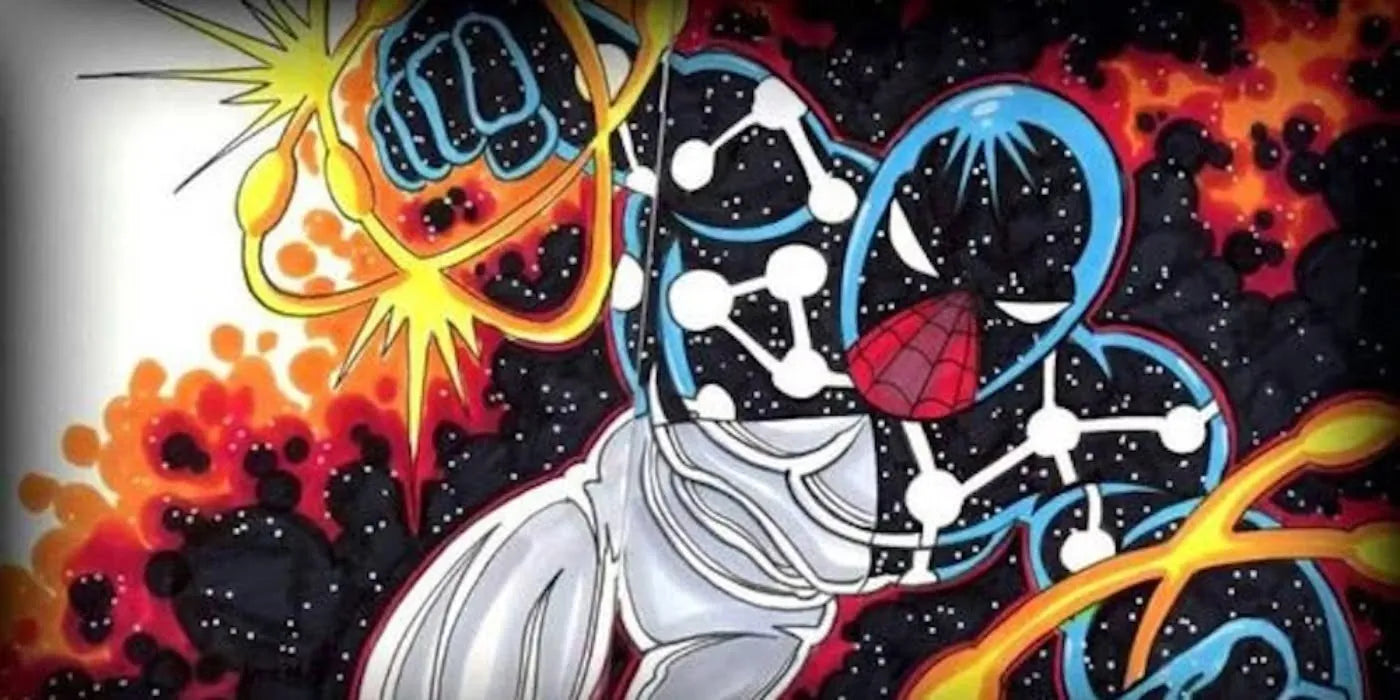
For six white-hot issues published between late 1989 and early 1990, Spider-Man stopped being what he had always been. No more clumsy Peter Parker struggling to reach the end of the month, no more acrobatic web-slinger leaping between Manhattan's gargoyles: in his place, a being with power comparable to Galactus, able to lift buildings, fly through the stratosphere and manipulate electromagnetism on a planetary scale. For a few comic-book weeks, the hero fans love precisely because he is fallible and human became a demigod. This cosmic interlude has a name: Captain Universe Spider-Man, and it remains one of the most fascinating and least-told chapters in the long career of the web-slinger.
The story is worth dwelling on, because it asks a dizzying question that few comics have truly dared to answer: what happens when a character built around his limits is suddenly freed from them? The Spider-Man creed - with great power comes great responsibility - has never rung louder than in this moment when Peter Parker finds himself with genuinely limitless power. This article pieces the arc back together, breaks down the mechanics of the Uni-Power, tells the story of the legendary clash with the Tri-Sentinel, and explains why this cosmic version of the wall-crawler still inspires the many incarnations across the multiverse three decades later.
The Uni-Power: the cosmic force that chooses its hosts
To understand how Peter Parker woke up one November morning in 1989 able to lift an aircraft carrier, you have to go back to 1968 and Marvel Super-Heroes #20, the issue that first introduced the character of Captain Universe. Originally this hero is one Ray Coffin, an ordinary astronaut who discovers a strange spacesuit turned into a source of powers. But the concept evolved quickly: Captain Universe is not a character, it is a status. A roaming cosmic force known as the Uni-Power travels the universe looking for temporary hosts in moments of extreme need, grants them near-godlike abilities for the length of a mission, then detaches and moves on to another bearer.
There is something deeply interesting about this mechanic. Unlike symbiotes such as Venom or Anti-Venom, the Uni-Power does not corrupt its host. Unlike the Iron Spider armour or the various suits Peter has worn over the years, it does not boost an existing ability: it adds an entirely new, almost divine layer on top of the bearer's personality. The hero stays himself, with his doubts, his morals and his quirks, but he temporarily holds the tools of a god. It is this tension between an ordinary human conscience and limitless cosmic power that makes the narrative formula so rich.
When the writers of the late 1980s went looking for an event capable of shaking up the status quo, the idea struck: have the Uni-Power choose the web-slinger. Not Iron Man, not Thor, not an already powerful character - precisely the most human hero in the Marvel catalogue. The contrast would be at its maximum, and the resulting arc remains one of the most discussed in the whole Spider-Man library.
Acts of Vengeance: the backdrop to the cosmic shift
The Captain Universe Spider-Man arc is not an isolated event. It belongs to the sprawling crossover Acts of Vengeance, written by Roger Stern, which ran across the entire Marvel line from late 1989. The premise is devilish: a mysterious Prime Mover arranges a secret meeting between the worst villains on the roster - Magneto, the Wizard, the Mandarin, the Red Skull, Doctor Octopus - and whispers a perverse idea to them: what if every supervillain took on a hero he does not know, instead of his usual enemy? Spider-Man would end up facing Magneto, the Fantastic Four would face X-Men enemies, and so on. The element of surprise would make every confrontation more dangerous.

It is in this context that Spectacular Spider-Man #158 (published in October 1989, written by Gerry Conway and drawn by Sal Buscema) launches the cosmic subplot. Peter Parker finds himself facing the prospect of a threat far beyond his usual abilities. The Uni-Power, drawn by that emergency, bonds with him. The visual transformation is striking: his classic red and blue suit is threaded with cosmic silver and white, and his spider emblem turns into a pulsing stellar symbol. The first power tests leave Peter baffled: he accidentally tears the door off his flat while merely trying to turn the handle, he smashes through the floor getting out of bed, and he starts flying on his way out to fetch some milk. The scene is played with Conway's trademark humour, but it immediately raises the question: what do you do with that much power?
This interlude is reminiscent of other moments when the web-slinger tasted a force greater than himself. The black symbiote period had already given Peter unprecedented physical power, but power twisted by an alien will. The Superior Spider-Man period, in which Otto Octavius takes control of Peter's body, would later play on the reverse mechanic: a familiar body with an alien mind. Captain Universe Spider-Man is the purest formula of all: an intact Peter Parker, simply handed cosmic tools. That is also why these six issues remain unique in the great saga of the web-slinger.
The cosmic web-slinger's powers: a dizzying catalogue
When the Uni-Power bonds with Peter Parker, it does not simply amplify his spider gifts. It opens an entirely new range of abilities whose scope leaves readers open-mouthed. Physical strength first: Cosmic Spider-Man can lift loads estimated at more than a hundred tonnes, against roughly twenty in normal times. To give a sense of scale, that is the strength bracket of a moderately angry Hulk, or a Thor without his hammer. In practice, Peter can now stop a train at full speed simply by placing a hand on the buffer.
Then comes flight. Spider-Man, who has always depended on his webs to move between buildings, can now cross the sky at the speed of sound without touching a single surface. Narratively, that mobility frees the character from the urban constraints that define him: he becomes able to intervene anywhere on the planet within seconds. The scenes of him soaring over Manhattan in Spectacular #158 struck readers used to watching him slalom between skyscrapers at the end of a web.
His spider-sense, already legendary, becomes cosmic perception. Peter can now detect electromagnetic energy flows miles away, anticipate his opponents' movements to the millimetre, and even sense large-scale gravitational vibrations. That extended perception would prove a decisive asset against the Tri-Sentinel.
On top of that come entirely new powers: emission of cosmic energy as concentrated beams, manipulation of magnetic fields (an ability that would be central in the clash with Magneto), generation of force shields, and manipulation of matter at molecular scale. Cosmic Spider-Man can also change the density of his own body, turning intangible long enough to pass through a wall, or on the contrary becoming indestructible on impact. In short, as Conway noted in a later interview for Wizard Magazine, the idea was to give the web-slinger 'everything we secretly dream of seeing him do and that he can never do'.
This pile-up of gifts is not gratuitous. It sets up a clash with a cosmic-level threat, because the narrative rule laid down by Stern is clear: if the Uni-Power has chosen Peter Parker, an absolute emergency is brewing. And that emergency has a name: the Tri-Sentinel.
COLLECTOR FIGURE - 2099 VERSION

Spider-Man 2099 Figure
79.90 EUR
The futuristic incarnation of the web-slinger, his own abilities amplified by technology. An ideal piece for fans of Spider-Man's enhanced versions, to display alongside your classic Peter Parker and bring the diversity of the multiverse to life.
Discover →The Tri-Sentinel: the cosmic web-slinger's peak
The clash with the Tri-Sentinel remains, for many readers and comics historians, one of the great Spider-Man action set pieces of any era. The stakes are simple and terrifying: a mutant-hunting Sentinel - those giant robots originally built to track down and neutralise Marvel's mutants - was modified by Loki, the trickster god of Asgard pulling the strings behind Acts of Vengeance, into a robot three times the size and three times as heavily armed, fitted with a nuclear core capable of levelling an entire city. The Tri-Sentinel is unleashed on Manhattan with a single mission: destroy everything.

No ordinary hero would stand a chance against such an abomination. Iron Man is tied up on other fronts of the crossover, the Fantastic Four are busy elsewhere, the Avengers scattered. As luck would have it, Spider-Man, now carrying the Uni-Power, is the one nearby when the robot emerges. The fight fills the whole of Spectacular Spider-Man #160 (March 1990), regarded today as the high point of Conway's run on the title.
Visually, Sal Buscema delivers pages of rare intensity. Cosmic Spider-Man fires energy beams that rip open the robot's armour, lifts articulated lorries and hurls them like missiles, generates a force field to shield trapped civilians, and bends electromagnetic waves to scramble the Tri-Sentinel's targeting systems. Meanwhile the robot hits back with weapons able to vaporise a whole neighbourhood. The battle stretches from Times Square to Central Park, and Peter knows - he feels it through his new cosmic perception - that if he fails to neutralise the Tri-Sentinel's nuclear reactor, millions of New Yorkers will die.
The final scene has stayed with everyone who read it. At the exact moment Peter manages to pierce the central armour and pull out the overheating nuclear core, the Uni-Power leaves him. No warning. No transition. High in the stratosphere, hundreds of metres above Manhattan, with an unstable nuclear device in his hands, Peter becomes an ordinary human again. The fall would start within the second if Captain America, alerted at the last moment, did not catch him. The metaphor is crystal clear: what makes Spider-Man lovable is not the borrowed power, it is the humanity he keeps even at the height of the battle. The scene endures as one of the most iconic of the web-slinger's career.
Magneto, Sebastian Shaw and the secondary opponents
The Tri-Sentinel is not the only opponent Cosmic Spider-Man faces during his short reign. Before the final battle, several confrontations build towards the climax. The most memorable pits Peter against Magneto himself, within the Acts of Vengeance framework that forces villains to attack heroes they do not know. The master of magnetism, used to humiliating the X-Men, believes he is dealing with a classic Spider-Man he could neutralise in seconds by manipulating his metallic web-lines. Except that this time Peter can answer in kind: his own cosmic powers include partial mastery of electromagnetism. The clash, brief but brutal, ends with Magneto temporarily driven back, in itself a rare feat for a street-level hero.
Sebastian Shaw, the mutant able to absorb the kinetic energy inflicted on him and convert it into physical strength, is another iconic opponent of this interlude. He too underestimates his rival: Shaw assumes that the harder Peter hits him, the more power he will absorb. But the cosmic energy Cosmic Spider-Man projects is not simple kinetics. It overruns Shaw's absorbing capacity and leaves him overwhelmed. Here again the script plays on surprise: a web-slinger everyone thought they knew turns out to be unpredictable.
These clashes give the arc a rare amplitude. Cosmic Spider-Man is not just a boosted web-slinger facing threats from his usual bracket: he is a street-level hero catapulted into the big league, forced to invent in real time a combat grammar suited to higher-class opponents. That narrative dynamic would later inspire other cosmic arcs for the character, right up to moments like No Way Home where Spider-Man has to handle stakes far beyond his usual New York patch.
The arc also explores quieter moments, where Peter tests his new powers in an everyday setting. One comical scene sees him trying to wash up without pulverising the plates, which proves surprisingly hard when you have strength you are not used to measuring out. Mary Jane Watson, Peter's wife at the time, watches her husband with bemused puzzlement. Conway enjoys these domestic in-between moments as a reminder that, behind the cosmic suit, Peter Parker is still a man in a kitchen, desperately trying not to break the wedding china.
PREMIUM COLLECTOR'S PIECE

Premium Resin Spider-Man Collector's Figure
999.90 EUR
The ultimate object for true collectors. A premium resin figure paying tribute to every version of the web-slinger, from the classic Peter Parker to the most exceptional incarnations such as Cosmic Spider-Man. A centrepiece for a secure display cabinet.
Discover →Why the power fades: the end of Cosmic Spider-Man
The Uni-Power is, by definition, temporary. It never stays long with the same host. Once the mission is complete - here, the neutralisation of the Tri-Sentinel - it detaches and goes looking for another cosmic emergency elsewhere in the universe. Conway builds the arc's exit around that implacable logic: Peter does not lose his powers because he slipped up, or because he was corrupted, or because he abused them. He loses them because the Uni-Power is needed somewhere else. The divestiture is almost sad in its impersonal administration.
This mechanic sets Captain Universe apart from most other power-acquisition devices in storytelling. In Kraven's Last Hunt, the stakes are psychological: Kraven wants to prove his moral superiority by surpassing the web-slinger. In The Night Gwen Stacy Died, the stakes are emotional: Peter discovers that his powers are not enough to protect the people he loves. In the cosmic arc, the stakes are metaphysical: can a human survive, psychologically, having been a god for a few weeks and then becoming mortal again?
The answer, given in a handful of very beautiful scenes, is yes, but at a cost. Peter goes back to his ordinary life, to his flat in Forest Hills, to his difficult month-ends, to his photography assignments for J. Jonah Jameson, who carries on hating him without knowing it. But something has changed. He has tasted a level of power few beings ever know. He knows intimately what it is to be able to lift a planet. And he also knows, with doubled certainty, that this is not what defines a hero. The creed 'with great power comes great responsibility' finds its deepest resonance in that descent: what matters is not the scale of the gifts received, it is what you do with them while you have them, and what you remain once they are gone.
That philosophy has run through the character's mythology ever since. Later arcs such as Superior Spider-Man would play on the opposite idea - what happens if you take Peter's humanity out of the suit - and confirm by contrast what the cosmic arc had suggested: Spider-Man is his conscience, not his body or his powers.
The legacy of Captain Universe Spider-Man in pop culture
Three decades after its original publication, the Captain Universe Spider-Man arc still feeds Marvel's output in various forms. The cosmic Spider-Man concept has been picked up in several later comics, notably in recent arcs where the Uni-Power resurfaces in a multiverse context. The video games devoted to the web-slinger have included the Captain Universe outfit as an unlockable suit in several titles, starting with Insomniac's 2018 Spider-Man on PlayStation 4, where the cosmic suit is one of the iconic skins players can unlock as they progress.
On the big screen, the concept has not yet been adapted head-on, but indirect references are scattered through recent productions. Spider-Man: Into the Spider-Verse and Across the Spider-Verse allude to alternative variants of the web-slinger in which Peter kept amplified powers, temporarily or for good. The idea of a Spider-Man able to challenge gods also floats in the thematic background of the MCU, where the character played by Tom Holland regularly faces stakes well beyond the strict boundaries of Queens.
On the merchandising side, the Captain Universe suit has become a collectors' classic. Its cosmic silver-and-white palette contrasts with the web-slinger's traditional reds and blues, which makes it a visually distinct piece in any collection. The merchandise built around this version comes round regularly, whether articulated figures, retro art posters reproducing Sal Buscema's pages, or t-shirt variants carrying the suit's pulsing stellar symbol. The cosmic suit also shows up regularly in the rankings of the web-slinger's legendary outfits published by the specialist magazines.
Beyond marketing, the arc still influences writers. When Dan Slott revived the mythology of the Spider-Totem and the Web of Destiny in Amazing Spider-Man, the idea of a web-slinger connected to cosmic forces beyond him drew directly on the grammar Conway laid down in 1989. The totemic predators such as Morlun, and the cosmic variations that appeared in Spider-Verse, all owe something to the character's first cosmic interlude. The pillar page on the complete universe of Spider-Man characters could not be conceived today without that founding step.
CLOTHING - BE THE WEB-SLINGER
Spider-Man Costume T-Shirt
24.90 EUR
The iconic Spider-Man suit pattern printed on a comfortable t-shirt, so you can carry the web-slinger's spirit with you every day. Ideal for fans who want to show their passion for the major arcs such as the Captain Universe period and every cosmic version of the hero.
Discover →Cosmic Spider-Man in the modern multiverse
The idea that somewhere in the Marvel multiverse there might be a web-slinger who kept Captain Universe's cosmic powers for good is a door contemporary writers push ajar on a regular basis. The concept lends itself naturally to the multiverse storytelling that has dominated Marvel's output since the 2010s. In certain variants that appeared in the original Spider-Verse arc by Dan Slott, an adult cosmic Spider-Man crosses paths with other versions of the character from parallel realities, including variations as exotic as Spider-Man 2099, Miles Morales, or Spider-Gwen.
In the main canon, the Uni-Power resurfaces periodically. It has chosen new bearers several times over the decades, some famous, others unknown, but each time the event stays rare and memorable. The narrative logic Conway laid down in 1989 endures: Captain Universe is not a recurring hero, it is a cosmic event that happens when the universe needs it and vanishes once the crisis is resolved. That rarity is precisely what gives it its dramatic value.
For today's fans, rediscovering the Captain Universe Spider-Man arc through the Marvel Epic Collection reprints or the themed omnibuses is a peculiar experience. The pacing, the graphic codes of the late 1980s, the very free use of inner monologue: all of it gives the reading a retro texture that contrasts with more cinematic modern comics. But the thematic question the arc raises, what we mean when we say Spider-Man is 'the most human hero' in the Marvel catalogue, remains universally contemporary.
The arc also converses with characters who did not yet exist when it was written. Spider-Boy, the clone recently added to the web-slinger's mythology, asks the identity question in his own way: what is left of the character when you take something fundamental away, or add something to it? Anti-Venom, in another register, explores the idea of an alien power that purifies instead of corrupting. Rhino and the other brute-force villains still serve as a contrast that highlights what sets Spider-Man apart from his opponents. All these reflections descend in part from the cosmic matrix laid down by Conway, Buscema and Stern at the end of the 1980s.
Why this arc is still essential to know
For today's reader discovering Spider-Man through the MCU or the recent games, the Captain Universe arc may look like an anecdotal detour in the character's long publishing history. Five issues spread across three separate titles in a bygone era of comics publishing, no longer part of the canon directly referenced in mainstream media. So why take an interest in it today?
First, because this is factually the moment when Spider-Man was the most powerful he has ever been in his comics career. At a time when 'who is the strongest hero in Marvel' rankings have become a social-media sport, knowing that the web-slinger once stood in the league of Galactus and Thanos for a few weeks changes the perspective. The Peter Parker fans know as a street-level hero has, in his publishing past, touched the absolute summit of Marvel's power hierarchy. That fact is rarely mentioned in power comparisons, yet it is an integral part of the complete biography of Peter Parker.
Second, because the arc crystallises, with almost didactic clarity, what sets Spider-Man apart from other Marvel heroes. Being powerful is not enough to make a hero: Iron Man, Thor and Hulk all are, permanently. What makes Spider-Man is the fragility, the humour, the worry about breaking the crockery, the constant awareness of limits. The Captain Universe arc is the reverse experiment: what happens to Spider-Man when you remove those limits? He does the job, saves the planet, then returns to his life with no apparent regret. That calm in the comedown is a lesson in heroic morality that no other arc has delivered with such simplicity.
Finally, because it is an excellent entry point into the other cosmic arcs that followed: the map of the Spider-Man multiverse, the alternative variations of the web-slinger that populate the Spider-Verse collections, or even the identity questions raised by the villains who defined Spider-Man over the decades. The Captain Universe arc is a gateway into a whole stretch of the web-slinger's mythology that recent adaptations are only beginning to explore. And it sits in the line of the other major arcs, the ones that shaped the character's emotional dimension, whether the great romances of Peter Parker or the darkest moments such as the death of Gwen Stacy, that it takes on its full value in the web-slinger's long saga.
The web-slinger who touched the divine
Captain Universe Spider-Man is a unique snapshot in the publishing history of a character who has plenty of them. Six issues, a few weeks of fiction, and the quiet revelation that the hero we love for his limits has already been, for the length of one crisis, entirely without them. This cosmic interlude did not fundamentally change Peter Parker, who went back to his ordinary life with the same quiet gratitude as before, but it widened for ever the field of what the web-slinger is capable of being when circumstances demand it.
For fans of the Spider-Man universe who want to build up their collection or deepen their knowledge of the character's major arcs, the Captain Universe episode deserves a prime place. Whether through the Spider-Man figures in the collection, the official t-shirts, the art posters or the jumpers and sweatshirts featuring the web-slinger, every piece extends your attachment to these memorable story moments. The Spider-Man universe as a whole is not limited to the classic confrontations with Doctor Octopus or the Green Goblin: it also takes in these cosmic interludes where the web-slinger briefly flirted with divinity, before happily coming back down to the washing-up, the difficult month-ends and the photo assignments for the Daily Bugle. It is precisely that amplitude, from cosmic god to ordinary man, that makes Spider-Man the most complete and best-loved hero in the Marvel catalogue.

