
14-Day Money-Back Guarantee
0
The short answer
Hobie Brown is the punk-rock version of Spider-Man: a British vigilante born in an England ruled by a fascist Norman Osborn, who arrived in comics during the 2014 Spider-Verse crossover. His electric guitar doubles as a sonic weapon. Full profile below.
Contents
Why does Spider-Punk electrify fans?Superpowers with a punk twistSpider-Punk in Across the Spider-Verse (2023)The essential comics for really understanding Spider-PunkSpider-Punk beyond the page: the icon of a pop rebellionThe future of Spider-Punk in the franchiseConclusion: an amplified hero, a traffic boost
Spider-Punk is probably one of the most fascinating characters to appear in Spider-Man mythology over the last fifteen years. Not a simple variant, not a supporting player, not a cameo — Hobie Brown embodies a genuine ideological alternative to the classic web-slinger. Where Peter Parker hesitates, Hobie acts. Where Peter looks for balance, Hobie chooses the break. This article traces the character's full history, his role in Across the Spider-Verse, and his growing cultural impact.
To place Spider-Punk within the broader multiverse mythology, a detour through the Spider-Verse explained simply is essential — Hobie Brown is one of the most politically engaged variants in the whole spider lineage.
Why does Spider-Punk electrify fans?
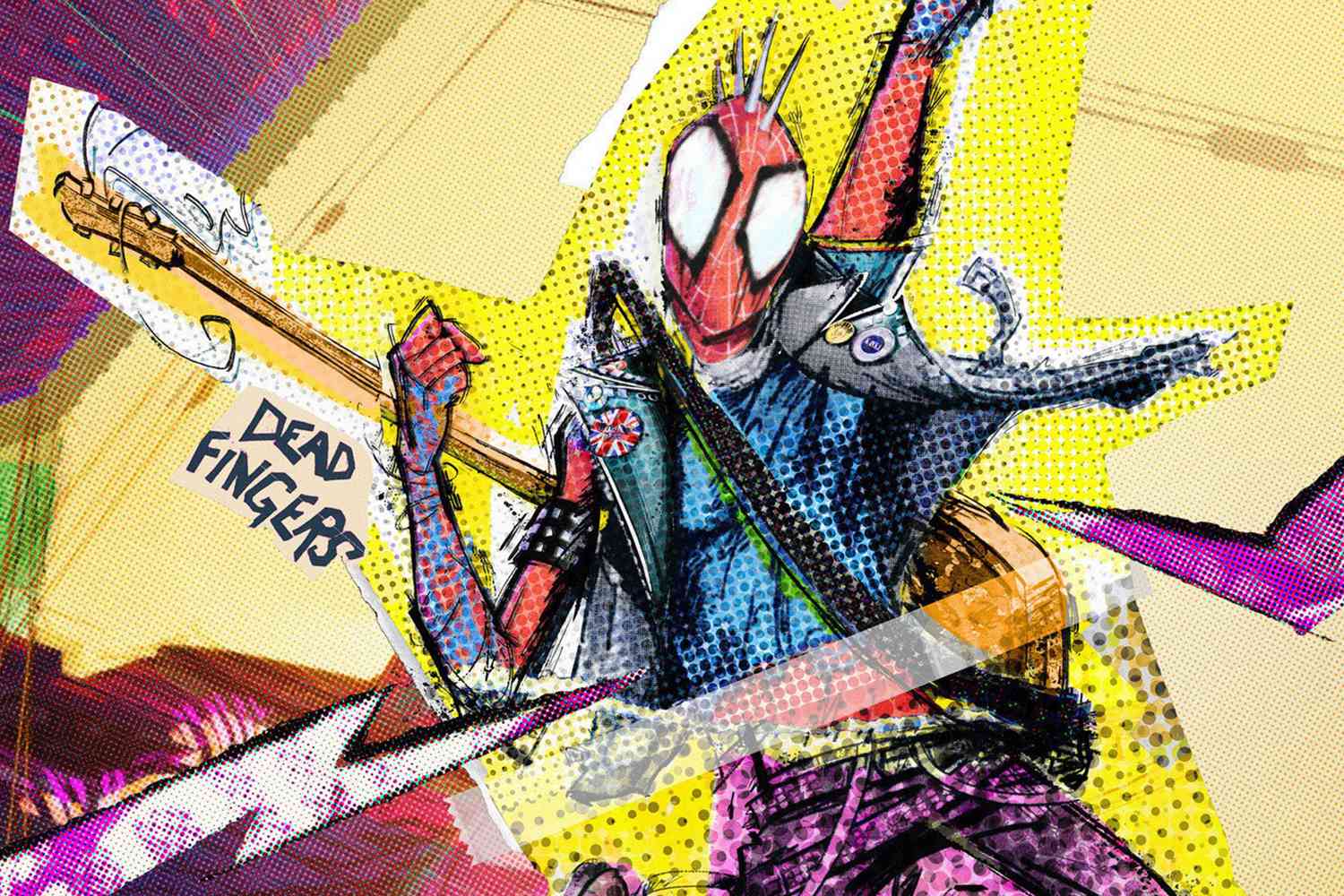
Hobie Brown first appears in Spider-Verse #2 in November 2014, as part of the Spider-Verse crossover written by Dan Slott. The concept is immediately striking: a British, Black, punk-rocker, anti-fascist Spider-Man who combines his spider powers with an electric guitar capable of generating destructive sound waves. That unexpected pairing of punk rock and superheroics instantly won over a slice of the fan community.
Hobie's origin is a rich one. In his world, England is run by President Norman Osborn, who has turned fascist. Hobie becomes Spider-Punk after being bitten by a spider mutated by industrial pollution. That political dimension sets Hobie radically apart from the classic Peter Parker. For Peter, the enemy is often an individual supervillain. For Hobie, the enemy is an entire system — a system he fights openly, with no pretence of neutrality.
That political dimension echoes very contemporary questions. How do you fight an authoritarian system? Is violence justified in defence of freedom? Can a hero stay neutral in the face of systemic injustice? To compare Hobie with other politically engaged figures in the Marvel universe, a detour through Back in Black, when Peter Parker drops his morals is illuminating — Peter slips temporarily into the stance Hobie holds permanently.

First appearance
Spider-Verse #2, November 2014, in the crossover written by Dan Slott.
Origin
Bitten by a spider mutated by industrial pollution, in an England ruled by Norman Osborn.
His enemy
An entire system, fought openly, rather than an individual supervillain.
Superpowers with a punk twist
Hobie has the classic Spider-Man powers — superhuman agility, greatly increased strength, spider-sense, the ability to spin webs. But his originality shows in what he adds to them. His modified electric guitar lets him emit sound frequencies that can disorientate enemies, shatter glass or disrupt electronic communications.
His costume is a manifesto too. Black studded leather jacket, torn T-shirt with a Spider logo, punk mask, ripped jeans, battered trainers. Where the classic Spider-Man suit is synthetic and precise, Hobie's is handmade, cobbled together, deliberately asymmetrical. That DIY (do-it-yourself) aesthetic carries the punk philosophy into the very fabric of the character. To dig into that visual dimension, a detour through Spider-Man's film costumes, symbolic evolution and hidden secrets is illuminating — Hobie is probably the single biggest aesthetic break in the whole franchise.

The Spider-Punk mask to embody the rebellion
Spider-Man Mask - Spider Punk
The Spider-Punk mask reproduces Hobie Brown's iconic design — rebel finishes, deliberate asymmetry, a DIY signature. For convention cosplay, a Halloween statement or your collection — this is the piece that makes the character's punk-rock spirit real.
€119.90
See the Spider-Punk mask →Classic powers
Superhuman agility, greatly increased strength, spider-sense and webs.
Electric guitar
Sound frequencies that disorientate, shatter glass or disrupt communications.
DIY costume
Studded leather jacket, torn T-shirt, punk mask: handmade and asymmetrical.
Spider-Punk in Across the Spider-Verse (2023)
Hobie Brown makes his big-screen debut in Across the Spider-Verse, the second instalment of Sony's animated saga. Voiced by Daniel Kaluuya (the brilliant actor from Get Out and Black Panther), the character quite literally steals every scene he appears in. His punk silhouette, his musical flow and his political irreverence won audiences over straight away.
Beyond his individual showing, Spider-Punk plays a structural role in the film. He is the only member of the Spider Society to openly refuse the group's rules. When Miguel O'Hara imposes an authoritarian hierarchy on every Spider-Hero in the multiverse, Hobie is the only one who says no. That rebel stance, consistent with his punk identity, makes him the film's internal counterweight. To dig into that conflict, a detour through Miles Morales, the new Spider-Man adored by fans is essential — Hobie is also the only one who protects Miles against that authority.
The character's animation in Across the Spider-Verse is technically virtuosic. Sony Animation chose to render Spider-Punk as a deliberately chaotic paper collage — every frame is built from different visual elements layered on top of one another, like a handmade punk fanzine. That unique look sets Hobie apart from every other Spider-Hero in the film. It is probably the greatest animation feat in the whole Spider-Verse saga.

The Spider-Punk cosplay for die-hard fans
Full Spider-Man Spider-Punk Cosplay Costume
The premium Spider-Punk cosplay faithfully reproduces Hobie Brown's film costume — leather jacket, asymmetrical mask, punk finishes. For conventions, photo shoots or high-end cosplay, it is the statement piece for the most committed fans.
€599.90
See the Spider-Punk cosplay →Daniel Kaluuya
He voices Hobie in Across the Spider-Verse.
The only one who says no
Faced with Miguel O'Hara's hierarchy, he refuses the rules and protects Miles.
A paper-collage look
Chaotic animation, layered like a handmade punk fanzine.
The essential comics for really understanding Spider-Punk
Beyond the film, Hobie Brown's story runs across several comic series fans should discover. The first major arc is of course Spider-Verse (2014-2015), where the character is introduced. Its follow-up, Spider-Geddon (2018), extends the story with a more political dimension. More recently, the solo Spider-Punk series (2022) written by Cody Ziglar gave the character his own comics franchise.
Those reads reveal the character's depth beyond his screen appearance. Hobie is not just a cool look — he is a politically coherent character, with a real ideology, precise cultural references (from the English punk movement of the 1970s to contemporary anti-fascist movements), and complex narrative relationships. To dig into those ramifications, a detour through the full history of the symbiotes and Marvel mythology is worthwhile — Hobie represents another route by which Spider-Man is transformed.
The other narrative dimension to explore is the Hobie/Miguel O'Hara rivalry. Miguel, the the cyberpunk side of the Marvel multiverse, represents authoritarian order against Hobie's rebellion. That ideological opposition is one of the deepest in the Marvel multiverse. It raises the question: should the order of the multiverse be preserved at any cost, even at the expense of individual freedoms?

The Spider-Verse aesthetic as a poster
Spider-Man Across The Spider Verse Poster
The Across the Spider-Verse poster captures the revolutionary look of the film in which Spider-Punk makes his big-screen debut. Multiple designs, graphic collages, a vivid palette — the perfect piece for fans of Sony's animation and of Hobie himself.
€22.90
See the Across poster →| Comic | Year | What it adds |
|---|---|---|
| Spider-Verse | 2014-2015 | Introduces the character |
| Spider-Geddon | 2018 | A story with a more political dimension |
| Spider-Punk (solo series) | 2022 | Written by Cody Ziglar, his own comics franchise |
Spider-Punk beyond the page: the icon of a pop rebellion
Beyond the comics and the film, Hobie Brown has taken on a cultural dimension that goes past fiction. Several Spider-Punk T-shirts turn up in streetwear collections. Graffiti artists borrow his design for urban murals. Punk-rock musicians name-check him regularly in their tracks. That level of cultural reach is rare for a recent comic character.
The other cultural dimension is representation. Hobie is a Black British Spider-Man — a rare combination in the Marvel universe. That portrayal reached an audience who did not necessarily see themselves in the white American versions of the character. This inclusivity is probably one of the deeper reasons for his success with the new generation. To dig into diversity across the Marvel multiverse, a detour through Miles Morales and his impact is illuminating.
On the merchandise side, the Spider-Punk range has exploded since 2023. Articulated figures, T-shirts, posters, accessories: everything is now there for fans who want to make their passion tangible. To explore the wider Spider-Man collecting ecosystem, the Spider-Man figures collection, the T-shirts collection and the masks collection offer a full visual overview.
Urban culture
Streetwear T-shirts, graffiti murals and name-checks in punk-rock tracks.
Representation
A Black British Spider-Man, a rare combination in the Marvel universe.
Merchandise
Figures, T-shirts, posters and accessories: the range has exploded since 2023.
The future of Spider-Punk in the franchise
Hobie Brown's future looks especially rich. Beyond the Spider-Verse, the third instalment of the Sony Animation saga due in 2027, should deepen the character. Several rumours point to an appearance by Hobie in a live-action series planned at Disney+, with a cast not yet announced.
On the comics side, Marvel has clearly invested in the character for the long term. The solo Spider-Punk series continues with new writers, new arcs, new enemies. Hobie has become one of the most strategically protected Marvel characters — much as Miles Morales was ten years ago. That editorial seal of approval guarantees his place in the mythology for decades to come.
The other thing to watch is the character's political evolution. In a global climate where authoritarianism and civil liberties dominate the debate, Spider-Punk could become a major narrative vehicle. Marvel is not holding back — several recent arcs place him at the heart of explicitly political conflicts. To dig into that tension between commitment and heroism, a detour through the blurred line between justice and vengeance in Spider-Man is illuminating.
Beyond the Spider-Verse
The third instalment, due in 2027, should deepen the character.
Live-action series
Rumours point to an appearance in a series planned at Disney+.
Comics
The solo series continues with new writers, arcs and enemies.
Conclusion: an amplified hero, a traffic boost
Spider-Punk is probably the most striking addition to Spider mythology since Miles Morales. Not simply because he has a cool design — other characters do too. But because he raises political questions the classic mythology avoided. That ideological dimension renewed interest in the franchise among an audience starting to tire of the classic Peter Parkers.
To carry the exploration further, a few essential leads. First, read Cody Ziglar's Spider-Punk series (2022-) — the best introduction to the character. Then watch Across the Spider-Verse (2023) — his cinematic breakthrough. Finally, follow the announcements around Beyond the Spider-Verse (2027), where he should play a central role.
One thing is certain: as long as Marvel keeps producing, Hobie Brown will remain a major figure. Not as one variant among many — as the modern embodiment of a fundamental question. Can a hero be political without ceasing to be a hero? Hobie's answer is clear: yes, and it is the very condition of staying relevant. That stance, radical for a Marvel character, is probably what makes Spider-Punk an essential character for the next ten years.

