

14-Day Money-Back Guarantee
0
The short answer
This 1996 mini-series follows Kaine, eaten up by his own crimes, clinging to Janine Godbe in order to save himself and ending up face to face with Ben Reilly. Inner drama matters far more here than the fights, and it all turns on one simple question: can you still be forgiven? Here is what is at stake.
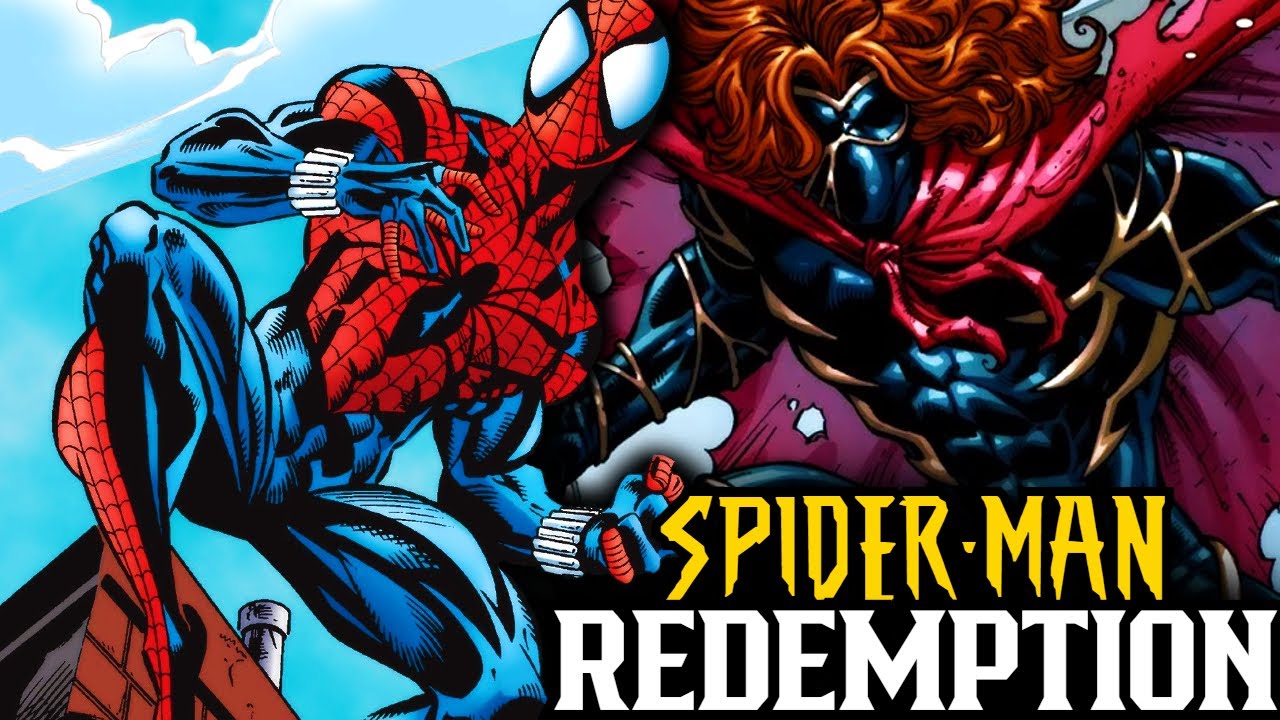
Published in 1996 across four issues, Spider-Man: Redemption is a poignant, introspective arc, often underrated, yet carrying a rare emotional force. It centres on Kaine, Peter Parker’s tortured clone, and on his desperate quest for redemption. The story unfolds after the dark events of the Clone Saga, with Kaine haunted by his past crimes and trying to make amends… in his own way.
Far from the usual spectacular punch-ups, this arc lingers on the psychology of its characters. It sets Kaine’s darkness against Ben Reilly’s light (the Spider-Man on duty at the time), while exploring a theme rarely handled this well in the web-slinger’s world: redemption through sacrifice.
Behind the claws and the nightmares, Kaine is a character searching for love and inner peace. That is what makes *Spider-Man: Redemption* stand apart: a dive into the suffering of a broken man who wants to rebuild himself… but doubts he deserves to.
In this first part, we look back at the post-Clone Saga context, Kaine’s state of mind, and the start of his hunt for… love. Because yes, it all begins with a devouring obsession with Janine Godbe, Ben Reilly’s former girlfriend.
👉 If you want to carry on exploring the darker, more introspective stories of the Spider-Man universe, have a look at Kraven’s Last Hunt or The Other: Evolve or Die.
And if you collect, take a look at our selection of Spider-Man figures, our comic-accurate costumes so you can become one of the faces of the Spider-Verse yourself, or our masks.
Ben Reilly vs Kaine: two faces, the same DNA, opposite destinies
If *Spider-Man: Redemption* leaves such a mark on readers, it is because it shines a light on a silent duel between two souls cast from the same mould… but shaped by radically different paths. Ben Reilly and Kaine are both clones of Peter Parker. Yet they embody two diametrically opposed emotional poles.
Ben Reilly, who had become Spider-Man by then, is Peter’s moral heir. He chooses hope, responsibility and altruism. Despite his doubts about who he really is, he acts with empathy and kindness. He wants to honour the symbol of the Spider and protect the innocent, even when the world questions his legitimacy.
Kaine, by contrast, is the product of rejection, pain and degeneration. His unstable cloning warps him, physically as much as psychologically. Where Ben holds out a hand, Kaine clenches a fist. Where Ben looks for peace, Kaine embraces rage. He acts on instinct, out of fear of being forgotten, out of anger at a world that abandoned him before he was even born.

In *Redemption*, that contrast becomes a cruel mirror. While Ben tries to turn the page with Janine and build a ‘normal’ life, Kaine resurfaces, obsessed with a relationship he considers unfair. He wants to ‘save’ Janine, not for her sake, but for his own. That is where the drama takes hold.
Ben and Kaine are both Spider-Men... but one is a guiding light, the other a creeping shadow. That is what makes their confrontation so powerful: an inner struggle projected outwards, where every blow traded is an existential cry.
👉 You will find that same psychological clash in other major arcs such as The Lost Years, which explores Ben and Kaine’s wandering years before Redemption.
And to round off the experience, explore our Spider-Man T-shirts collection, or discover the Spider-Verse merchandise gathered in our complete guide to Spider-Man merchandise.
The weight of the past: Janine Godbe, between redemption and sacrifice
In *Spider-Man: Redemption*, beyond the duel between Ben Reilly and Kaine, one central figure emerges: Janine Godbe. Ben’s lover during his years in exile, she too carries the weight of a troubled past. Accused of murder in a traumatic family case, Janine is on the run, exactly as Ben once was. Together, they had found a fragile peace, far from New York and far from heroic responsibilities.

But that peace is shattered by the return of Kaine, obsessed with Janine as much as with his own pain. For Kaine, Janine represents a light he cannot reach. His behaviour grows more and more unstable, threatening and manipulative. He believes he is acting for her good, yet he only repeats a cycle of control and destruction.
Ben, for his part, fights to give Janine a chance at a normal life, even if that means facing his own degenerate brother and reopening painful memories. The main theme of the arc then becomes crystal clear: redemption is only possible if you face your past head-on, instead of running from it.
The story alternates between flashbacks and the present, building a strong emotional tension. Every character is confronted with their own choices: Janine hesitates between love and flight, Kaine between anger and loneliness, Ben between duty and the heart. That dramatic triangle gives the arc an almost tragic dimension.
The message is clear: you cannot erase your wrongs, but you can learn to live with them. Justice is not found in punishment, but in forgiveness. And sometimes you have to give up your own happiness so that someone else can rebuild theirs.
👉 That moral dilemma echoes plenty of major Spider-Man arcs, such as One More Day, where Peter also has to make heartbreaking choices between love, responsibility and sacrifice.
And to bring these moving stories into your everyday life, have a look at our comfortable, immersive Spider-Man pyjamas, or explore the slippers section for the perfect film night.
Redemption: a choice, a sacrifice… a promise
In the final act of *Spider-Man: Redemption*, Ben Reilly makes a decision that crystallises everything that makes him a true hero. Rather than run again, he chooses to face justice alongside Janine, accepting the consequences of their shared past. That choice perfectly embodies the moral code that has always guided Spider-Man, even in his most tormented versions: facing the truth is the first step towards redemption.
Opposite them, Kaine goes under for good. Disfigured, eaten away by his own mistakes, unable to grasp the very idea of forgiveness, he vanishes at the end of the arc, leaving a bitter taste in the reader’s mouth. He did not fail for lack of strength or intelligence… but because he refused to love in any way other than through possession and suffering.
That powerful contrast between Ben and Kaine — two clones of the same man — opens up a deep reflection on identity. It is not DNA that forges the soul, but choices. And by that measure, Ben proved he was worthy of the name Spider-Man.

The final panel of the series shows Ben and Janine holding hands, ready to face a world that was not waiting for them, but that they will face together. Redemption is not about saving other people. It is about saving yourself.
Want to stay a little longer in this world of clones, shadows and redemption? Have a look at our Spider-Man jumpers inspired by the great sagas, or complete your collection with a blanket featuring Ben Reilly or Kaine, as a tribute to these complex, tragic characters.
Finally, explore our pillar pages on Peter Parker or the major story arcs so you do not miss a thing of the web-slinger’s mythology.

